

Paint Tank Selection Guide | How to Choose a Paint Pressure Tank for Industrial Coating Systems
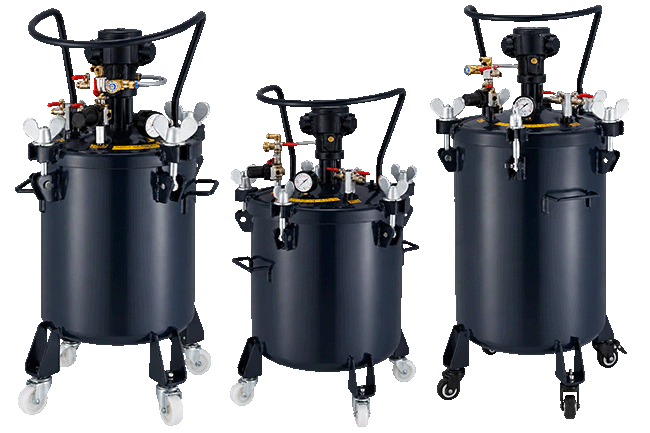
What Is a Paint Tank?
A paint tank (also called a paint pressure tank, paint pressure pot, or paint supply tank) is an industrial pressure vessel that stores paint or coating material and delivers it under controlled compressed-air pressure to spray guns, automatic spray systems, or coating equipment. It is used to maintain stable material flow and consistent pressure during painting and coating operations.
In industrial coating, a paint tank is not simply a container. It is part of the material supply system. Its role is to keep paint flowing at a steady pressure so the spray gun or automated applicator can produce a uniform coating thickness and consistent atomization.
How Does a Paint Pressure Tank Work?
A paint pressure tank uses compressed air to pressurize the paint inside a sealed tank. The pressurized paint is then pushed through a fluid hose to the spray gun or dispensing equipment. Pressure regulators and gauges allow the operator to control the material pressure. Some tanks also include agitators to keep pigments or fillers mixed and prevent settling.
Key functions of a paint pressure tank include:
- Stable paint delivery
- Continuous coating supply
- Pressure control
- Improved spraying consistency
- Reduced manual refilling and downtime
Paint Tank Selection Logic: What to Evaluate Before Buying
Choosing the right paint tank depends on the material, the application, and the production environment. The following factors are commonly used to evaluate a paint pressure tank.
1. Material Compatibility and Tank Construction
The tank material must be compatible with the paint or coating being used. Stainless steel is widely used for industrial pressure tanks because it offers corrosion resistance, mechanical strength, and easy cleaning. Common stainless steel grades include 304, 304L, 316, and 316L. Grade 316 or 316L may be selected when stronger corrosion resistance is required, such as with certain chemicals, saltwater, or pharmaceutical and food-related applications.
For paint and coating applications, stainless steel helps resist rust and oxidation and supports a clean surface that is easier to maintain.
2. Tank Capacity and Production Demand
Tank size should match the paint consumption rate and the desired refill interval. A tank that is too small may require frequent refilling and cause production interruptions. A tank that is too large may be unnecessary for low-volume operations and can make cleaning and material changeover more difficult.
Consider:
- Paint consumption per hour or per shift
- Number of spray guns or applicators supplied
- Batch size and color change frequency
- Available floor space and mounting requirements
3. Pressure Requirements and Control
Operating pressure affects paint flow and spray quality. The tank and its components must be rated for the required working pressure. Pressure regulators, gauges, safety valves, and fluid outlets should be selected to match the coating system.
Stable pressure is important for:
- Uniform coating thickness
- Consistent atomization
- Reduced coating defects
- Efficient material use
4. Agitation and Mixing
Some paints and coatings contain pigments, fillers, or other solids that can settle over time. In these cases, a paint pressure tank with an agitator or mixing system may be needed to keep the material homogeneous. Agitation helps maintain consistent color and coating performance.
If the material tends to separate or settle, an electric agitator or mixing pressure tank may be more suitable than a standard tank.
5. Cleaning and Maintenance
Paint tanks should be designed for practical cleaning and maintenance. Smooth internal surfaces, accessible openings, and compatible seals and gaskets help reduce cleaning time and prevent cross-contamination between colors or materials.
Consider how often the tank will be cleaned and whether quick color changes are required.
6. Customization and Integration
Industrial coating systems vary. A paint tank may need to be integrated with existing spray guns, robotic spray systems, automatic coating machines, or fluid delivery lines. Customization options may include tank size, outlet configuration, agitator type, pressure rating, and material grade.
Buyers should confirm that the manufacturer can provide the required connections and configuration for their specific coating line.
Typical Applications of Paint Tanks
Paint pressure tanks are used in industries and processes that require controlled paint or coating delivery, including:
- Automotive manufacturing and refinishing
- Metal finishing and surface treatment
- Furniture coating
- Machinery protection and industrial painting
- Automated spray lines and robotic coating systems
- General industrial coating and finishing
In these applications, unstable paint delivery can cause uneven coating thickness, poor atomization, material waste, and production downtime. A properly selected paint tank helps support consistent surface quality and production efficiency.
Common Considerations and Limitations
When selecting a paint tank, keep the following points in mind:
- Material compatibility: Confirm that the tank, seals, and wetted parts are compatible with the paint, solvent, and cleaning agents used.
- Pressure safety: Ensure the tank and components are rated for the intended working pressure and include appropriate safety features.
- Agitation needs: Not all paints require agitation, but materials with pigments or fillers may settle without mixing.
- Cleaning requirements: Frequent color changes or hygienic requirements may call for specific tank designs and surface finishes.
- Integration: Check that the tank can connect properly to existing spray guns, hoses, and control systems.
- Documentation: Request available technical information, such as material certificates or pressure ratings, where applicable. Do not assume certifications or parameters that are not confirmed by the manufacturer.
About DGYAKOO
DGYAKOO is a manufacturer of glue pressure tanks, adhesive and dispensing pressure tanks, and related pressure vessels. The company provides stainless steel pressure pots, paint supply tanks, and customized coating material feeding solutions for industrial customers. Product information and application details are available at https://www.madetank.com/.
Frequently Asked Questions (FAQ)
What is a paint tank used for?
A paint tank is used to store paint or coating material and deliver it under controlled pressure to spray guns or automated coating equipment. It helps maintain stable paint flow and consistent pressure during industrial painting and coating processes.
What is the difference between a paint tank and a paint pressure pot?
In industrial contexts, “paint tank” and “paint pressure pot” are often used interchangeably. Both refer to a pressure vessel that supplies paint under pressure. The specific terminology may vary by industry or supplier.
How do I choose the right size paint pressure tank?
Choose the tank size based on paint consumption rate, number of spray guns, desired refill interval, batch size, and available space. A tank that is too small may cause frequent refilling and downtime, while an oversized tank may be harder to clean and change over.
When is an agitator needed in a paint pressure tank?
An agitator is needed when the paint or coating contains pigments, fillers, or other solids that can settle over time. Agitation helps keep the material mixed and consistent. If the material separates easily, a paint pressure tank with an agitator or a mixing pressure tank may be more suitable.
What materials are commonly used for paint tanks?
Stainless steel is commonly used for industrial paint tanks because of its corrosion resistance, strength, and cleanability. Common grades include 304, 304L, 316, and 316L. The correct grade depends on the material being processed and the operating environment.
Can paint tanks be customized?
Many manufacturers offer customization options such as tank size, outlet configuration, agitator type, pressure rating, and material grade. Customization depends on the specific coating system and production requirements. Buyers should confirm available options directly with the manufacturer.
What should I check before buying a paint pressure tank?
Before buying, check material compatibility, pressure rating, tank capacity, agitation requirements, cleaning and maintenance needs, and integration with existing spray equipment. Also request available technical documentation and confirm that the tank meets the requirements of your application.
