

Pneumatic Glue Pressure Tank | Efficient Adhesive Feeding for Industrial Dispensing Systems
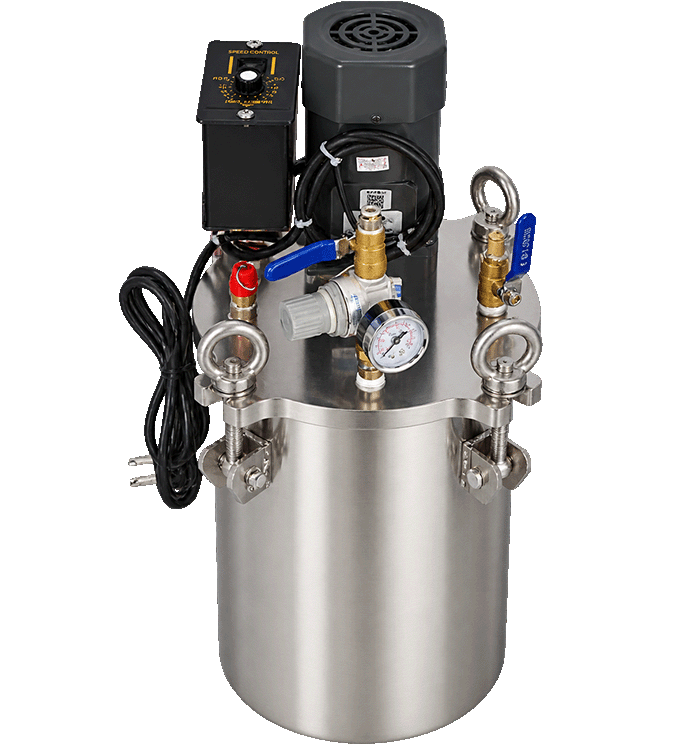
In automated manufacturing, stable adhesive supply is essential for consistent dispensing quality and efficient production. A Pneumatic Glue Pressure Tank is designed to store glue and deliver it to dispensing equipment using controlled compressed air. It provides a practical solution for factories that require continuous adhesive feeding, stable material pressure, and easy integration with automatic dispensing systems.
Compared with manual glue feeding or small material containers, a pneumatic pressure tank can reduce refill frequency and provide a more consistent adhesive supply. It is widely used in electronics, automotive components, LED lighting, batteries, household appliances, packaging, filters, speakers, and other industrial assembly applications.
What Is a Pneumatic Glue Pressure Tank?
A Pneumatic Glue Pressure Tank is a sealed pressure vessel that uses compressed air to push adhesive from the tank to a dispensing valve, glue gun, or automatic dispensing machine.
During operation, compressed air enters the tank through a pressure regulator. The air pressure acts on the adhesive inside the container and forces the material through the fluid outlet. By adjusting the air pressure, operators can control the material supply according to glue viscosity, hose length, dispensing speed, and process requirements.
A typical pneumatic glue pressure tank may include:
- Stainless steel tank body
- Stainless steel tank lid
- Air pressure regulator
- Pressure gauge
- Safety relief valve
- Compressed air inlet
- Glue outlet
- Fluid delivery pipe
- Sealing ring
- Optional pneumatic agitator
This simple structure makes the tank suitable for both manual dispensing stations and automated production lines.
Advantages of Pneumatic Glue Pressure Tanks
One of the main benefits of a Pneumatic Adhesive Pressure Tank is stable material feeding.
When adhesive pressure fluctuates, the dispensing volume may become inconsistent. This can result in uneven glue beads, excessive adhesive usage, insufficient bonding, or production defects.
A properly adjusted pneumatic pressure tank helps maintain a steady adhesive supply, allowing the dispensing valve to operate under more consistent conditions.
Other advantages include:
- Continuous glue supply
- Adjustable working pressure
- Reduced material refill frequency
- Easy integration with dispensing machines
- Simple operation
- Low maintenance requirements
- Suitable for automated production
- Available in multiple capacities
Because compressed air is already widely available in industrial factories, pneumatic glue feeding systems can often be integrated into existing production equipment without complicated additional equipment.
Stainless Steel Pneumatic Glue Pressure Tank
For industrial applications, 304 stainless steel is commonly used to manufacture pneumatic glue pressure tanks.
A Stainless Steel Pneumatic Glue Pressure Tank offers good mechanical strength, corrosion resistance, and durability. The smooth stainless steel surface also makes the tank easier to clean when changing adhesive materials.
Depending on material compatibility, the tank can be used for various fluids such as:
- UV adhesive
- Silicone adhesive
- Epoxy
- Water-based glue
- Industrial assembly adhesive
- Sealant
- Resin
- Coating materials
- Lubricants
Before using a specific adhesive, buyers should confirm its compatibility with the stainless steel tank, seals, hoses, valves, and other components.
Applications of Pneumatic Glue Pressure Tanks
Pneumatic glue pressure tanks can be connected to many types of industrial dispensing equipment.
Common applications include:
Electronics Manufacturing
They can be used for PCB bonding, electronic component assembly, potting, sealing, and encapsulation.
Automotive Parts
A stable adhesive supply is useful for automotive lighting, sensors, electronic modules, interior components, and other bonding applications.
LED Lighting
The tank can continuously supply adhesive for LED bonding, sealing, and thermal material dispensing.
Battery Production
Pneumatic glue tanks can support adhesive feeding for battery assembly, sealing, and related manufacturing processes.
General Industrial Assembly
They are also used in speakers, filters, household appliances, packaging equipment, furniture, and other automatic production lines.
Choosing the Right Tank Capacity
Different production processes require different tank capacities.
Common pneumatic glue pressure tank sizes include:
2L, 4L, 5L, 10L, 15L, 20L, 30L, 40L, and 50L.
A compact 5L Pneumatic Glue Pressure Tank is suitable for smaller dispensing machines, laboratory production, and applications with lower adhesive consumption.
For continuous manufacturing, larger tanks can reduce refill frequency and support longer production cycles.
When selecting tank size, consider glue consumption, production speed, adhesive working life, available machine space, and cleaning frequency.
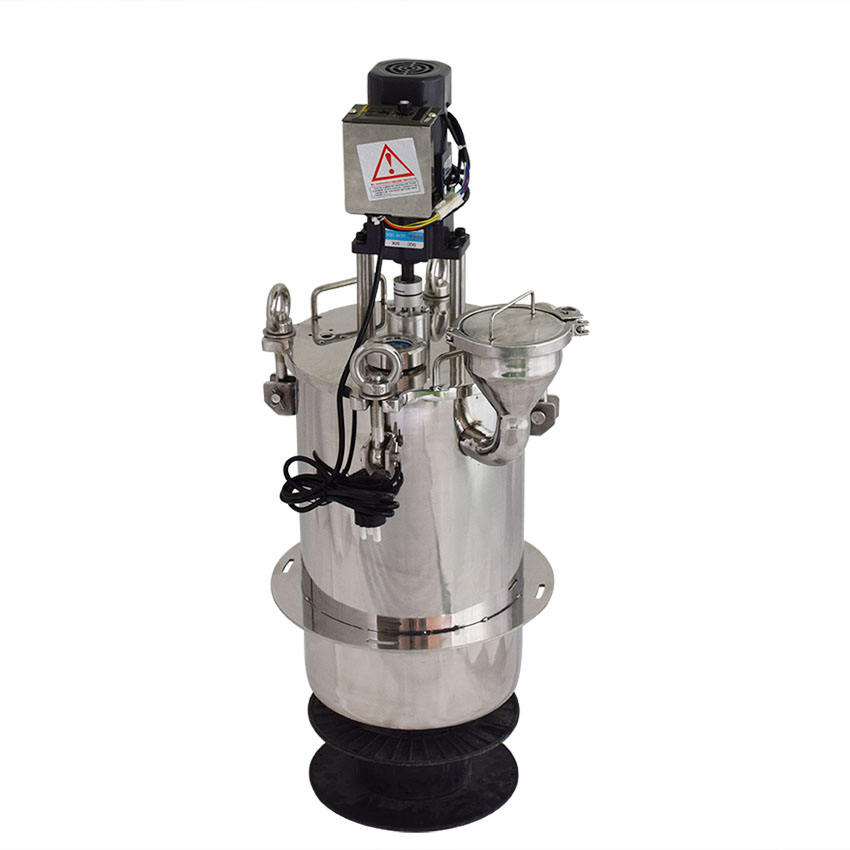
Pneumatic Glue Pressure Tank with Agitator
Some adhesives contain pigments, fillers, particles, or other components that may settle over time.
For these applications, a Pneumatic Glue Pressure Tank with Agitator can provide continuous mixing while supplying the adhesive.
A pneumatic motor uses compressed air to drive the mixing shaft and blade inside the tank. Mixing speed and agitator design can be selected according to the material characteristics.
This configuration is especially useful for adhesives and coatings that require continuous mixing to maintain a uniform composition.
If the glue remains homogeneous during storage, a standard pneumatic pressure tank without an agitator may be a more economical choice.
Custom Pneumatic Glue Pressure Tank Solutions
Industrial dispensing equipment often requires specific tank dimensions and connections. Therefore, customization can be important.
A professional Pneumatic Glue Pressure Tank Manufacturer can customize:
- Tank capacity
- Tank diameter and height
- Fluid outlet size
- Connection threads
- Number of outlets
- Pressure regulator
- Pressure gauge
- Safety valve
- Pneumatic agitator
- Mixing shaft and blade
- Mounting brackets
- Lid configuration
- OEM branding
Providing information about glue type, viscosity, working pressure, required capacity, connection specifications, and installation dimensions helps the manufacturer recommend an appropriate configuration.
Why Choose Yakoo Pneumatic Glue Pressure Tanks?
Yakoo provides stainless steel pressure tanks for adhesive dispensing and industrial fluid supply applications.
Our Pneumatic Glue Pressure Tanks are available in multiple capacities and can be customized to match manual, semi-automatic, and fully automatic dispensing systems.
Depending on the application, Yakoo can provide customized fluid outlets, pressure control components, tank dimensions, pneumatic agitation systems, and OEM configurations.
Whether you require a compact tank for precision adhesive dispensing or a larger tank for continuous production, the configuration can be adapted to your equipment and production process.
Conclusion
A Pneumatic Glue Pressure Tank provides a simple and effective way to achieve stable adhesive feeding in industrial dispensing systems. By using controlled compressed air, the tank can continuously supply glue to dispensing valves and automated equipment while reducing refill frequency and supporting consistent production.
When choosing a pneumatic glue tank, buyers should consider adhesive viscosity, tank capacity, working pressure, material compatibility, outlet specifications, and whether agitation is required.
For manufacturers looking for a Stainless Steel Pneumatic Glue Pressure Tank, Pneumatic Adhesive Tank, or customized glue feeding solution, Yakoo offers multiple capacities and flexible configurations for industrial dispensing applications.