

AB Glue Pressure Tank | Stable Two-Component Adhesive Supply for Precision Dispensing
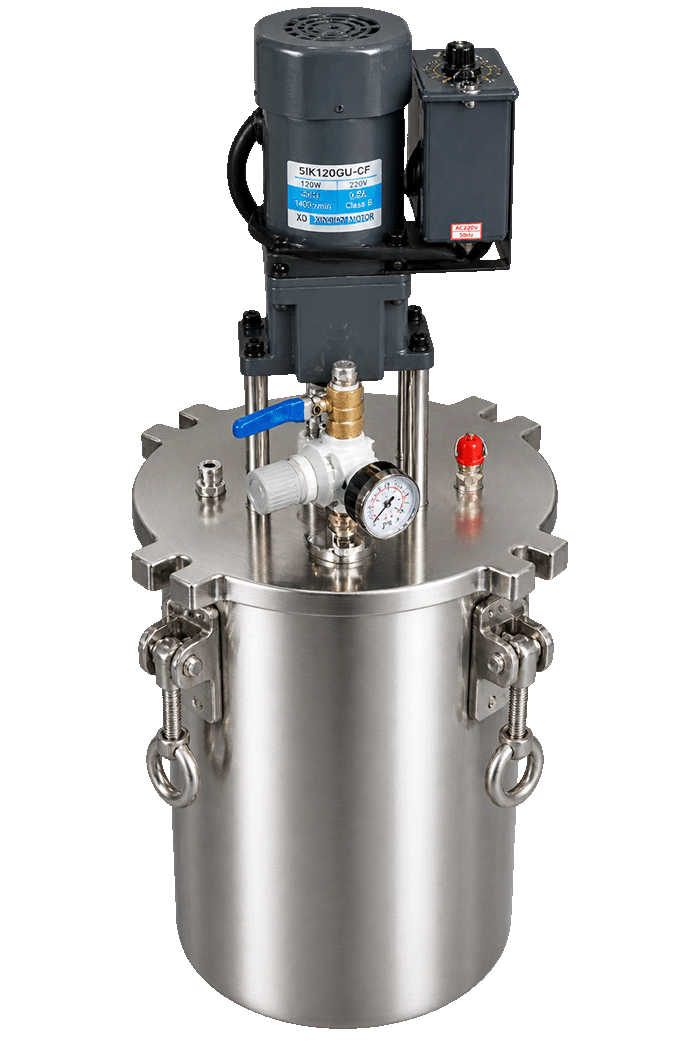
Two-component adhesives are widely used in industrial bonding, sealing, potting, encapsulation, and assembly processes. Unlike single-component glue, AB adhesive consists of two separate materials—typically Part A resin and Part B hardener—that must remain separated before dispensing and be mixed at the correct ratio during application. An AB Glue Pressure Tank provides a reliable way to store and continuously feed these two materials into a two-component dispensing system.
For manufacturers using epoxy, polyurethane, silicone, and other two-part adhesives, a properly configured AB glue pressure tank system can improve material feeding stability, dispensing accuracy, and production efficiency.
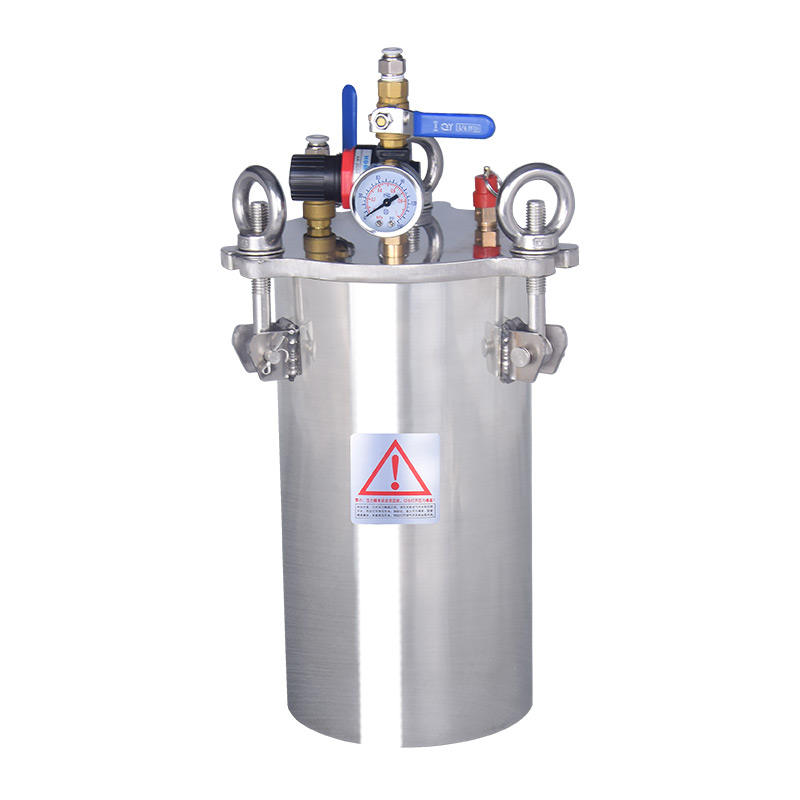
What Is an AB Glue Pressure Tank?
An AB Glue Pressure Tank is normally used as part of a two-component adhesive dispensing system. Instead of mixing Part A and Part B inside one tank, separate pressure tanks are generally used to store and supply the two components independently.
Compressed air applies controlled pressure to each tank, pushing Part A and Part B through separate fluid lines. The materials are then accurately proportioned by the dispensing equipment and combined through a mixer before reaching the workpiece.
A typical AB glue supply system may include:
- Part A pressure tank
- Part B pressure tank
- Pressure regulators
- Pressure gauges
- Safety relief valves
- Air inlet connections
- Separate fluid outlets
- Fluid hoses
- Dispensing valves
- Static or dynamic mixer
- Optional agitation systems
Keeping the two components separate until the dispensing stage helps prevent premature curing inside the pressure tanks and supply lines.
Why Use Pressure Tanks for AB Glue Dispensing?
Two-component adhesive dispensing requires a stable supply from both material channels. If the pressure of either component fluctuates significantly, the mixing ratio and final dispensing performance may be affected.
An AB Adhesive Pressure Tank provides controlled material feeding and can help maintain more consistent conditions throughout the production process.
Key advantages include:
- Continuous supply of Part A and Part B
- Stable material pressure
- Reduced manual refilling
- Better support for accurate mixing ratios
- Easy integration with automatic dispensing machines
- Suitable for continuous production
- Flexible tank capacity selection
For automatic AB glue dispensing systems, stable upstream material feeding is particularly important because the proportioning equipment relies on a consistent supply from both components.
Stainless Steel AB Glue Pressure Tank
Industrial AB glue tanks are commonly manufactured from stainless steel.
A 304 Stainless Steel AB Glue Pressure Tank provides good mechanical strength, corrosion resistance, durability, and ease of cleaning. It is suitable for many industrial adhesive applications when material compatibility is confirmed.
Depending on the adhesive formulation, pressure tanks may be used for:
- Two-component epoxy
- AB epoxy resin
- Polyurethane adhesive
- Two-component silicone
- Potting compounds
- Encapsulation materials
- Industrial sealants
- Thermal conductive compounds
Because Part A and Part B can have different chemical properties, viscosity, and mixing requirements, the tank configuration for each component may also be different.
Applications of AB Glue Pressure Tanks
An AB Glue Dispensing Tank can be integrated into a wide range of industrial production systems.
Typical applications include:
Electronics Potting
Two-component epoxy and polyurethane materials are frequently used to protect electronic components from moisture, vibration, dust, and environmental exposure.
Battery Manufacturing
AB adhesives can be used for bonding, sealing, thermal management, and encapsulation during battery module and pack assembly.
Automotive Components
Automotive lighting, sensors, electronic modules, motors, and structural components may require accurately mixed two-component adhesives.
LED and Lighting Production
AB glue dispensing systems can be used for potting, sealing, and bonding LED components and lighting assemblies.
Industrial Assembly
Other applications include motors, transformers, filters, household appliances, speakers, sensors, and various precision components.
Selecting the Right Tank Capacity
Different production lines require different material capacities.
Common AB glue pressure tank sizes may include:
2L, 4L, 5L, 10L, 15L, 20L, 30L, 40L, and 50L.
Part A and Part B tanks do not necessarily need to have the same capacity. The correct size depends on the adhesive mixing ratio and material consumption.
For example, if an adhesive uses substantially more Part A than Part B, the A-side tank may be larger to reduce unnecessary refilling.
When choosing tank capacity, consider:
- AB mixing ratio
- Daily adhesive consumption
- Material viscosity
- Production speed
- Pot life
- Refill frequency
- Available equipment space
Matching tank capacity to the actual consumption ratio can make the production system more efficient.
AB Glue Pressure Tank with Agitator
Some two-component adhesives contain fillers or particles that may settle during storage.
For these applications, the A-side or B-side tank can be equipped with a pneumatic or electric agitator.
An AB Glue Pressure Tank with Agitator helps maintain material uniformity before dispensing, which can be especially useful for filled epoxies, thermal compounds, and other materials prone to sedimentation.
Common customization options include pneumatic mixing motors, adjustable mixing speed, customized shafts, and different mixing blade designs.
Not every adhesive requires agitation, so the need for mixing should be determined according to the material characteristics.
Custom AB Glue Pressure Tank Solutions
AB dispensing systems vary considerably between manufacturers. Tank configuration should therefore be selected according to the adhesive properties and dispensing equipment.
A professional AB Glue Pressure Tank Manufacturer can customize:
- A-side and B-side tank capacities
- Tank diameter and height
- Fluid outlet sizes
- Connection threads
- Pressure regulators
- Pressure gauges
- Safety valves
- Agitator configurations
- Mixing shafts and blades
- Mounting structures
- Multiple outlet ports
- OEM branding
Before customization, buyers should provide information about the AB glue type, mixing ratio, viscosity of each component, required capacity, operating pressure, connection dimensions, and dispensing equipment.
Why Choose Yakoo AB Glue Pressure Tanks?
Yakoo provides stainless steel pressure tanks for glue dispensing, adhesive feeding, and industrial fluid handling systems.
Our AB Glue Pressure Tanks can be configured according to different two-component adhesive applications. Separate A-side and B-side tanks can be supplied in different capacities and equipped with customized pressure control components, fluid outlets, fittings, and agitation systems.
Yakoo also supports OEM customization for automatic dispensing machine manufacturers and industrial users requiring specific tank dimensions or connections.
Conclusion
An AB Glue Pressure Tank is an important part of a reliable two-component adhesive dispensing system. By storing Part A and Part B separately and providing controlled material feeding, the system supports stable adhesive supply, accurate downstream proportioning, and continuous production.
When selecting an AB glue tank system, buyers should consider the mixing ratio, viscosity of both components, tank capacity, working pressure, fluid connections, and agitation requirements.
Whether you need a Stainless Steel AB Glue Pressure Tank, Two Component Adhesive Pressure Tank, or customized AB glue supply system, Yakoo can provide flexible pressure tank configurations for industrial dispensing applications.