

Dispensing Pressure Tank | A Reliable Solution for Stable and Precise Fluid Dispensing
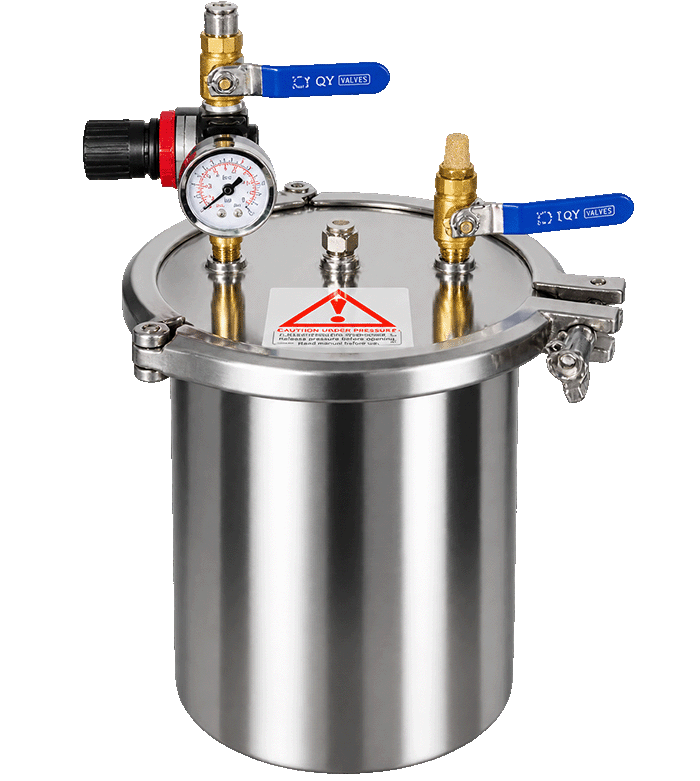
In modern manufacturing, stable fluid delivery is essential for maintaining product quality, improving production efficiency, and reducing material waste. Whether the application involves adhesives, glue, coatings, lubricants, inks, sealants, or other industrial liquids, manufacturers need a reliable way to supply material continuously and consistently to dispensing equipment. A Dispensing Pressure Tank is one of the most practical solutions for this purpose.
Unlike ordinary storage containers, a dispensing pressure tank is designed to store liquid materials under controlled pressure and deliver them smoothly to dispensing valves, spray guns, automated production equipment, or other fluid handling systems. By maintaining stable internal pressure, the tank helps ensure consistent flow, better dispensing accuracy, and fewer interruptions during production.
For factories that require continuous dispensing, precision control, and reliable fluid transfer, choosing the right Dispensing Pressure Tank can significantly improve the overall performance of the production line.
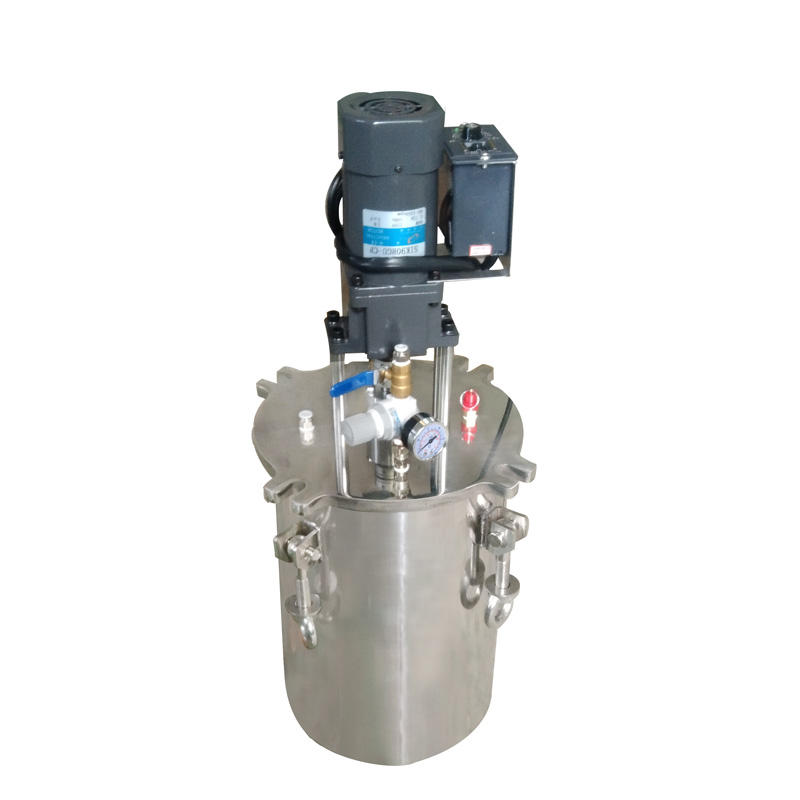
What Is a Dispensing Pressure Tank?
A Dispensing Pressure Tank, also known as a pressure feed tank, pressure pot, glue pressure tank, or fluid dispensing tank, is a sealed container used to hold and deliver liquid materials under pressure.
Compressed air or another suitable pressure source is introduced into the tank. The pressure acts on the liquid inside, forcing the material through an outlet pipe and into the dispensing system. Depending on the application, the liquid can then be supplied to a manual dispensing gun, automatic dispensing valve, spray system, coating machine, or robotic production line.
Compared with directly pumping material from an open bucket or container, a pressure tank provides more stable and controllable fluid delivery. This makes it particularly suitable for industrial applications where consistent flow rate and dispensing quality are important.
A typical dispensing pressure tank may include:
- Stainless steel tank body
- Stainless steel lid
- Pressure regulator
- Pressure gauge
- Safety relief valve
- Air inlet
- Fluid outlet
- Sealing components
- Optional pneumatic agitator
- Optional electric agitator
- Custom ports and fittings
Different tank capacities and configurations can be selected according to the type of liquid, viscosity, consumption rate, production cycle, and required working pressure.
Why Use a Dispensing Pressure Tank?
The primary purpose of a Dispensing Pressure Tank is to provide stable material pressure to downstream dispensing equipment.
During industrial dispensing, unstable fluid supply can cause several problems. For example, changes in material pressure may result in inconsistent glue bead size, uneven coating thickness, irregular spraying, unstable dispensing volume, or frequent production interruptions.
A properly selected pressure tank can help reduce these problems.
1. Stable Material Supply
The pressure inside the tank can be adjusted according to the process requirements. Once properly regulated, the liquid is supplied at a relatively stable pressure.
This consistency is especially important in applications such as:
- Automated adhesive dispensing
- Electronic component potting
- Sealant application
- Spray coating
- Lubricant dispensing
- Ink transfer
- Precision fluid filling
Stable pressure helps the dispensing valve operate more consistently, improving repeatability from one production cycle to another.
2. Improved Dispensing Accuracy
For precision manufacturing, small variations in fluid volume can affect product quality.
A Dispensing Pressure Tank works together with regulators, valves, controllers, and dispensing equipment to create a more stable fluid delivery system. By reducing fluctuations in the material supply, the system can achieve better control over dispensing quantity and flow rate.
This is particularly valuable for electronics, automotive components, medical device manufacturing, LED assembly, battery production, and other industries requiring controlled adhesive or liquid application.
3. Reduced Production Interruptions
Using small bottles or open containers may require frequent refilling. Every refill can interrupt production and increase labor requirements.
Pressure tanks are available in multiple capacities, such as:
- 2L
- 4L
- 5L
- 10L
- 15L
- 20L
- 30L
- 40L
- 50L
Larger tanks can support longer production cycles before refilling is required. This can help reduce downtime, especially in automated manufacturing environments.
The ideal tank capacity depends on material consumption, production speed, available installation space, and the desired refill interval.
Why Stainless Steel Is Commonly Used
Industrial dispensing equipment must often handle different chemicals, adhesives, solvents, coatings, and other liquid materials. For this reason, material selection is an important factor when choosing a pressure tank.
304 stainless steel is widely used for dispensing pressure tanks because it offers a useful combination of mechanical strength, durability, corrosion resistance, and ease of cleaning.
A stainless steel pressure tank can provide several practical advantages.
Good Corrosion Resistance
304 stainless steel performs well in many general industrial environments and is suitable for a wide range of liquid materials.
For applications involving more aggressive chemicals, customers should evaluate material compatibility carefully. Depending on the process requirements, alternative stainless steel grades or special treatments may be required.
Easy to Clean
Cleanliness is important when changing materials or maintaining the dispensing system.
A smooth stainless steel internal surface can make cleaning easier and reduce material residue. This is particularly important when the tank is used for adhesives, inks, coatings, resins, or materials that may cure or dry after extended exposure.
Long Service Life
A properly manufactured stainless steel tank offers good structural strength and durability.
For industrial users operating dispensing equipment every day, long service life helps reduce equipment replacement frequency and maintenance costs.
Applications of Dispensing Pressure Tanks
The versatility of a Dispensing Pressure Tank allows it to be used in many manufacturing industries.
Adhesive and Glue Dispensing
One of the most common applications is supplying industrial adhesives.
The tank can be used with various dispensing systems for:
- UV glue
- Epoxy adhesive
- Silicone
- Anaerobic adhesive
- Contact adhesive
- Water-based glue
- Industrial sealant
- Assembly adhesive
A Glue Dispensing Pressure Tank provides continuous material supply to the dispensing valve, making it suitable for both manual and automated production.
Electronics Manufacturing
Electronic products often require precise dispensing of small quantities of liquid materials.
Applications may include:
- PCB coating
- Component bonding
- Potting
- Encapsulation
- Thermal interface material dispensing
- LED assembly
- Sensor sealing
Stable fluid pressure can improve dispensing consistency and reduce defects caused by irregular material flow.
Automotive Manufacturing
Automotive production requires adhesives, lubricants, coatings, sealants, and other fluids at many stages.
Pressure tanks can be integrated into production equipment for applications such as:
- Automotive lighting assembly
- Interior component bonding
- Electronic module sealing
- Gasket dispensing
- Lubrication
- Component coating
Industrial automation systems often combine pressure tanks with pneumatic or electric dispensing valves to achieve repeatable production.
Spray Coating
A dispensing pressure tank can also be used as a material supply container for certain spray applications.
Pressure allows coating material to be continuously transferred to the spray gun. Compared with small gravity cups, a larger pressure tank may be more suitable for continuous or higher-volume spraying operations.
Applications may include:
- Industrial coatings
- Paint
- Release agents
- Protective coatings
- Surface treatment liquids
Lubricant and Oil Dispensing
Controlled oil and lubricant delivery is required in many assembly and maintenance processes.
A pressure tank can provide a continuous supply to dispensing valves or lubrication equipment. The system can be configured according to the viscosity and required flow rate of the material.
Choosing the Right Tank Capacity
Tank size is one of the first specifications buyers should consider.
A small 5L Dispensing Pressure Tank may be ideal for laboratory use, small production lines, low-consumption dispensing, or applications where materials need to be changed frequently.
Medium capacities such as 10L, 15L, or 20L are commonly used for general industrial dispensing.
Larger tanks such as 30L, 40L, or 50L may be selected for higher material consumption and longer continuous production cycles.
When choosing the capacity, buyers should consider:
- Daily material consumption
- Material shelf life
- Required refill frequency
- Available installation space
- Production speed
- Weight when fully loaded
- Ease of cleaning
- Material change frequency
Selecting an excessively large tank is not always better. Materials with limited working life or curing characteristics may be more suitable for smaller tanks that can be cleaned and refilled regularly.
Working Pressure Matters
Another critical factor is maximum working pressure.
Many industrial Dispensing Pressure Tanks are designed for working pressures around 0.5MPa, although actual specifications vary by model and manufacturer.
Higher pressure does not automatically mean better dispensing performance.
The correct operating pressure depends on:
- Fluid viscosity
- Hose diameter
- Hose length
- Dispensing valve type
- Required flow rate
- Tank outlet configuration
- Production speed
- Process accuracy requirements
Low-viscosity materials usually require less pressure, while more viscous materials may require higher pressure or additional material handling solutions.
Users should always operate the tank within the manufacturer’s rated working pressure and follow the relevant safety instructions.
When Is an Agitator Required?
Some liquid materials may separate, settle, or change consistency while stored inside the tank.
In these situations, a Dispensing Pressure Tank with Agitator may be recommended.
An agitator continuously or periodically mixes the material, helping maintain a more uniform composition.
Typical applications include:
- Coatings containing pigments
- Suspensions
- Certain adhesives
- Paint
- Materials containing fillers
- Liquids prone to sedimentation
Common mixing options include pneumatic agitators and electric agitators.
A pneumatic agitator is widely used in industrial environments because it can be operated using compressed air. An electric agitator may provide additional speed control options depending on the system design.
Not every material requires mixing. For stable liquids, a standard pressure tank without an agitator may provide a simpler and more economical solution.
Important Features to Consider
When comparing Dispensing Pressure Tank manufacturers, purchasing decisions should not be based on tank capacity alone.
Several design details can affect performance and usability.
Pressure Gauge
A clear pressure gauge allows operators to monitor tank pressure during production.
Pressure Regulator
A regulator helps adjust incoming air pressure and maintain the required operating condition.
Safety Relief Valve
A properly selected safety relief device is important for pressure equipment. It helps prevent operation beyond the intended pressure range.
Reliable Sealing
Good sealing performance is essential for maintaining stable internal pressure and reducing leakage.
Fluid Outlet Design
The position, diameter, and connection type of the fluid outlet should match the customer’s dispensing equipment.
Easy-Open Lid
A well-designed lid can simplify material filling and cleaning.
Custom Connections
Different factories use different hoses, valves, connectors, and dispensing systems. Custom fittings can make equipment integration easier.
Custom Dispensing Pressure Tank Solutions
Industrial fluid dispensing systems vary significantly between factories. Standard products may not always meet every requirement.
For this reason, an experienced Dispensing Pressure Tank manufacturer should be able to provide customization.
Typical customization options may include:
- Tank capacity
- Stainless steel material
- Tank dimensions
- Inlet and outlet size
- Connection thread
- Number of fluid outlets
- Pressure regulator configuration
- Pressure gauge range
- Agitator installation
- Agitator speed
- Custom brackets
- Special lid design
- Hose connection
- Surface treatment
- OEM branding
Before ordering a customized tank, customers should provide as much process information as possible.
Useful information includes:
- What material will be placed inside the tank?
- What is the material viscosity?
- What tank capacity is required?
- What working pressure is needed?
- Is agitation required?
- What type of outlet connection is used?
- What dispensing equipment will connect to the tank?
- What is the required flow rate?
- Is the process manual or automatic?
- Are there special dimensional requirements?
Providing these details can help the supplier recommend a more appropriate pressure tank configuration.
How a Dispensing Pressure Tank Improves Production Efficiency
The value of a pressure tank goes beyond simply storing liquid.
A properly configured fluid supply system can help improve overall manufacturing efficiency in several ways.
First, a larger material reservoir reduces the frequency of refilling.
Second, stable pressure helps the dispensing system maintain consistent output, reducing adjustments during production.
Third, closed tank construction can help protect materials from unnecessary exposure to dust and contaminants.
Fourth, integration with automatic dispensing equipment reduces manual handling.
Finally, reusable stainless steel tanks can provide a practical long-term material supply solution for industrial applications.
For manufacturers trying to improve automation, a stable fluid supply system is often an important part of the overall equipment design.
Maintenance and Cleaning
Regular maintenance helps ensure safe and reliable operation.
After production, the tank should be cleaned according to the characteristics of the material being used. Adhesives, coatings, and other liquids should not be allowed to harden inside the tank, outlet pipe, or fittings.
Operators should regularly inspect:
- Tank sealing ring
- Pressure regulator
- Pressure gauge
- Safety valve
- Air connections
- Fluid outlet
- Hose connections
- Lid locking mechanism
- Agitator components
Before opening the tank, internal pressure must be fully released.
Cleaning agents should also be selected according to the material being processed and the compatibility of seals, hoses, and stainless steel components.
Good maintenance practices help extend equipment service life and keep the dispensing system operating consistently.
Why Choose a Professional Dispensing Pressure Tank Manufacturer?
For international buyers, choosing the right supplier is as important as choosing the right product.
A professional manufacturer should understand both pressure tank manufacturing and industrial dispensing applications.
The supplier should be able to provide clear technical information regarding:
- Tank material
- Capacity
- Working pressure
- Tank dimensions
- Wall thickness
- Lid thickness
- Connection specifications
- Accessories
- Testing
- Packaging
- Customization
For OEM projects, the ability to adjust dimensions, fittings, agitator configurations, and branding can also be important.
A dependable supplier should help buyers select a suitable tank based on the application instead of simply recommending the largest or most expensive model.
Yakoo Dispensing Pressure Tank Solutions
Yakoo provides stainless steel pressure tank solutions for industrial fluid dispensing applications.
Our pressure tanks can be used with adhesives, glue, coatings, lubricants, inks, sealants, and other suitable liquid materials. Different capacities are available to support laboratory applications, manual dispensing stations, semi-automatic equipment, and fully automated production lines.
Depending on the application, tanks can be configured with stainless steel barrel bodies, stainless steel lids, pressure regulators, pressure gauges, safety devices, fluid outlets, and optional mixing systems.
Customization is also available for customers with specific requirements regarding:
- Capacity
- Dimensions
- Connections
- Ports
- Working pressure
- Agitator
- Accessories
- OEM branding
Before production, customers can provide their fluid characteristics, equipment connection requirements, and working conditions so that an appropriate solution can be recommended.
Frequently Asked Questions About Dispensing Pressure Tanks
What materials can a dispensing pressure tank handle?
It depends on the material compatibility of the tank body, seals, hoses, valves, and fittings. Stainless steel tanks are commonly used for adhesives, coatings, oils, inks, lubricants, and many industrial liquids.
The exact material should be confirmed with the supplier before purchasing.
Can a dispensing pressure tank be used for high-viscosity glue?
Yes, in many cases, but the required pressure, hose diameter, outlet size, and dispensing valve need to be matched to the viscosity.
Very high-viscosity materials may require additional feeding equipment or specialized pressure systems.
Is 304 stainless steel suitable for a pressure tank?
304 stainless steel is commonly used for industrial pressure tanks because of its durability and corrosion resistance. However, chemical compatibility should always be checked for aggressive or special fluids.
What size pressure tank should I choose?
The ideal size depends on production consumption and refill frequency. Small production lines may use 2L to 5L tanks, while higher-volume operations may require 10L, 20L, 30L, 40L, or larger capacities.
Do I need a pressure tank with an agitator?
If the material settles, separates, or needs continuous mixing, an agitator may be beneficial. Stable homogeneous liquids normally do not require agitation.
Can the tank be customized?
Yes. A professional manufacturer can usually customize capacity, dimensions, ports, fittings, agitator configuration, accessories, and other specifications.
Conclusion
A Dispensing Pressure Tank is a simple but important component in many industrial fluid handling and dispensing systems.
By providing stable material pressure, it can improve fluid delivery consistency, reduce production interruptions, support dispensing accuracy, and make automated production easier to manage.
Whether the application involves glue, adhesives, coatings, lubricants, inks, sealants, or other industrial fluids, the correct tank should be selected according to material characteristics, required capacity, working pressure, production speed, and dispensing equipment.
For buyers searching for a Stainless Steel Dispensing Pressure Tank, Glue Pressure Tank, Adhesive Pressure Tank, or customized industrial fluid supply solution, working with an experienced manufacturer can help ensure that the tank matches the actual production process.
Yakoo offers different pressure tank capacities and customized configurations for industrial dispensing applications. If you are planning a new dispensing line or upgrading an existing fluid supply system, providing information about your material, viscosity, required capacity, working pressure, and equipment connection will make it easier to select the appropriate Dispensing Pressure Tank for your application.