

Stainless Steel Glue Dispensing Pressure Tank | A Practical Guide for Industrial Buyers
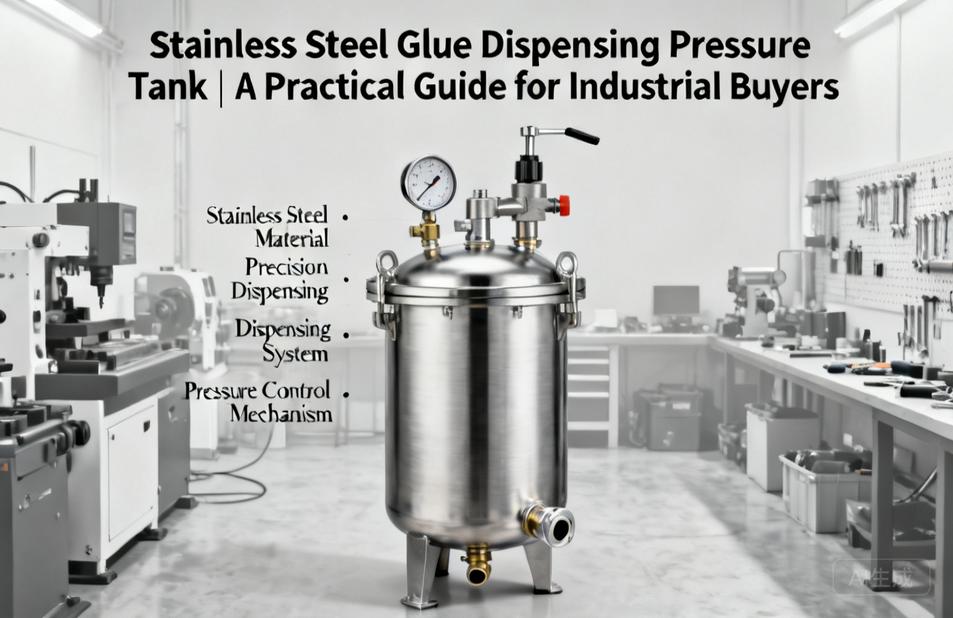
A stainless steel glue dispensing pressure tank is a key component in many industrial adhesive application systems, designed to store and deliver liquid adhesives, sealants, and similar materials under controlled pneumatic pressure. For procurement teams, plant engineers, and maintenance managers looking for reliable equipment, this type of tank offers a robust solution for transferring or dispensing medium- to high-viscosity fluids in a repeatable, efficient manner. Whether the task is bonding, sealing, potting, or gasketing, a stainless steel pressure tank helps ensure consistent flow and reduced downtime compared to manual application methods.
Product Overview
Essentially, a glue dispensing pressure tank is a sealed vessel that uses compressed air to push adhesive from the tank through a hose to a dispensing gun or valve. The operator regulates air pressure to control the flow rate, making the system adaptable to different adhesive viscosities and application speeds. Stainless steel construction provides excellent resistance to corrosion, oxidation, and chemical attack, making this type of tank suitable for water-based adhesives, solvent-based products, and even some reactive resins. The tank typically includes a lid, air inlet, fluid outlet, pressure gauge, and safety valve. Some models are portable, while others are designed for fixed installations in a production line.
Key Features of Stainless Steel Pressure Tanks
Durable Material
Stainless steel, often 304 or 316 grade, is the primary material used in these tanks. Grade 304 is common for general industrial use, while 316 offers even higher corrosion resistance for harsher chemicals or frequent washdown environments. The material’s strength allows the tank to handle industrial pressures safely without deformation, and its smooth surface is easy to clean, which is especially important when changing adhesive formulations.
Pressure Control
Most tanks come with a regulator and gauge, allowing the operator to set the exact air pressure needed for a specific adhesive. Precise control reduces waste and improves the uniformity of the bead or dot applied. This is particularly important for automated systems, where consistent dispensing is critical for product quality.
Portability and Mounting Options
Manufacturers offer both stationary and mobile versions. Caster-mounted tanks can be moved between workstations, which is useful in flexible production environments. Wall-mounted or stand-mounted models save floor space and keep the tank stable during operation. Choosing the right configuration depends on the layout of your facility and the workflow you need to support.
Materials and Construction
Beyond the grade of stainless steel, the construction quality of the tank matters. Look for tanks with a smooth interior finish to minimize material buildup. Welds should be continuous and free of defects, as sharp edges or cracks can trap adhesive and create contamination issues. The lid seal is another important detail; a good gasket ensures airtight closure and prevents leaks. Also, check the tank’s pressure rating and safety valve setting to ensure they meet your application’s requirements and local safety norms. While we cannot provide specific figures, a reputable supplier will clearly state these specifications and can offer documentation for verification.
Applications in Industrial Settings
Stainless steel glue dispensing pressure tanks are used across a wide range of industries. In woodworking and furniture manufacturing, they help apply edgebanding adhesive or assembly glue. In the automotive sector, technicians use them for applying sealants and sound-deadening materials. Electronics manufacturers rely on them for potting compounds and conformal coatings. General assembly operations use these tanks for thread locking, gasketing, and structural bonding. Because the tank can be set to deliver a steady output, it is also commonly integrated into semi-automated and automated dispensing systems, where precision and repeatability are essential.
How to Choose the Right Pressure Tank
Determine the Fluid Characteristics
Start by assessing the viscosity, chemical compatibility, and presence of fillers or abrasives in your adhesive. High-viscosity materials may require a larger outlet or a tank with a follower plate to help push the material down. Corrosive fluids demand a higher-grade stainless steel and compatible seals. Understanding these factors helps you avoid tank and hose degradation that leads to downtime and increased maintenance costs.
Evaluate Volume and Cycle Time
Tank capacity should match your production volume and the frequency of refills. A tank that is too small requires constant stopping to reload, reducing efficiency. A tank that is too large may allow adhesive to cure or degrade before use, especially for fast-setting products. For continuous production, consider a tank size that allows at least a full shift of operation, but always consult the adhesive manufacturer’s recommendations for pot life and storage conditions.
Consider the Dispensing Equipment
The tank is part of a larger system that includes hoses, guns, valves, and possibly a pump. Ensure that the tank’s outlet connection is compatible with your existing equipment, or plan to purchase the appropriate adapters. Also, think about whether you need additional features such as a stirrer for settling-prone materials, a heating jacket for viscosity control, or a level sensor to alert operators when refilling is needed. These options can enhance usability but also add cost, so weigh the benefits against your actual needs.
OEM and Custom Options
Many manufacturers, suppliers, and factories offer customization services for stainless steel glue dispensing pressure tanks. You can request a specific capacity, different port sizes, special lid configurations, or custom mounting brackets. OEM production is common, where the tank is branded for your company or integrated into your own equipment. When working with a custom order, clarity is key. Provide detailed drawings or specifications, and discuss tolerance requirements and testing procedures upfront. A reliable partner will guide you through material options, surface finish, and assembly details to ensure the final product meets your operational requirements.
Buying Considerations
Quality Assurance and Support
When you source a pressure tank, you are investing in a component that affects your line’s uptime and product quality. Ask suppliers about their quality control processes, inspection documentation, and after-sales support. Does the manufacturer offer spare parts, repair services, or technical consultation? A supplier that stands behind its product with responsive service is more valuable in the long run than one that only offers a lower price.
Compliance and Safety
In many countries, pressure vessels must meet certain safety standards. Although we cannot list specific certifications without verifying product details, you should ask the supplier for relevant compliance documents and test reports. Verify that the safety valve is correctly set and that the tank can handle the maximum air pressure your compressor can deliver. Also, ensure that the operator has proper training to use the tank safely, including understanding the limitations of the system.
Total Cost of Ownership
Look beyond the initial purchase price. A cheaper tank that corrodes quickly or fails prematurely can cost more in downtime, replacement, and wasted adhesive. Consider factors like maintenance frequency, ease of cleaning, and availability of spare parts. A stainless steel tank is generally more durable than a mild steel or plastic unit, but the exact cost-benefit depends on your application environment and usage intensity.
Supplier Selection
Choosing a trusted manufacturer or supplier is as important as choosing the tank itself. Start by evaluating potential partners based on their experience in the dispensing industry, their manufacturing capabilities, and their communication responsiveness. Ask for references or examples of similar projects, but do not rely solely on claims. A reputable supplier should be transparent about their production process and willing to answer technical questions in detail. If possible, visit the factory or request a sample to inspect the build quality firsthand. For international buyers, consider shipping costs, lead times, and import duties. A local distributor might offer quicker support, while an overseas factory could provide more competitive pricing for larger orders. Ultimately, you want a partner who can provide consistent quality, reliable delivery, and practical advice when you need it.
Frequently Asked Questions
Can I use a stainless steel glue pressure tank with two-component adhesives?
Two-component adhesives require mixing before or during application, which a standard pressure tank alone cannot do. You would need a meter-mix system that pumps both components in the correct ratio and mixes them in the dispensing gun. A pressure tank can still be used as a material reservoir for each component, but additional equipment is required for proper dosing and mixing.
How do I clean the tank after use?
The cleaning method depends on the adhesive type. For water-based adhesives, warm water with mild detergent is often sufficient. Solvent-based adhesives may require appropriate solvents. Always follow the adhesive manufacturer’s safety data sheet. For regular cleaning, you can remove the lid, empty the tank, and wipe down the interior. Some tanks have quick-release clamps that simplify disassembly. Check the design for easy access to all internal surfaces.
What air pressure do I need to run the tank?
The required air pressure varies based on adhesive viscosity and flow rate. Most tanks operate within a standard industrial air pressure range, but you should check the tank’s rated maximum pressure. You can adjust the regulator to achieve the desired flow, but do not exceed the tank’s maximum rated pressure. Your compressor should provide enough CFM to maintain the set pressure during continuous dispensing.
Can I get a custom size or with an agitator?
Yes, many factories offer custom sizes and options such as an agitator or stirrer inside the tank. Agitation helps keep fillers suspended and prevent settling. You can specify the capacity, mounting style, and additional accessories according to your application. When ordering, provide full details about the adhesive and the production process so the manufacturer can recommend the most suitable design.
Conclusion
Selecting the right stainless steel glue dispensing pressure tank involves understanding your adhesive, your production process, and the equipment’s construction. Prioritize material quality, pressure control, and ease of maintenance. Consider whether you need a standard model or a custom solution with options like agitation or specific port sizes. Take the time to evaluate suppliers on their technical expertise and support capabilities. A well-chosen tank will improve consistency, reduce waste, and contribute to a smoother manufacturing operation. For specific specifications, application advice, or to discuss OEM and custom orders, contact a reputable manufacturer or supplier directly. They can assist you in finding a solution that fits your exact requirements, from tank capacity to integrated features, ensuring your dispensing system performs reliably over the long term.