

Glue Pressure Tank | A Practical Guide for Industrial Adhesive Dispensing Systems
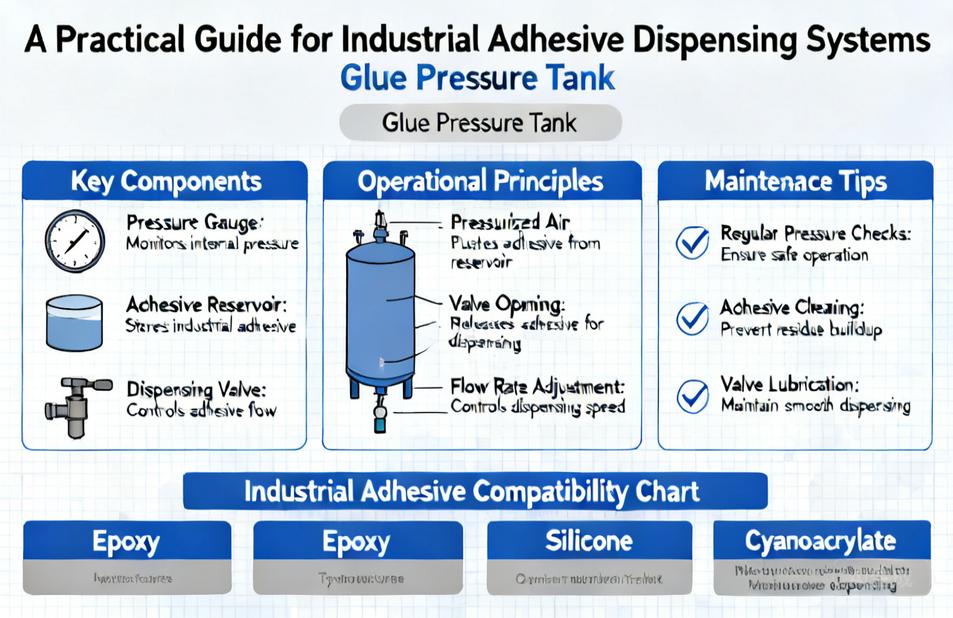
A glue pressure tank is a sealed vessel designed to store and deliver adhesive, sealant, or similar viscous materials under controlled air pressure. It is commonly used in industrial dispensing systems where consistent, hands-free adhesive flow is required, such as in packaging, woodworking, automotive assembly, and electronics manufacturing. By using compressed air to push the adhesive from the tank to an applicator gun or nozzle, the glue pressure tank helps maintain a steady output and improves production efficiency. For many factories and assembly lines, this equipment serves as a central component in an automated or semi-automated gluing process.
How Does a Glue Pressure Tank Work?
A glue pressure tank operates on a simple principle: compressed air enters the tank through a regulator, creating pressure on the surface of the adhesive. That pressure forces the material up through a dip tube or outlet pipe and out to the dispensing tool. The operator controls the air pressure to adjust the flow rate, which is especially useful for different adhesive viscosities. Most tanks are equipped with a pressure gauge, an air inlet valve, and a quick-release lid for easy refilling. Some models also include an agitator or stirrer to keep the adhesive well mixed, especially when handling materials that tend to settle or thicken over time.
Key Components
- Pressure vessel body: usually made of steel or stainless steel for durability and corrosion resistance.
- Pressure regulator and gauge: allow operators to adjust and monitor the air pressure.
- Lid and clamp: provide a secure seal and allow quick opening for cleaning or refilling.
- Discharge outlet and hose connection: carry the adhesive to the dispensing gun or nozzle.
- Optional agitator: helps maintain consistent viscosity for certain adhesives.
Key Features to Look for in a Glue Pressure Tank
When selecting a glue pressure tank, the first thing to check is the material of construction. Carbon steel tanks are more affordable but may require a protective coating to resist corrosion, especially when used with water-based adhesives. Stainless steel tanks offer better chemical resistance and are easier to clean, making them a preferred choice for food-grade or solvent-based adhesives. The tank capacity also matters, as it should match your production volume and the frequency of adhesive changes. Smaller tanks, such as 5-liter or 10-liter units, are suitable for manual workstations, while larger tanks up to 60 liters or more are used in high-volume production lines.
Another important feature is the lid design. A quick-release clamp lid reduces downtime when refilling or cleaning, which is particularly valuable in busy production environments. The pressure range should be compatible with your existing air compressor and the requirements of the adhesive being used. Always verify the maximum working pressure and make sure the tank includes a safety relief valve to prevent over-pressurization.
Materials and Construction
The construction quality of a glue pressure tank directly affects its safety and service life. Welds are a critical point; look for smooth, fully penetrated welds that meet standard pressure vessel guidelines. Interior surface finish matters too, because rough surfaces can trap old adhesive and make cleaning difficult. A polished interior is easier to wipe down and helps prevent contamination when switching between different adhesives. The lid gasket must be compatible with the type of adhesive used, as some solvents can degrade standard rubber seals.
Stainless steel tanks, often made from 304 or 316 grade, provide excellent resistance to a wide range of chemicals, including many reactive adhesives. For hot melt adhesives, some tanks are designed with a heating jacket to keep the adhesive at the correct temperature. If your application involves hot melt glue, you should confirm that the tank is equipped with a heating element and temperature control system, as this is not a standard feature on all models.
Applications of a Glue Pressure Tank
Glue pressure tanks are used in many industries because they allow a controlled, consistent flow of adhesive to a variety of dispensing tools. In the packaging industry, they supply glue to case sealers and carton closing machines. In woodworking, they feed glue to edge banders and laminating lines. Automotive manufacturers use them for applying sound deadening mats, sealants, and structural adhesives. In electronics assembly, a glue pressure tank can provide precise beads of adhesive for component mounting or conformal coating. Other applications include furniture production, mattress manufacturing, filter assembly, and general product assembly where manual glue application is too slow or inconsistent.
Common Dispensing Tools Used with a Glue Pressure Tank
- Manual or pneumatic dispensing guns
- Automatic spray nozzles
- Bead applicators
- Robotic dispensing systems
How to Choose the Right Glue Pressure Tank
Choosing the correct glue pressure tank involves more than just picking a capacity. First, you need to know the maximum viscosity of the adhesive you plan to use. Higher viscosity materials require higher operating pressure or a larger bore outlet, so make sure the tank and its accessories can handle the required flow rate. Second, consider the working environment. If the tank will be moved between workstations, a portable model with casters might be useful. Third, check the compatibility of the wetted parts with your adhesive. For example, polyurethane adhesives can react with moisture, so you may need a tank with a desiccant dryer or a nitrogen purge option. Always ask the supplier for a material compatibility chart to avoid costly mistakes.
Another key point is the type of pressure control. A simple air regulator is sufficient for many jobs, but some applications need a more precise electronic pressure control to maintain an exact output. If your process involves start-stop cycles, look for a tank with a reliable check valve and a quick-release coupling to minimize pressure loss. Additionally, do not forget to account for the hose length and the distance between the tank and the dispensing point, as long hoses can cause pressure drops and affect adhesive flow.
Customization and OEM Options
Many manufacturers offer glue pressure tanks as standard models, but you can often request modifications to better suit your specific process. Common customization options include different capacities, additional outlets for multiple dispensing lines, special lid materials, level sensors for automatic refill, and stirrers for heavy fillers. If you are an equipment builder or a distributor, you may want an OEM tank with your own brand name, specific colors, or special fittings. In the B2B market, working directly with a factory that offers OEM and custom services can help you get a tank that matches your exact requirements without paying for unnecessary features. When discussing custom orders, be clear about your application, adhesive type, working pressure, and any relevant safety standards that apply in your region.
Buying Considerations and Supplier Selection
Before placing an order for a glue pressure tank, verify the supplier’s manufacturing capabilities and quality control procedures. A reputable supplier should have experience in building pressure vessels and should provide clear technical documentation, including dimension drawings and material certificates. Ask about their testing procedures; every tank should be pressure tested before shipment to ensure there are no leaks. Check their after-sales support, especially in terms of spare parts availability and warranty terms. If you are sourcing from overseas, consider shipping costs and lead time, and make sure the packaging is robust enough to prevent damage during transit. It is also wise to request a sample or a small trial order before committing to a large volume, particularly if you are considering a custom design.
For long-term reliability, choose a manufacturer that follows recognized industry standards for pressure vessel design. While this article does not reference specific certifications, a reliable supplier will be transparent about the tests and standards they follow. Do not hesitate to ask about the maximum allowable working pressure, the burst pressure rating, and whether the tank has been designed with a sufficient safety margin for the intended application.
Frequently Asked Questions
How often should I clean a glue pressure tank?
Cleaning frequency depends on the type of adhesive and the production schedule. If you change adhesives frequently or use materials that cure quickly, you should clean the tank at the end of each shift. For stable adhesives used continuously, cleaning every few days or weekly may be enough. Always follow the cleaning recommendations from the adhesive manufacturer, and use solvents that are safe for both the adhesive and the tank material.
Can I use a glue pressure tank with hot melt adhesive?
Yes, but only if the tank is specifically designed for hot melt applications. Hot melt adhesive tanks are equipped with a heating jacket, temperature controller, and appropriate insulation to keep the adhesive molten. Using a standard cold glue pressure tank with hot melt adhesive will damage the tank and the adhesive. Confirm with the manufacturer that the tank supports the required temperature range before purchasing.
What is the difference between a pressure tank and a pressure pot?
In most industrial settings, the terms are used interchangeably. Both refer to a sealed vessel that uses compressed air to dispense adhesive or similar materials. Some industries use ‘pressure pot’ specifically for paint or coating applications. For adhesives, ‘glue pressure tank’ is more common. The key is to ensure the tank is compatible with the material you intend to use, regardless of what it is called.
How do I know what capacity I need?
Estimate your average adhesive consumption per hour or per shift, and choose a tank that can hold at least that amount without causing frequent refills. A larger tank reduces downtime but also holds more material, which may increase waste if the adhesive has a limited pot life. For batch production, a medium capacity tank is often a good balance. You can also ask the supplier for advice based on your typical dispensing gun flow rate and usage pattern.
Conclusion
A glue pressure tank is a practical investment for any production line that relies on consistent adhesive application. The right tank improves process control, reduces material waste, and helps maintain a cleaner work environment. When selecting a tank, focus on material compatibility, capacity, pressure rating, and ease of cleaning. Do not overlook the importance of working with a reliable manufacturer or supplier who can support you with proper technical advice and after-sales service. If you are unsure about which model fits your application, contact a reputable supplier and discuss your specific requirements. They can help you choose a standard unit or develop a custom solution that meet your needs.
For more details about glue pressure tanks, including available capacities, custom OEM options, and pricing, reach out to our team with your application details. We are happy to provide a recommendation based on your process requirements.