

Pressure Tank Manufacturer for Dispensing Equipment | How to Select the Right Tank for Your System
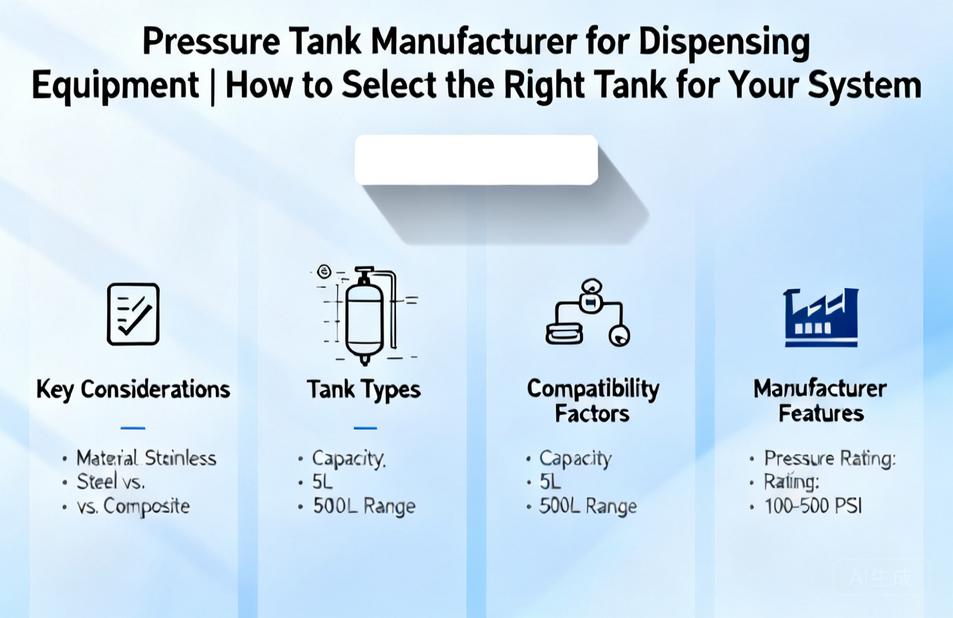
As a pressure tank manufacturer for dispensing equipment, we understand that the tank is not just a simple vessel—it is a critical component that directly affects the stability, accuracy, and efficiency of your dispensing process. A pressure tank for dispensing equipment is a sealed container that holds fluids, adhesives, sealants, or other media under regulated pressure, delivering a consistent flow to dispensing valves, nozzles, or guns. Whether you are in electronics assembly, automotive bonding, packaging, or general industrial fluid handling, choosing the right tank and the right manufacturing partner can make a significant difference in your operation.
What Does a Pressure Tank Do in a Dispensing System?
In a typical dispensing setup, the pressure tank serves as the material reservoir. Compressed air or an inert gas is introduced into the tank, pressurizing the contents. This pressure pushes the fluid through a feed line to the dispensing point. The tank must maintain stable pressure to ensure repeatable shot sizes, consistent beads, or uniform sprays. If the tank loses pressure or fluctuates, the dispensed volume changes, leading to defects, waste, or production downtime. Therefore, the tank’s design, construction, and pressure regulation features are vital for process control.
Key Features Buyers Look for in a Dispensing Pressure Tank
When evaluating pressure tanks for dispensing applications, procurement teams and process engineers typically focus on several functional characteristics. Pressure stability is paramount; tanks should be equipped with reliable regulators, gauges, and safety valves. Material compatibility is another critical factor—the wetted parts must resist corrosion or degradation from the fluid being dispensed. Common materials include stainless steel, carbon steel with internal coatings, and specialty alloys. Sealing integrity ensures no leaks and maintains consistent pressure. Ease of cleaning and refilling reduces changeover time, especially in multi-material operations. Finally, size and portability matter; tanks range from small bench-top units to large floor-standing models, and some are designed for quick tank swaps.
Materials and Construction: What to Specify
The choice of material depends on the fluid, the environment, and the required cleanliness level. Stainless steel, particularly grades like 304 and 316, is common for its corrosion resistance and durability in industrial settings. For aggressive chemicals or high-purity applications, higher-grade alloys or PTFE-lined tanks may be necessary. Carbon steel tanks are often used for less corrosive media where cost is a primary concern, but they typically require internal coatings or linings. The exterior finish also matters: powder coating or painted surfaces protect against ambient conditions. Welding quality, surface finish, and port configurations (inlet, outlet, vent, gauge) are all part of the construction specification. A reputable pressure tank manufacturer will work with you to define these details based on your fluid and process.
Typical Industrial Applications
Pressure tanks for dispensing equipment are used across many industries. In electronics manufacturing, they supply solder paste, conformal coating, and adhesives to precision dispensing valves. In automotive assembly, they deliver sealants, greases, and structural adhesives. Packaging lines use them for glue and hot melt applications. Other applications include medical device assembly, aerospace bonding, furniture manufacturing, and general product assembly where controlled fluid application is required. Each application may have unique requirements regarding pressure range, flow rate, and material compatibility.
How to Choose the Right Pressure Tank for Your Dispensing Equipment
Selecting a pressure tank involves matching the tank to your dispensing system and production needs. Start by defining the fluid characteristics: viscosity, corrosiveness, and whether it cures or settles. Then consider the required pressure and flow rate for your dispensing valve or nozzle. The tank’s pressure rating must exceed your maximum operating pressure with a safe margin. Volume capacity should align with your production run length and refill frequency. Port sizes and types must connect seamlessly to your existing feed lines. If you use multiple fluids, you may need multiple tanks or a quick-change system. Also evaluate the control interface: manual regulators, pilot-operated regulators, or electronic pressure control. For automated lines, tanks with level sensors and remote monitoring can improve process reliability. Finally, think about maintenance and cleaning—easy access to the interior and removable components simplify upkeep.
Customization and OEM Options
Many dispensing processes require a pressure tank that fits specific space constraints, fluid chemistry, or connectivity requirements. A capable supplier can offer custom and OEM solutions. Customization may include non-standard dimensions, special port layouts, alternative materials, additional safety features, or integrated heating or agitation. OEM arrangements allow equipment builders to private-label tanks or integrate them into their own dispensing systems. When discussing customization, provide detailed specifications: fluid type, operating pressure, temperature range, required connections, and any industry standards that apply. A good manufacturing partner will ask the right questions and provide engineering support without overpromising.
Buying Considerations and Supplier Selection
When sourcing pressure tanks, price is only one factor. Evaluate the supplier’s technical expertise, quality control processes, and ability to support your application. Ask about their experience with dispensing equipment and similar industries. Review their manufacturing capabilities: do they have in-house welding, machining, and testing? Can they provide material certificates and dimensional reports? Consider lead times and whether they hold stock of common configurations. Communication is also key—a supplier who responds promptly and asks thoughtful questions is likely to be a better long-term partner. It is advisable to request drawings or samples for approval before full production, especially for custom tanks. Avoid suppliers who cannot clearly explain their quality standards or who make unrealistic claims. A reliable pressure tank manufacturer will be transparent about capabilities and limitations.
Frequently Asked Questions
What pressure range should I choose for my dispensing tank?
The pressure range depends on your dispensing valve or nozzle requirements and the fluid viscosity. As a general guideline, select a tank with a maximum pressure rating at least 25% higher than your highest expected operating pressure. Always confirm with your dispensing equipment supplier.
Can I use one pressure tank for different fluids?
It is possible if the tank materials are compatible with all fluids and you have a thorough cleaning procedure between changeovers. However, for fluids that react with each other or require strict contamination control, dedicated tanks are recommended.
Do you offer OEM or custom pressure tanks?
Yes, as a manufacturer we can produce custom and OEM pressure tanks based on your specifications. This includes size, materials, port configurations, and pressure ratings. Contact us with your requirements for a detailed evaluation.
How do I maintain a pressure tank for consistent dispensing?
Regular maintenance includes checking seals, inspecting regulators and gauges, cleaning the interior, and verifying pressure settings. Follow the manufacturer’s maintenance schedule and replace worn parts promptly to avoid downtime.
Conclusion
Choosing the right pressure tank for dispensing equipment is a decision that impacts product quality, process efficiency, and operational cost. Focus on material compatibility, pressure control, sealing, and ease of maintenance. Work with a pressure tank manufacturer or supplier who understands dispensing applications and can provide custom or OEM support. If you are unsure about the best configuration for your fluid and equipment, reach out to discuss your specifications—our team can help you evaluate options and find a practical solution.