

30L Pressure Tank | A Practical Guide for Industrial Fluid Dispensing and OEM Applications
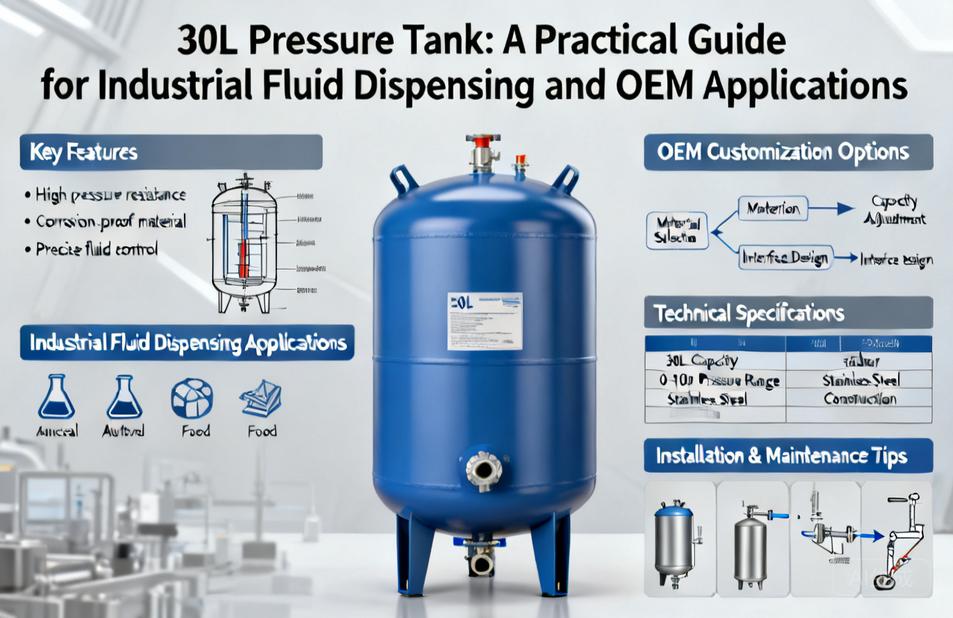
A 30L pressure tank is a compact yet powerful vessel designed to store and dispense fluids, adhesives, sealants, and lubricants under controlled pressure. Commonly used in manufacturing lines, automotive assembly, and general industrial maintenance, this size strikes a balance between capacity and portability, making it a popular choice for medium-volume dispensing tasks. For B2B buyers, understanding how this equipment works, what materials are available, and how to match it with existing systems is essential for making a sound purchasing decision.
What Is a 30L Pressure Tank?
A pressure tank, also known as a pressure vessel or dispensing tank, operates by using compressed air to push fluid out through a hose or gun. The 30-liter capacity refers to the total internal volume, which typically holds between 20 and 27 liters of usable fluid depending on the fill level and internal components. These tanks are widely used in industries that require consistent, controlled application of medium-viscosity materials, such as two-part adhesives, oil, grease, or paint. Unlike pumps, pressure tanks offer a simple and reliable method for dispensing without complex electrical or mechanical parts, reducing maintenance costs and downtime.
Key Features to Consider
When evaluating a 30L pressure tank, several features directly affect performance and safety. First, the lid or cover design is critical. Most industrial tanks feature a quick-release clamp or bolted flange that allows easy opening for refilling and cleaning. Second, the outlet connection, usually a 1/4-inch or 3/8-inch NPT thread, determines compatibility with existing dispensing guns or valves. Third, a pressure gauge and safety relief valve are essential for monitoring and preventing over-pressurization. Finally, consider the presence of an internal dip tube that reaches the bottom of the tank, ensuring complete evacuation of fluid without sucking air.
Materials and Construction
The most common materials for 30L pressure tanks are stainless steel and carbon steel. Stainless steel (typically 304 or 316 grade) offers excellent corrosion resistance, making it suitable for water-based adhesives, chemicals, and food-grade applications. Carbon steel is more affordable and works well with oil-based fluids, but may require a protective coating for humid or corrosive environments. For OEM projects, manufacturers can supply tanks with different internal coatings, such as epoxy or PTFE, to handle aggressive solvents. The tank wall thickness and welding quality are also important factors, as they determine the maximum allowable working pressure and long-term durability under cyclic loading.
Industrial Applications of a 30L Tank
This size of pressure tank is versatile enough to serve multiple industries. In automotive manufacturing, it is used to apply seam sealers, sound deadening materials, and anti-corrosion wax. In woodworking and furniture production, it dispenses PVA glue and contact cement. Electronics assembly lines use it for precise application of potting compounds and conformal coatings. Maintenance departments often employ a 30L unit for greasing machinery or transferring oil from drums to gearboxes without spillage. Additionally, it is a common component in centralized lubrication systems, where a single tank feeds multiple points through a network of hoses and metering valves.
How to Choose the Right 30L Pressure Tank
Selecting a 30L pressure tank requires a careful review of your fluid type, viscosity, dispensing pattern, and pneumatic supply. Start by determining the operating pressure range needed. Most industrial pressure tanks are rated for 3 to 8 bar, but some heavy-duty models can handle up to 10 or 15 bar. The fluid’s viscosity influences the diameter of the outlet hose and the type of gun or valve used; high-viscosity materials may require a larger bore and a higher pressure setting. Also consider the ambient temperature and whether the tank will be exposed to solvents that could damage seals. A reputable manufacturer will provide a technical data sheet specifying materials, pressure limits, and compatible media.
Matching the Tank with Your Dispensing System
Before purchasing, check the inlet connection on your air supply. Most tanks use a quick-connect fitting sized for 3/8-inch or 1/2-inch air hoses. The air regulator installed on the tank should be adjustable, with a gauge that allows fine tuning. Also verify that the tank’s outlet thread matches your existing dispensing equipment. If you are integrating the tank into a robotic or automated line, confirm that the flow rate meets your cycle time requirements. For example, a 30L tank with a 10 mm hose can typically dispense several liters per minute, but this decreases with viscous fluids and smaller nozzles.
Customization Options and OEM Solutions
For many industrial buyers, a standard off-the-shelf 30L pressure tank does not entirely meet their process requirements. In such cases, working with a manufacturer that offers custom pressure tank services is invaluable. Common modifications include altering the inlet or outlet thread sizes, adding a second outlet for simultaneous dispensing, installing a level sensor for low-fluid alarms, or using a special gasket material for chemical compatibility. OEM customers often request custom branding, specific pressure ratings, or a special lid design for rapid cleaning. A flexible supplier will also provide documentation such as material certificates or pressure test reports, though you should always verify that these documents are authentic and not generic.
Buying Considerations and Supplier Selection
When sourcing a 30L pressure tank, price is only one factor. Evaluate the supplier’s manufacturing experience, quality control procedures, and after-sales support. A reliable pressure tank supplier should have a clear policy on returns, replacement parts, and warranty coverage. Ask about lead times, especially if you need a custom version. Also inquire about packaging for export, as tanks are heavy and sensitive to damage during shipping. If you plan to import directly from a factory, request a pre-shipment inspection or sample unit for testing under your actual operating conditions. Building a long-term relationship with a manufacturer can result in better pricing, priority production slots, and technical advice for future projects.
Frequently Asked Questions
Can I use a 30L pressure tank for food-grade applications?
Yes, but only if the tank is made of stainless steel with a food-safe internal finish and FDA-compliant seals. You should also specify that all wetted parts are suitable for the specific food product. Many manufacturers offer 316 stainless steel options for demanding hygiene standards. Always request a certificate of compliance for the material grade.
What is the maximum working pressure for a 30L pressure tank?
The maximum working pressure varies by model and material. Standard industrial tanks usually range from 8 to 15 bar, but you must check the manufacturer’s specification for the exact limit. Do not exceed the rated pressure, as this can cause tank deformation or rupture, leading to safety hazards. For high-pressure applications, choose a tank with a higher pressure rating and correspondingly thicker walls.
How do I clean a 30L pressure tank after use?
First, release all air pressure and disconnect the air supply. Then remove the lid and drain any remaining fluid. For water-based materials, rinse with warm water and a mild detergent. For oil-based fluids, use an appropriate solvent that is compatible with the tank material. Dry the interior completely before storing to prevent corrosion or mold growth. Regular cleaning extends the life of seals and prevents contamination of the next batch.
Can I buy a 30L pressure tank with an OEM logo?
Yes, most pressure tank factories offer OEM services. You can have your logo engraved on the tank body or printed on a nameplate. Additionally, you can customize the color of the outer coating, the lid handle, and even the packaging. Minimal order quantities may apply, so communicate your expected volume early in the negotiation.
Conclusion
A 30L pressure tank is a practical investment for any facility that needs reliable, low-cost dispensing of fluids and sealants. By focusing on material quality, pressure rating, compatibility with your existing tools, and the availability of custom options, you can select a tank that will serve your production for years. Whether you need a standard unit or a fully tailored solution, working with an experienced manufacturer or supplier ensures that you receive a safe and efficient product. Contact our team today to discuss your specific application requirements and request a quotation with detailed specifications.