

Dispensing Pressure Vessel Selection Guide for Industrial Fluid and Adhesive Systems
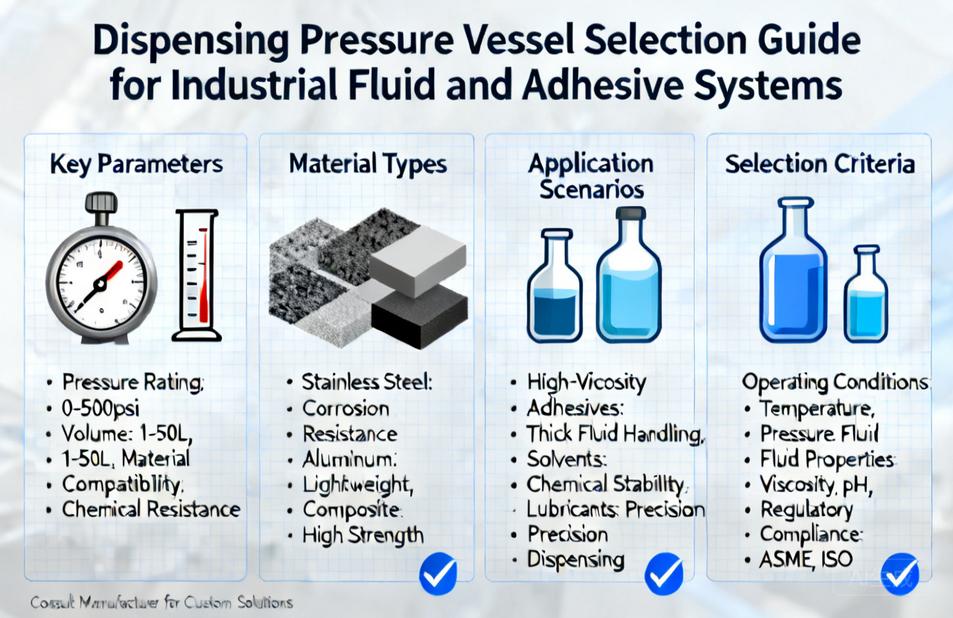
A dispensing pressure vessel is a specialized tank designed to hold and dispense liquids, adhesives, sealants, or other flowable materials under controlled pressure. Unlike standard storage tanks, it is integrated into a dispensing system where compressed air or another gas pressurizes the vessel, pushing the material through hoses, valves, and nozzles with consistent flow. These vessels are widely used in automated dispensing, potting, bonding, sealing, and coating processes across industries such as electronics, automotive, aerospace, medical device assembly, and general manufacturing. For buyers sourcing dispensing equipment, understanding how these vessels work and what to evaluate is essential for matching the right unit to the application.
How a Dispensing Pressure Vessel Works
At its core, a dispensing pressure vessel operates on a simple principle: regulated gas pressure applied to the material inside the tank forces it out through an outlet. The vessel typically includes a sealed chamber, a lid with a gas inlet, a pressure regulator, a material outlet, and safety features such as a relief valve and pressure gauge. When the system is pressurized, the material flows to a dispensing valve or nozzle, where it is applied to the substrate. The pressure level directly influences flow rate and bead size, so precise regulation is critical for repeatable results. Many vessels also include agitation or heating options to maintain material viscosity and prevent settling during production.
Key Features Buyers Look For
When evaluating a dispensing pressure vessel, procurement teams and process engineers focus on several functional characteristics. Pressure control is fundamental; the vessel must maintain stable pressure to ensure consistent dispense volume. Material compatibility determines whether the wetted parts resist corrosion, abrasion, or chemical attack from the fluid being dispensed. Sealing integrity prevents leaks and pressure loss, which can cause inconsistent beads or system downtime. Ease of cleaning and refilling affects changeover time and operator safety. Integration readiness includes standard port sizes, mounting options, and compatibility with existing regulators, hoses, and dispensing valves. Additionally, safety features such as pressure relief devices and proper lid locking mechanisms are non-negotiable in industrial environments.
Materials and Construction Considerations
The construction material of a dispensing pressure vessel must match the chemical and physical properties of the material being dispensed. Stainless steel is common for its corrosion resistance and durability, especially in applications involving solvents, adhesives, or moisture-sensitive materials. Some vessels use carbon steel with internal coatings for less aggressive fluids, while others may employ aluminum for weight-sensitive installations. The internal surface finish also matters: a smooth, polished interior reduces material buildup and simplifies cleaning, which is particularly important when switching between different adhesives or when contamination control is required. Weld quality, port threads, and lid sealing design all contribute to the vessel’s overall reliability and service life.
Typical Industrial Applications
Dispensing pressure vessels serve a broad range of industrial processes. In electronics manufacturing, they supply solder paste, encapsulants, and conductive adhesives to automated dispensing robots. In automotive assembly, they handle sealants, gaskets, and structural adhesives for body panels and powertrain components. Medical device production uses them for precise application of silicone, epoxy, and UV-curable adhesives. Aerospace and defense applications often require vessels that meet stringent cleanliness and material compatibility standards. Other common uses include potting and encapsulation of electrical components, dispensing of thermal interface materials, and applying coatings or lubricants in controlled volumes. Because each application has unique flow, viscosity, and curing requirements, the vessel must be selected with the entire dispensing system in mind.
How to Choose the Right Dispensing Pressure Vessel
Selecting a dispensing pressure vessel begins with understanding the material to be dispensed: its viscosity, chemical composition, curing behavior, and whether it contains fillers or abrasives. Next, define the required dispense volume, flow rate, and pressure range. The vessel capacity should align with production run length and refill frequency; too small a tank increases downtime, while an oversized tank may waste material or create pressure control challenges. Consider the operating environment: cleanroom compatibility, temperature stability, and resistance to washdown or solvent exposure. Evaluate the port configuration and mounting method to ensure seamless integration with existing pumps, valves, and controllers. Finally, review maintenance requirements, spare parts availability, and whether the supplier can provide technical support for system setup and troubleshooting.
Customization and OEM Options
Many dispensing pressure vessel manufacturers offer customization to meet specific process requirements. Custom options may include modified tank dimensions, alternative port sizes or locations, specialized internal coatings, integrated agitation or heating systems, and unique lid designs for faster refilling. OEM arrangements allow equipment builders and system integrators to private-label vessels or incorporate them into larger dispensing machines. When requesting a custom or OEM solution, buyers should provide detailed specifications: material compatibility data, pressure and temperature ranges, required flow rates, connection types, and any industry-specific standards the vessel must satisfy. Working directly with a factory that has engineering capabilities can shorten development time and ensure the final product fits the intended application without compromising safety or performance.
Supplier Selection and Buying Considerations
Choosing a reliable supplier for dispensing pressure vessels involves more than comparing prices. Evaluate the manufacturer’s experience with similar applications and their ability to provide technical documentation, material certificates, and dimensional drawings. Ask about quality control procedures during fabrication and testing, including pressure testing and weld inspection. Confirm that the supplier can support custom requirements without excessive lead times or minimum order quantities that do not fit your project. For international buyers, consider communication responsiveness, export packaging standards, and after-sales support. A supplier that understands dispensing systems as a whole can often recommend the right vessel configuration and help avoid costly integration mistakes.
Frequently Asked Questions
What is the difference between a dispensing pressure vessel and a standard pressure tank?
A dispensing pressure vessel is designed specifically for use in fluid dispensing systems, with features that support consistent flow, quick material changeover, and integration with dispensing valves and nozzles. A standard pressure tank may serve storage or general pressure applications but often lacks the sealing, port configuration, and cleanliness requirements needed for precise dispensing.
Can I use a dispensing pressure vessel with abrasive or filled materials?
It depends on the vessel’s internal construction and the material’s characteristics. Abrasive or filled materials can cause wear on wetted parts and may require hardened surfaces, specialized coatings, or more frequent maintenance. Always share the material specifications with the supplier to confirm compatibility.
How do I determine the right size and pressure rating for my application?
Start by calculating the required dispense volume per cycle and the number of cycles between refills. Then match the vessel capacity to reduce downtime. The pressure rating should exceed your maximum working pressure with a suitable safety margin, and it must be compatible with the dispensing valve and hose ratings. Consulting the vessel manufacturer with your process details is recommended.
Do suppliers offer OEM or custom branding for dispensing pressure vessels?
Many manufacturers provide OEM and custom options, including private labeling, modified dimensions, and application-specific features. The scope of customization varies by supplier, so discuss your requirements early in the sourcing process.
Conclusion
Choosing the right dispensing pressure vessel requires a clear understanding of your material, process, and integration needs. Focus on pressure control, material compatibility, sealing, and safety, and work with a supplier that can support custom or OEM requirements. Whether you are building a new dispensing system or replacing an existing vessel, gathering detailed specifications and involving the manufacturer early will help you achieve reliable, repeatable results. For specific questions about vessel sizing, materials, or customization, contacting a qualified supplier with your application details is the best next step.