

Customized Pressure Vessel | Engineering, Applications, and How to Source Reliable OEM Solutions
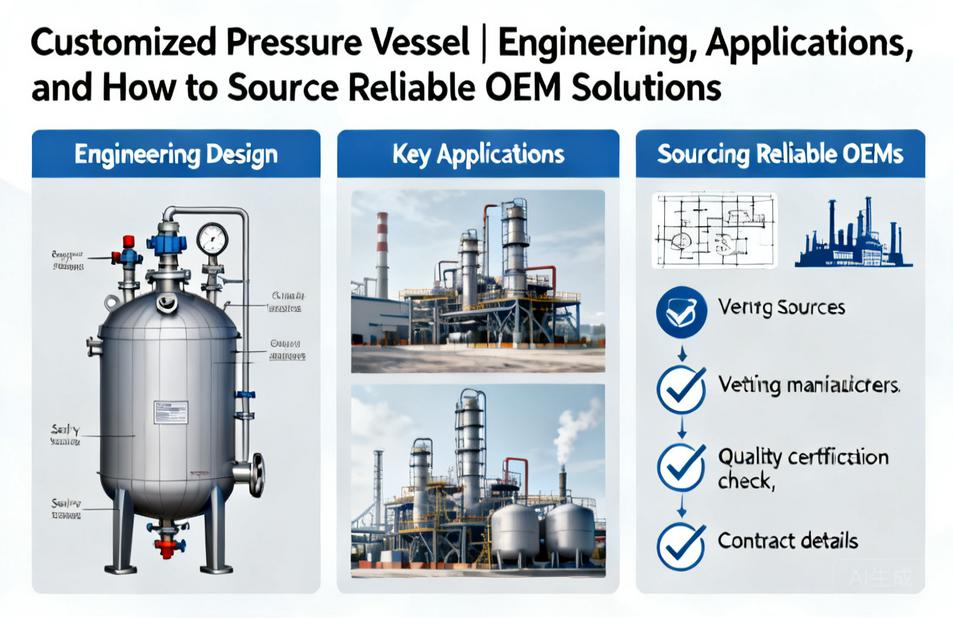
In industrial processing, a customized pressure vessel is often required when standard tanks fail to meet specific operational demands. Unlike off-the-shelf products, a customized pressure vessel is designed and fabricated to handle particular pressures, temperatures, media, and installation constraints. These vessels play a critical role in storing gases, liquids, and even supercritical fluids under controlled pressure. For engineering teams, plant managers, and procurement specialists, understanding the options for custom fabrication is essential to ensure safety, efficiency, and longevity in demanding environments. This article provides a practical overview of customized pressure vessels, covering design considerations, material selection, applications, and the key factors to evaluate when choosing a manufacturer or supplier.
What Is a Custom Pressure Vessel and How Does It Work?
A custom pressure vessel is a closed container engineered to hold gases or liquids at a pressure substantially different from the ambient pressure. The core working principle is simple: the vessel contains the internal medium while withstanding the resulting mechanical stress. However, the design complexity increases significantly when customizing for specific requirements. The vessel’s shell, heads, nozzles, and supports must be calculated to handle both internal pressure and external loads, including wind, seismic activity, and thermal expansion. The working pressure may be constant or cyclic, and the vessel may operate under vacuum or high-pressure conditions. Because each application introduces unique variables, custom engineering ensures that the vessel integrates effectively with existing systems and performs safely over its intended service life.
Why Choose a Customized Pressure Vessel?
Meeting Unique Process Conditions
Standard pressure vessels are built to meet common industrial parameters, but many processes require specific dimensions, connection types, or operating limits. For example, a chemical plant may need a vessel with a non-standard diameter to fit into an existing reactor line, or a beverage facility may require a special agitation system inside the tank. A customized pressure vessel can be engineered around these constraints, ensuring that the equipment fits the process rather than forcing the process to adapt to the equipment.
Compliance with Local Codes and Standards
Different regions have different pressure vessel codes and regulations. A customized vessel can be designed and stamped according to the relevant standard, such as ASME Boiler and Pressure Vessel Code, PED, or other local codes. This is crucial for plants that must pass regular inspections or for end-users who require certification documentation for insurance and safety audits. A qualified manufacturer will help navigate these requirements and provide the necessary documentation.
Material Compatibility
Process media can be corrosive, abrasive, or reactive. Off-the-shelf vessels are available in common materials like carbon steel and stainless steel, but customized options may involve exotic alloys, corrosion-resistant linings, or special internal coatings. For example, handling hydrochloric acid may require a rubber-lined vessel or a high-nickel alloy. Custom fabrication allows you to select the most cost-effective material that provides the required corrosion allowance and mechanical properties.
Key Design Considerations for a Custom Pressure Vessel
Designing a custom pressure vessel involves several critical parameters that must be defined clearly before fabrication begins. These include:
Design Pressure and Temperature
The maximum internal pressure and the maximum or minimum operating temperature define the vessel’s thickness and material selection. The designer must also consider the combined effects of pressure and temperature, as well as potential thermal cycling or thermal shock during operation.
Vessel Dimensions and Capacity
Required volume and physical dimensions influence the shape of the vessel. Vertical or horizontal orientation, the number of nozzles, and the position of manways or handholes are all customizable. The aspect ratio affects fluid dynamics inside the vessel, which is particularly important for mixing or separation processes.
Fittings, Nozzles, and Internals
Custom pressure vessels can be equipped with a variety of connections, including inlet and outlet nozzles, pressure relief devices, level sensors, temperature probes, and sight glasses. Internal structures such as baffles, coils, trays, or agitators can also be integrated during fabrication. Specifying these components early in the design phase ensures proper alignment and reduces the need for post-fabrication modifications.
Materials Used in Custom Pressure Vessel Manufacturing
Material selection is one of the most important decisions in custom manufacturing. The material must provide adequate strength, corrosion resistance, weldability, and cost-effectiveness. Common choices include:
- Carbon steel – suitable for moderate temperatures and pressures, and widely used for non-corrosive media.
- Stainless steel (304, 316, etc.) – provides better corrosion resistance and hygiene, making it suitable for food, pharmaceutical, and chemical applications.
- Duplex and super duplex stainless steels – offer higher strength and resistance to chloride stress corrosion cracking.
- Nickel alloys (Inconel, Hastelloy, etc.) – used for highly corrosive environments and extreme temperatures.
- Exotic materials such as titanium and zirconium – specified for very aggressive processes where other metals fail.
For cost optimization, some vessels are fabricated from carbon steel with a corrosion-resistant lining, such as rubber, glass flake, or a thermoplastic layer. The choice depends on the media, the required service life, and the maintenance strategy of the plant.
Applications Across Diverse Industries
Custom pressure vessels are found in a wide range of industrial sectors. In the oil and gas industry, they are used as separators, scrubbers, and surge vessels. Chemical processing plants rely on them for reactors, distillation columns, and storage receivers. In pharmaceuticals and biotechnology, custom vessels ensure sterile containment for fermentation and purification processes. Water treatment facilities may deploy pressure vessels for reverse osmosis membrane housings or for storing treated water under pressure. Additionally, customized vessels are used in power generation for feedwater heaters and in manufacturing for hydraulic and pneumatic accumulators. Each application demands specific design calculations and safety features, which is why working with an experienced fabricator is crucial.
How to Choose a Reliable Custom Pressure Vessel Manufacturer
Selecting the right manufacturer for your custom pressure vessel is a strategic decision. Here are several questions to consider when evaluating suppliers:
- What codes and standards does the factory adhere to? Confirm that they can manufacture to ASME, PED, or other applicable regulations and provide the associated stamps or certificates.
- What is their experience with your specific process or industry? A manufacturer familiar with your application is more likely to anticipate potential design issues.
- Can they provide fabrication drawings and calculations for review? Detailed engineering documentation is essential for verifying that the vessel meets your specifications.
- What is their inspection and testing capability? Ensure they follow documented quality procedures, such as hydrostatic testing, NDE, and helium leak testing if required.
- Are they capable of handling custom internals and complex nozzle configurations? Ask for examples of similar custom projects they have completed.
OEM and Customization Services
Many pressure vessel manufacturers offer OEM services, meaning they can build vessels to your exact drawings and specifications, or they can work from your performance requirements to develop a design. If you have an existing vessel design that needs to be replicated or modified, an OEM arrangement can be highly efficient. On the other hand, if you only have a process requirement, the manufacturer can provide the engineering expertise to design a vessel from scratch. Clear communication of your needs, including desired capacity, pressure, temperature, media properties, and installation constraints, is vital to receiving an accurate quotation and a functional final product.
Buying Considerations and Lead Times
When purchasing a customized pressure vessel, it is important to consider not only the initial price but also the total cost of ownership. Factors such as energy efficiency, maintenance requirements, and expected service life influence the total cost. In addition, the lead time for custom fabrication can vary from several weeks to several months, depending on the complexity, material availability, and the manufacturer’s workload. Therefore, it is recommended to plan your project timeline accordingly and communicate your required delivery date early in the process. Many buyers also prefer to work with a supplier who offers after-sales support, spares, and repair services to minimize downtime.
Frequently Asked Questions
What information do I need to provide to get a quotation for a customized pressure vessel?
To receive an accurate quote, you should provide the operating and design pressure, design temperature, internal volume or dimensions, the medium to be contained, required materials, connection sizes and types, applicable design code, and any other specific requirements such as insulation or internal finish.
Can small volumes be produced for a custom vessel?
Yes, many manufacturers accept orders for a single unit or small quantities. Custom vessels are often built to order, so there is no minimum quantity requirement in most cases. However, the unit price will be higher for small orders compared to large production runs.
How long does it take to manufacture a custom pressure vessel?
Lead times typically range from 8 to 16 weeks for standard designs, but complex vessels with exotic materials or extensive testing may require longer. It is best to consult with the manufacturer early to establish a realistic schedule.
Do you provide assistance with pressure vessel design and certification?
Most reputable manufacturers have in-house engineering teams or partner with design consultants who can perform calculations, create fabrication drawings, and manage certification with third-party inspectors. This service is often included in the project scope.
Conclusion
A customized pressure vessel is a significant capital investment that directly impacts operational safety and efficiency. By focusing on your process requirements, selecting the correct materials, and partnering with a qualified manufacturer, you can obtain equipment that performs reliably for many years. Whether you need a simple storage tank or a complex reactor vessel, the key is to collaborate with a supplier that offers engineering depth, manufacturing precision, and transparent communication. To discuss your specific application, contact our team with your process details, and we will assist you in developing a solution that meets your technical and commercial requirements.