

Pressure Pot for Spray Gun | A Practical Guide for Industrial Coating and Finishing Operations
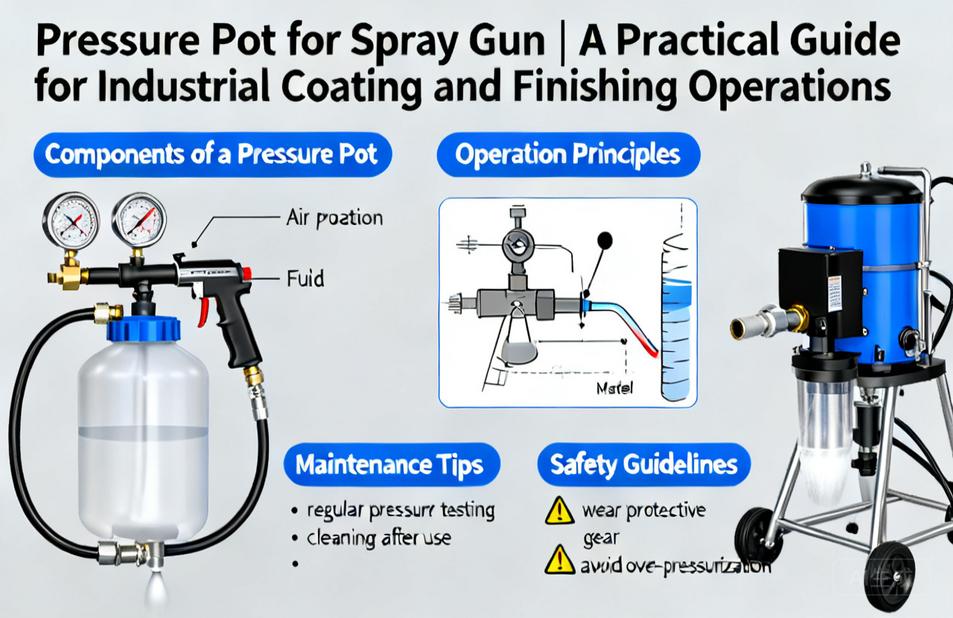
A pressure pot for spray gun is a specialized pressure vessel designed to supply coating materials, paints, adhesives, or other fluids to a spray gun at a consistent and controlled pressure. Unlike gravity-fed or siphon-fed systems, a pressure pot uses compressed air to push the material from a sealed tank through a hose and into the spray gun. This setup is particularly valuable in industrial finishing environments where production speed, material consistency, and the ability to spray large volumes of fluid without frequent refilling are critical. This article is intended for maintenance managers, production engineers, and purchasing professionals who are evaluating pressure pots for their coating or finishing lines and want practical guidance for selecting the right equipment from a reliable pressure pot manufacturer or supplier.
What Is a Pressure Pot for Spray Gun and How Does It Work?
In simple terms, a pressure pot system consists of a cylindrical tank, a lid with a clamping mechanism, an air regulator, a fluid pickup tube, and a pressure outlet. The tank is filled with coating material, and the lid is sealed. Compressed air is then introduced into the tank, creating an even pressure across the surface of the fluid. This pressure pushes the fluid up through the pickup tube and out through a hose that connects directly to the spray gun. The operator can adjust both the air pressure inside the tank and the atomization air pressure at the gun to achieve the desired spray pattern and fluid flow rate.
One of the main advantages of using a pressure pot for spray gun operations is that it allows for continuous spraying over extended periods. Since the reservoir is much larger than a spray gun mounted cup, operators can complete larger projects with fewer interruptions. In addition, because the fluid is delivered under pressure rather than relying on gravity or siphon action, it is easier to spray high viscosity materials, such as heavy primers, mastics, or corrosion resistant coatings.
Key Features to Consider in an Industrial Pressure Pot System
When evaluating a pressure pot for spray gun applications, buyers need to look beyond the basic tank capacity or price. Consistent performance, operator safety, and long-term durability all depend on design details that are sometimes overlooked. The following features are important for industrial use:
Tank Capacity and Material Compatibility
Pressure pots come in various tank sizes, often ranging from 2 liters for touch-up work to 90 liters or more for heavy industrial applications. The capacity you need depends on how much material you consume during a typical shift. Larger pots reduce refill frequency but may be harder to move or clean. Material compatibility is equally critical. Most pressure pots are made of steel, typically painted internally to resist corrosion, while stainless steel pots are preferred for water-based or reactive materials. Verify that the tank interior is compatible with your solvents and coatings to prevent contamination or chemical attack.
Pressure Regulation and Safety Devices
Because a pressure pot operates under compressed air, precise pressure regulation is essential for achieving an even finish. Look for a system that has a high-quality air regulator and gauge, preferably one that provides a stable output regardless of fluctuations from your plant compressor. Safety features are not optional. A pressure vessel must include a pressure relief valve set to the safe working pressure, and the lid should have an interlock or safety clamp mechanism so that it cannot be opened while pressure remains inside the tank. If the unit does not include these features, it should not be used for commercial painting and is likely not CE or ASME certified.
Mobility and Mounting Options
Not every workshop has the same layout. A fixed pressure pot with legs might be ideal for a dedicated spray booth, while a cart mounted pressure pot allows operators to move the system between workstations. Consider whether the unit comes with a wheeled trolley or if it must be bench mounted. In facilities where the spray gun is used in multiple areas, a portable design reduces downtime and material waste from long hoses.
Materials and Construction in a Commercial Pressure Pot
Pressure pots are subject to physical wear, chemical exposure, and repeated cleaning cycles, so the construction material will significantly influence lifespan and safety. Painted carbon steel is a common and economical option, usually having a protective lining inside to resist corrosion from solvents. However, if the lining is damaged, rust particles can contaminate the coating and ruin a paint job. Stainless steel pressure tanks, on the other hand, offer superior corrosion resistance and are easier to keep clean with harsh solvents. They are strongly recommended for aqueous coatings, polyurethane, epoxy, or other moisture sensitive or reactive systems.
Another critical construction detail is the lid seal. A reliable, chemical resistant gasket is important; a degraded seal will cause pressure loss, inconsistent spraying, and even dripping of material from the lid during operation. Check the manufacturer or factory documentation for the gasket material and whether spare seals are available. Additionally, the fluid path inside the tank should be free of sharp bends or narrow passages that can trap material or restrict flow for viscous fluids. Choose a design with a wide opening or removable cover to facilitate easier cleaning and material changes.
Industries and Applications for Pressure Pot Spraying Systems
A pressure pot for spray gun is not limited to a single industry; it is a versatile tool in many coating operations. In general metal fabrication and woodworking, these pots are used for applying primers, paints, varnishes, and lacquers. In the automotive refinishing sector, they enable body shops to spray base coats and clear coats with a uniform finish over larger panels. Other common industrial applications include:
- Applying fire retardant coatings on steel structures
- Spraying sound deadening or underbody coatings on vehicles
- Coating large pipes, tanks, or marine equipment with heavy duty anticorrosion paints
- Spreading adhesives, latex or mastic, onto substrates for lamination
- Applying textured or aggregate finishes on walls or ceilings
Because a pressure pot system separates the fluid supply from the spray gun, it is also convenient for spray guns that need to be held at various angles, as there is no cup to spill or obstruct the operator’s view. For facilities that frequently change colors or materials, having multiple smaller pressure pots can reduce downtime for cleaning, compared to using one large tank for varying jobs.
How to Choose a Pressure Pot for Your Specific Spray Gun
Matching a pressure pot to a spray gun is more involved than simply connecting a hose. A spray gun or pressure pot system will only work at its best when fluid flow rates, nozzle sizes, and air consumption are coordinated. Here are the main selection factors:
Fluid Delivery Rate and Air Demand
Every spray gun has a maximum fluid output, usually measured in liters or ounces per minute, plus an atomization air requirement. The pressure pot must be capable of supplying fluid at a rate that matches the gun’s consumption when spraying at a practical film thickness. At the same time, the compressor in the plant must have sufficient free air flow to operate the gun and pressurize the tank concurrently. Therefore, check the pressure pot’s working pressure range; is it compatible with the inlet air pressure used by the spray gun? Typical units are rated for pressures between 30 and 120 PSI, but some low pressure high volume (LVLP) guns will need a lower pot pressure.
Regulator and Gauge Compatibility
An adjustable fluid pressure regulator on the pot is important because it enables the operator to fine tune the coating delivery without changing the settings on the compressor. A pressure pot that uses the plant air directly, without any adjustable regulator, is less desirable because you will have to make trial adjustments at the gun, which is less precise. Look for a unit with two separate regulators: one for the pot pressure and one for the atomization air feeding the gun, if such a configuration is available. This provides the best operator control for achieving the correct spray pattern.
Attachment to Your Existing Spray Gun
Most professional spray guns will have an inlet fitting that can be connected to a fluid hose, but you may need an adapter for your specific brand or model. Many pressure pot suppliers offer hose kits with quick-couplings that fit common A or J series air fittings. It is advisable to confirm the thread size and fluid hose coupling type before purchase, especially if the gun is from a specific European or Asian manufacturer. If you are planning to build a complete setup, you can also order a package that includes the pot, hoses, and a spray gun that are tested together by the manufacturer or factory.
OEM and Custom Options for Industrial Customers
For equipment manufacturers or large-scale finishing operations, off the shelf pressure pots may not meet unique specifications. Many established pressure pot manufacturers and factories offer OEM or custom configurations. This can include a special tank capacity, a custom lid style, additional ports for agitation or level sensing, or particular wetted seal materials that are compatible with aggressive chemicals. Some buyers prefer a pressure pot that is pre-piped to match their existing fluid control system. In such cases, you should work directly with a supplier that has an engineering background and can adapt a standard design or create a custom drawing based on your fluid, pressure, and safety requirements.
When requesting a quotation for a custom pressure pot, make sure the supplier knows the maximum working pressure, the exact fluid type and its temperature, the desired outlet connection size, and whether the unit will be portable or stationary. The material of the tank, internal lining or coating, and type of pressure gauge should also be specified in writing. When comparing quotes from multiple suppliers, do not base your selection only on the price; check if the supplier includes a certificate of pressure testing and a full set of installation instructions. The term factory direct can sometimes be used to indicate lower importer margins, but the actual manufacturing quality may vary widely between factories, so request for factory audit reports or inspect the production line whenever possible.
Pressure Pot Supplier Selection: What to Look For
Selecting a reliable supplier for your pressure pot for spray gun is as important as choosing the correct tank specification. Since pressure vessels are safety-related tools, your source should demonstrate a clear understanding of international standards and quality control. Consider these points when reviewing a pressure pot supplier:
- Check whether the unit has been tested and certified by a recognized authority, such as CE, ASME, or other equivalent local regulation. Do not assume this from marketing text, ask for a test certificate or Declaration of Conformity.
- Ask about the warranty terms and how the supplier handles replacements for defective regulators, gauges, and sealing rings.
- Inquire about the availability of spare parts, especially the lid gasket, which tends to have a shorter lifespan in normal use.
- Look at the finish of the tank’s internal surface. A rough or improperly coated internal surface can trap contaminants or cause uneven material flow.
- Verify the construction details, such as the type of welding and whether all internal pressure-bearing parts are properly rated for the maximum allowable pressure.
Do not hesitate to request a pre-shipment inspection or a video test of the unit before the package is dispatched. A genuine manufacturer will normally welcome such a request, while a trading agent may find it difficult to act on it.
Frequently Asked Questions
Can a pressure pot be used with any spray gun?
Most professional spray guns can work with a pressure pot system as long as the fluid inlet is connected via a compatible hose or adapter. Siphon feed guns cannot be directly converted because they rely on having the cup attached to the top of the gun to create a vacuum. But standard pressure feed guns with a detachable cup can usually be adapted. It is best to ask the gun manufacturer for the fluid inlet size and thread type before ordering a pressure pot hose kit.
How often does a pressure pot need to be cleaned?
The cleaning frequency is directly related to the type of material sprayed and how fast it cures or sets. For solvent based paints, many painters can run a full shift and then flush at the end of the day. For two-component coatings or latex-based materials that dry quickly, you should clean the tank, hose, and gun as soon as you finish spraying or whenever you will stop for more than a few minutes. Leaving wet paint in the pot under pressure may lead to blocked fluid passages that are difficult to clean.
What is the difference between a pressure pot and a pressure tank?
In many industrial contexts, the terms are used interchangeably because both hold liquid under pressure. However, a pressure tank may also refer to water storage tanks used for pressurizing a water system, whereas a pressure pot is designed specifically for coating, adhesive, or fluid supply to a spray gun or extrusion applicator. When ordering from a manufacturer, understand that a pressure pot is a fluid material container with a quick-opening lid, while a pressure tank often has a manhole or large top opening for heavier substances.
Is it necessary to buy a stainless steel pressure pot?
That depends on the coating material and the cleaning solvents you plan to use. Stainless steel is more resistant to rust and corrosion, and it is easier to clean with strong solvents without damaging its surface. For water-based materials that can cause rust on carbon steel pots, stainless steel is a must. For occasional use with ordinary solvent borne paints, a lined carbon steel pressure pot may be sufficient, but you will need to inspect the lining regularly for chips or damage. In the long run, the increased initial cost of stainless steel is often justified by lower maintenance and a longer service life.
Conclusion
Selecting the correct pressure pot for spray gun use can have a direct impact on your finishing quality, production efficiency, and material waste. By considering the capacity, pressure control, safety devices, and material compatibility before your purchase, you can avoid many common operational problems that occur when a pressure system is not matched to a specific coating job. It is equally important to work with an experienced pressure pot manufacturer or supplier who can provide the necessary documentation, support, and spare parts over the equipment lifecycle. If you have a unique application or are considering an OEM or custom pressure pot with specific dimensions or wetted materials, contact our team today to discuss your specifications in detail. We are ready to provide technical advice, a professional quotation, and reliable service for your industrial coating equipment needs.