

Paint Supply Pressure Tank | A Comprehensive Guide for Industrial Coating Systems
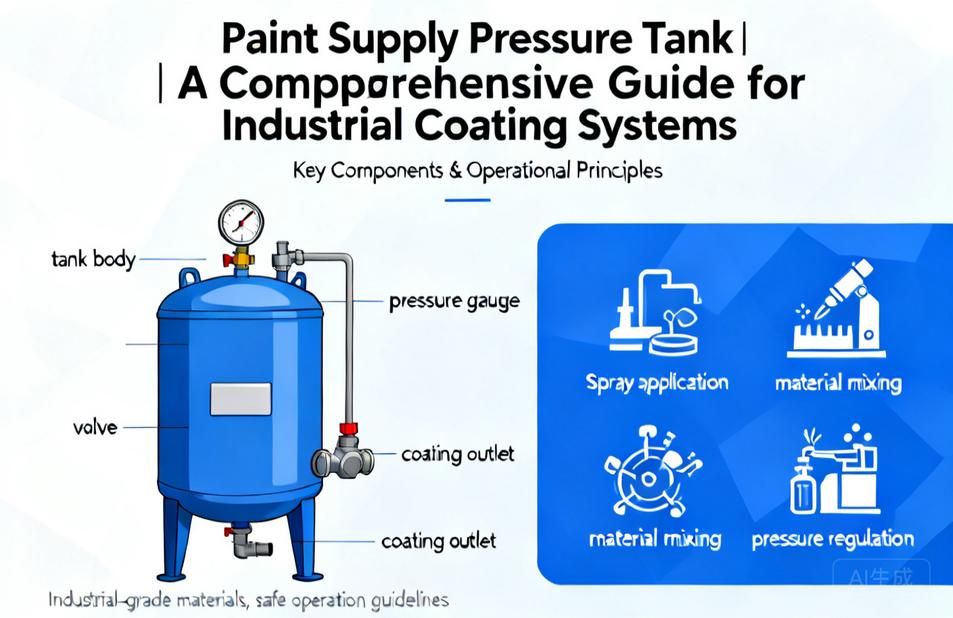
A paint supply pressure tank is a key component in industrial coating and fluid dispensing systems, designed to store and deliver paint, ink, adhesive, or similar liquids under controlled pressure. It is commonly used in spray finishing, automotive refinishing, wood coating, and general manufacturing environments where a steady and consistent material flow is required. This equipment helps operators maintain an even coating application and is often integrated with spray guns or automatic applicators to improve production efficiency and finish quality.
What Is a Paint Supply Pressure Tank and How Does It Work?
A paint supply pressure tank, sometimes referred to as a pressure pot or pressure vessel, is a sealed container that uses compressed air to push coating material from the tank to a spray gun or other dispensing tool. The tank is filled with paint or another liquid, then pressurized with clean, dry compressed air. This pressure forces the fluid through a hose to the application point, allowing for a consistent flow rate and reduced operator fatigue compared to gravity-fed or siphon-fed systems. Most units include a regulator and gauge to control outlet pressure, ensuring that the flow can be fine-tuned to match the viscosity of the coating and the requirements of the spray tip. Pressure tanks are available in different capacities and material options, making them suitable for a wide range of industrial applications.
Key Features to Consider in a Pressure Tank for Coating Applications
When evaluating a paint supply pressure tank, several design features directly influence performance, safety, and ease of maintenance. First, consider the tank material. Stainless steel models offer excellent corrosion resistance and are preferred for water-based coatings, while carbon steel tanks are often more economical for solvent-based materials. Equally important is the lid design and sealing mechanism. A quick-opening clamp or bolted cover can simplify refilling and cleaning, while a reliable gasket prevents air leakage during operation. Another critical feature is the inclusion of an air regulator and pressure gauge, as these components allow the operator to set and monitor the delivery pressure with accuracy. A tank that includes a fluid outlet filter can also help remove impurities that might clog spray tips, reducing downtime. Internal linings or coatings, when offered by the manufacturer, can protect the tank from aggressive solvents and extend its service life, though any coating option should be verified for compatibility with your specific material.
Materials and Construction of Industrial Pressure Tanks
The construction quality of a paint supply pressure tank determines its durability and safety in daily workshop use. Standard tanks are made from welded steel plates, with the interior often treated to resist corrosion. Stainless steel tanks, typically from 304 or 316 grades, provide superior resistance to rust and are widely recommended for waterborne paints, food-contact fluids, and chemical processing. The tank’s pressure rating should be clearly marked by the supplier, and any intended operating pressure should remain well below that limit. Welds are usually inspected to avoid weak points, and the lid must seal evenly to maintain pressure without leaks. The interior surface finish is also relevant; a smooth, polished finish is easier to clean and less likely to trap dried paint particles. For OEM or custom requirements, many factories can adapt tank connections, port sizes, or outlet configurations to fit existing paint lines, but any such customization should be confirmed with the manufacturer before purchase.
Common Applications and Industrial Use Cases
Paint supply pressure tanks are employed across a broad scope of industries, wherever a portable or stationary source of pressurized coating material is needed. Common applications include automotive refinishing and collision repair, wood furniture coating, metal fabrication painting, and general spray booth operations. In addition to spray painting, these tanks can be used to dispense adhesives, lubricants, mold release agents, and even food-grade liquids if constructed with appropriate materials. They are also useful for maintenance teams that need to apply corrosion-resistant coatings on large structures or for manufacturers that rely on robotic spray systems, where a steady fluid supply is critical. Because pressure tanks can be moved on casters or mounted on a cart, they support flexible layouts in production facilities, allowing applicators to move closer to workpieces and reduce long hose runs.
How to Choose the Right Paint Supply Pressure Tank
Selecting a suitable pressure tank involves matching the unit to the fluid characteristics, the application method, and the expected consumption rate. Start by determining the tank capacity. A larger tank reduces the frequency of refills, which is beneficial for high-volume spraying, but a smaller tank is easier to handle and clean, especially when frequent color changes are necessary. Next, evaluate the viscosity and chemical composition of the coating. Thicker materials may require a tank with a larger fluid outlet and a pressure rating sufficient to push the material through longer hoses. Also consider whether you need an agitator to keep pigments suspended; many models offer optional air-driven agitators that prevent settling during operation. The number of outlets, hose connections, and the type of spray gun you plan to use will also influence your choice, as different guns may require varying pressure ranges. Finally, compare the weight, portability, and ease of maintenance among different models, because daily handling and cleaning routines matter for worker efficiency.
OEM and Custom Options for Pressure Tanks
Many industrial fluid supply tanks are available as standard catalog items, but a significant number of buyers require custom features to integrate the equipment into an existing production system. If you are a machinery builder or a coating line integrator, you may need a tank with specific dimensions, a special inlet or outlet thread, an additional sight glass, or a customized lid configuration. Reliable pressure tank manufacturers and factories usually accept OEM projects, where they produce units according to your drawings or specifications. This may include changes to the tank’s port size, mounting brackets, pressure relief valve settings, and surface finish. When considering custom options, provide detailed information about the fluid, operating temperature, and pressure range so that the supplier can recommend the correct material thickness and seal type. A clear technical drawing or specification sheet is the best starting point for obtaining an accurate quotation.
Buying Considerations and Supplier Selection
Because a paint supply pressure tank is a pressure-bearing device, sourcing from a reputable supplier or manufacturer is essential to ensure safe operation and reliable performance. Before making a purchase decision, confirm that the tank complies with relevant pressure vessel standards or directives in your region, such as CE, ASME, or other applicable codes. Even if a tank does not require full certification for your application, the supplier should still provide documentation about material grades, test results, and maximum allowable working pressure. Evaluate the supplier’s production capacity, lead times, and after-sales support, including the availability of spare parts such as seals, regulators, and pressure gauges. In addition, consider asking for a sample or a visit to the factory, especially if you plan to order in large quantities. A trustworthy pressure tank factory will be transparent about manufacturing processes, quality control checks, and shipping logistics. It is also wise to request references from clients in similar industries to gauge the supplier’s reputation.
Frequently Asked Questions
Can I use a paint supply pressure tank with any spray gun?
In general, pressure tanks are compatible with many types of spray guns, including conventional air spray and HVLP models, provided that the fluid connection and pressure requirements match. You may need to install a suitable fluid hose and adapter to connect the tank outlet to the gun’s inlet. Always check the gun’s recommended fluid pressure range and compare it with the tank’s regulator settings to achieve a consistent spray pattern.
What is the difference between a pressure tank and a pressure pot?
There is no meaningful difference; the terms pressure tank and pressure pot are often used interchangeably. Both refer to the same type of closed vessel used to supply coating material under pressure. Some manufacturers may use ‘pot’ for smaller, portable units, while ‘tank’ is preferred for larger industrial vessels, but the working principle is identical.
How do I clean a paint pressure tank after use?
Cleaning should follow the supplier’s instructions and be done with compatible solvents. Release all air pressure, disassemble the fluid outlet parts, and rinse the tank interior with an appropriate solvent. Pay special attention to the lid seal and outlet ports, where dried material can accumulate. Wipe the exterior and store the tank with the lid slightly open to allow moisture to evaporate.
Is it possible to order a custom pressure tank for a specific viscosity fluid?
Yes, many paint supply pressure tank manufacturers and OEM suppliers can modify the tank design to handle high-viscosity fluids. This may involve a larger fluid outlet, wider air passages, or an integrated agitator. To obtain a correct quotation, share the fluid’s technical data sheet and your required flow rate with the supplier.
Conclusion
Choosing the correct paint supply pressure tank is a matter of balancing capacity, material compatibility, safety features, and operational convenience. Whether you are working in automotive painting, industrial finishing, or any other coating process, a well-selected pressure tank can reduce material waste, improve finish consistency, and simplify fluid delivery. To find the most reliable solution, clearly define your application requirements, compare products from established manufacturers and suppliers, and do not hesitate to ask for technical documentation or OEM support. For a tank that meets your exact specifications, contact a trusted manufacturer today to discuss your fluid, pressure, and integration needs.