

How to Choose a Custom Stainless Steel Tank Manufacturer for Industrial Applications
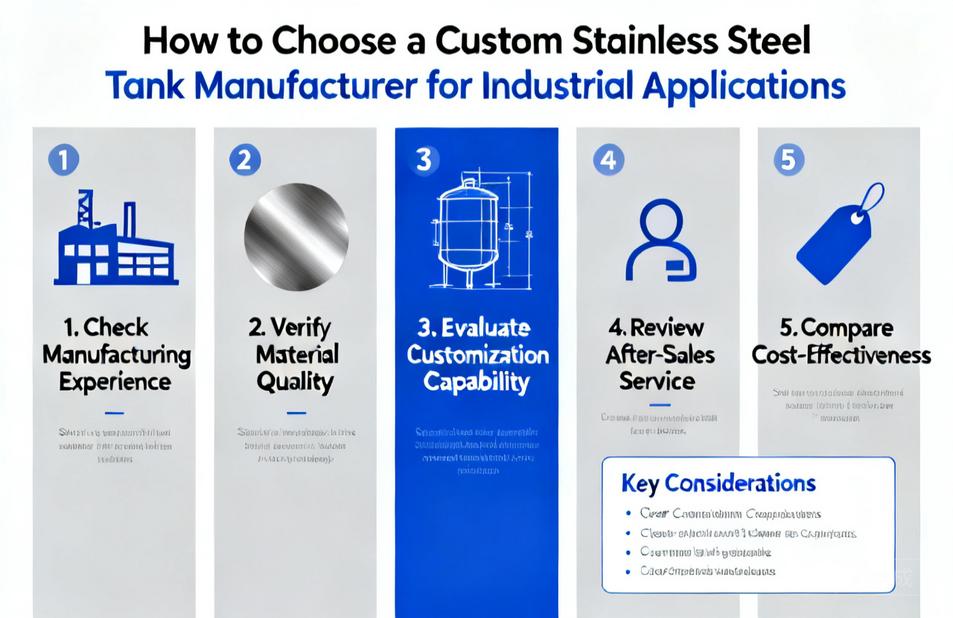
When sourcing industrial storage or processing equipment, finding a reliable custom stainless steel tank manufacturer is often the first step for engineering teams, plant managers, and procurement specialists. Custom stainless steel tanks are fabricated to fit exact process requirements, from mixing and storage to fermentation and chemical handling. Unlike off-the-shelf vessels, a custom build allows you to specify dimensions, connections, surface finishes, and agitation systems that align with your existing production line. Understanding how to evaluate a manufacturer and what to expect during the customization process is essential before you invest in capital equipment.
Why Choose a Custom Stainless Steel Tank Over Standard Models?
Standard tanks are produced in fixed sizes with common inlet and outlet positions, which often leads to installation compromises, additional piping, or wasted floor space. By working with a tank fabricator that offers engineering support, you can obtain a vessel that exactly matches your process capacity, available headroom, and interface requirements. Custom stainless steel tanks also allow you to choose the right steel grade, internal surface finish, insulation, heating or cooling jackets, and mounting style such as legs, saddles, or skirt supports. These decisions affect cleanability, product quality, maintenance cost, and operational safety.
Common Industries Relying on Custom-Built Stainless Tanks
Food and beverage processing, dairy, pharmaceutical, biotechnology, cosmetic, chemical, and water treatment industries all rely on fabricated stainless tanks. In hygienic applications, a custom stainless steel tank manufacturer must understand sanitary welding standards, electropolishing, and documentation requirements. For chemical processes, corrosion-resistant alloys like 316L stainless steel or duplex steel may be necessary. Having a partner that can recommend the correct material and welding process for your specific medium is a major advantage over purchasing a generic vessel.
Key Features to Discuss With a Stainless Steel Tank Supplier
Before contacting potential suppliers, it is useful to outline the main functional requirements of your tank. A professional custom stainless steel tank supplier will ask about capacity, pressure or vacuum conditions, operating temperature, product viscosity, agitation needs, and cleaning method. You should also consider the following technical details:
- Material grade and thickness: 304 stainless steel is common for general storage, while 316L is better for higher corrosion resistance. Verify the actual mill certificate and pressure vessel compliance if required.
- Internal surface finish: Ra or grit finish impacts cleaning and product release. For food or pharmaceutical use, a lower surface roughness is often specified.
- Welding quality and inspection: Full penetration welds, ground and polished welds, or passivation are important for longevity and hygiene.
- Connections and fittings: Specify the type of flanges, tri-clamp connections, threaded ports, or quick couplings needed to integrate with your piping.
- Agitation and mixing: Decide whether you need a top-mounted agitator, side-entry mixer, or static baffles and at what speed range.
- Heating or cooling: A dimple jacket, half-pipe coil, or electric heat tracing may be required to maintain process temperature.
- Insulation and cladding: For outdoor or high-temperature processes, insulation with a stainless steel outer shell is common.
- Accessories: Level sensors, pressure gauges, sight glasses, manways, and spray balls should be planned in the initial design stage.
Understanding OEM and Custom Fabrication Services
Many buyers ask if a manufacturer offers OEM services. In the context of tanks, OEM often means that the manufacturer builds a tank to the buyer’s design or brand specification, which may include a specific nameplate, non-standard dimensions, or unique finish. A reliable stainless steel tank factory should be willing to review your drawings and grant permission for you to use their engineering expertise to refine your design for manufacturability. Clear communication about tolerances, test requirements, and documentation like material test certificates or weld maps is part of a mature OEM relationship.
How to Select a Dependable Stainless Steel Tank Factory
Choosing a manufacturer is not only about the lowest quote. You are selecting an engineering partner for a piece of equipment that may serve for decades. Evaluate each factory on the following criteria:
Experience and Industry Track Record
Has the company produced tanks for your specific industry? A custom stainless steel tank manufacturer with past projects in dairy or chemical processing understands the regulatory nuances and practical pitfalls. Ask for reference installations or case examples, not necessarily with confidential client names, but with enough detail to confirm their capability.
Manufacturing Capability and Equipment
Look for a factory with modern CNC cutting, automatic welding, and polishing equipment. Large tanks require a clean assembly bay and lifting capacity. If your project involves pressure vessels, confirm whether the factory follows ASME, PED, or GB standards and whether they have the appropriate third-party inspection arrangements.
Quality Assurance and Testing
A serious supplier will have a documented quality plan that covers incoming material verification, in-process weld inspection, dimensional checks, and final hydrostatic or pneumatic testing when applicable. For hygienic tanks, they may also perform profilometer surface roughness checks. Ask how they handle non-conformances and whether they provide a warranty.
Lead Time and Project Communication
Custom fabrication is not immediate. A realistic schedule from drawing approval to delivery may range from four to twelve weeks depending on complexity and factory load. Inquire about their current lead time and how they manage project updates. A trustworthy supplier will provide a project timeline with milestones, but avoid promising exact dates that they cannot guarantee.
After-Sales Support
Will the manufacturer provide installation guidance, spare parts, or maintenance recommendations? For custom tanks, documentation like welding procedures, material certificates, and dimensional reports is more valuable than generic manuals. Confirm that you will receive this documentation before shipment.
Customization Options That Affect Tank Performance
It is helpful to understand what can be customized beyond the obvious dimensions. A reputable custom stainless steel tank manufacturer can adjust the following options:
- Bottom shape: dished, cone, or flat sloped bottom for drainage or discharge.
- Vent and overflow ports to manage pressure and filling.
- Mixer mounting for top, side, or bottom entry with various seal types.
- Baffles to improve mixing and reduce vortex formation.
- Electropolishing for improved cleanability and corrosion resistance.
- Castors or frames for portable operations.
- Special coatings or heat treatment where required.
- Nameplates and serial numbers for asset tracking.
The more specific your process description, the better the engineering team can propose the right welding and finishing methods. Do not assume that all stainless steel is the same; true corrosion resistance depends on the alloy, surface condition, and the chemical environment inside the tank.
Budgeting for a Custom Stainless Steel Tank
Pricing is influenced by material cost, fabrication hours, finishing quality, and inspections. While quotes vary significantly, do not base your decision purely on price. A lower-cost tank may use thinner material, poor surface finish, or skip necessary documentation, resulting in higher maintenance cost. Request a detailed quotation that lists material grade, wall thickness, included fittings, tests, and documentation. This helps you compare different manufacturers fairly.
Frequently Asked Questions
How do I determine the right stainless steel grade for my custom tank?
Consider the chemical composition of the product, operating temperature, and cleaning agents. For many food and cosmetic applications, 304 stainless steel is sufficient. For chloride exposure or pharmaceutical use, 316L is often preferred. Your custom stainless steel tank manufacturer can advise based on your specific fluid and process parameters.
Can I request a custom tank with my company logo or brand design?
Yes, many factories offer OEM services that allow you to customize the tank’s external cladding, nameplate, and sometimes the control system to match your brand. However, internal geometry and material must remain compliant with process requirements.
What documentation should I ask for from a tank manufacturer?
You should request material test certificates, weld procedure qualifications, dimensional inspection reports, and final surface finish reports if relevant. For pressure vessels, ask for the pressure test certificate and any third-party inspection documents.
How long does it take to receive a custom stainless steel tank?
Lead times depend on tank complexity, material availability, and factory workload. A simple unjacketed tank can take four to six weeks, while a complex insulated tank with advanced agitation might take eight to twelve weeks. Confirm the exact timeline during quotation stage.
Conclusion
Selecting a custom stainless steel tank manufacturer requires a clear understanding of your process requirements and an honest evaluation of fabrication capabilities. Start by defining your tank size, material, finish, connections, and testing needs. Then shortlist manufacturers that have verifiable experience in your industry and ask detailed questions about their quality procedures and project management. A reputable factory will not only deliver a well-built tank but also provide documentation and support that protect your investment. When you are ready to move forward, contact the supplier directly with your specifications and process description. Their engineers can help translate your needs into a technical design and provide a tailored quotation for your project.