

Choosing a Reliable Stainless Steel Pressure Vessel Supplier for Industrial Applications
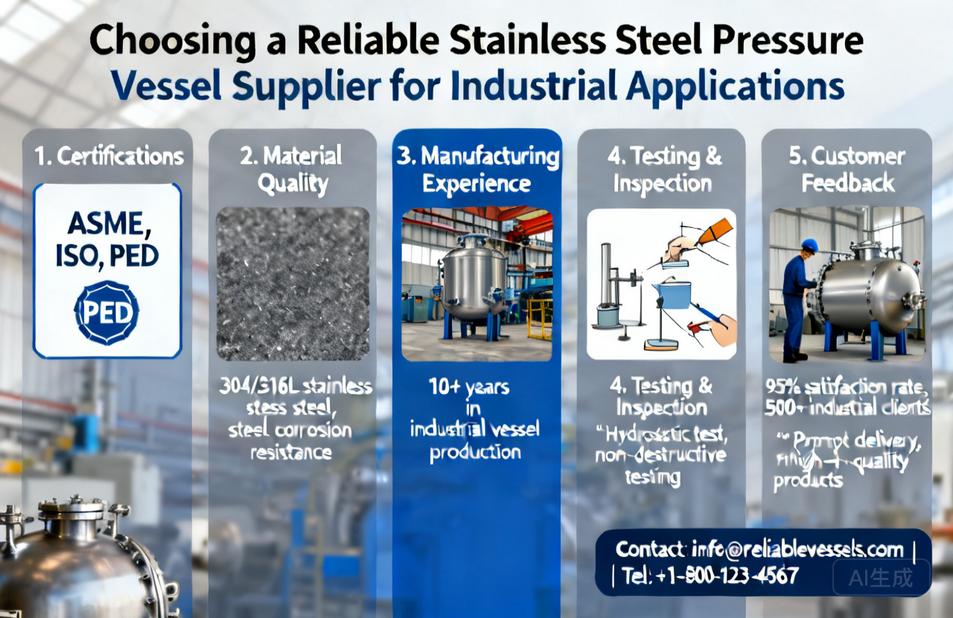
When sourcing a stainless steel pressure vessel supplier, industrial buyers are typically looking for a partner who can deliver durable, code-compliant equipment for storage, separation, reaction, or process containment. A stainless steel pressure vessel is engineered to hold gases or liquids at a pressure substantially different from the ambient pressure, and its use spans chemical processing, food and beverage, pharmaceutical, oil and gas, water treatment, and many other sectors. Selecting the right supplier is not only about comparing prices; it involves evaluating manufacturing capability, quality assurance, material traceability, customization support, and the ability to meet international standards.
What Is a Stainless Steel Pressure Vessel?
A stainless steel pressure vessel is a closed container designed to withstand internal or external pressure. The vessel is typically constructed from austenitic stainless steels such as 304 or 316/316L, chosen for their corrosion resistance, strength, and hygienic properties. These vessels are used as storage tanks, reactors, fermenters, heat exchangers, separators, and surge tanks. Depending on the intended service, the vessel may include additional features like agitation systems, heating or cooling jackets, level sensors, pressure relief devices, and various nozzle configurations. They are commonly available as vertical or horizontal designs and can be custom-engineered to meet process requirements.
Key Features to Look For in a Pressure Vessel
When evaluating a vessel offered by a manufacturer or supplier, several features determine its performance and longevity. Material grade and finish are critical; for aggressive media or sanitary applications, a 316L stainless steel with a low carbon content and an electropolished internal surface may be required. Weld quality and inspection are equally important, as the welds are often the most vulnerable points under cyclic or high pressure. Look for suppliers who follow full penetration welding procedures and perform non-destructive testing such as radiography or dye penetrant inspection. Other essential features include properly sized pressure relief valves, corrosion allowances, and appropriate design for thermal expansion or vacuum conditions.
Materials and Construction Standards
Reputable suppliers build stainless steel pressure vessels in accordance with recognized design codes such as ASME Boiler and Pressure Vessel Code Section VIII, PED (European Pressure Equipment Directive), or other local standards like GB150 or AD 2000-Merkblatt. These codes define minimum requirements for design, materials, fabrication, inspection, and testing. A supplier with in-house engineering and experienced welders certified to these standards is preferable. Always ask for material test certificates to confirm the chemical composition and mechanical properties of the steel plates and fittings used. For hygienic industries, surface roughness (Ra) and smoothness must align with cleanability requirements.
Common Applications Across Industries
The choice of a stainless steel pressure vessel is highly application-driven. In the food and beverage sector, vessels are used for pasteurization, fermentation, and storage of dairy, beer, wine, or juices. In pharmaceutical production, they serve as process tanks for mixing, holding, or storing intermediates under sterile conditions. Chemical plants rely on them for reactors or storage under corrosive or high-temperature environments. Water treatment facilities use pressure vessels as media filters or reverse osmosis housings. Oil and gas, petrochemical, and energy industries use larger custom-fabricated vessels for separation and gas processing. Each application may impose specific requirements in terms of pressure rating, temperature, corrosion resistance, and cleanability.
How to Choose the Right Vessel for Your Process
Before contacting a supplier, clearly define your process parameters, including operating pressure, temperature, fluid composition, volume, and flow requirements. Determine whether the vessel will be in continuous or batch service, and identify any cyclic loading that might cause fatigue. If your fluid is highly corrosive, a higher alloy or internal lining may be needed. Also, consider the installation site constraints such as space, lift, and connection orientations. After gathering these data, work with the supplier’s engineers to finalize the design, including wall thickness calculation, head type, support configuration, and nozzle schedule.
Customization and OEM Capabilities
Many industrial projects require pressure vessels that deviate from standard catalog designs. A capable manufacturer should offer customization options such as special dimensions, flanged or threaded connections, additional instrumentation ports, insulation, heating/cooling jackets, and internal baffles or coils. Under an OEM arrangement, the supplier may produce vessels under your brand name, adhering to your drawings, or they may modify standard designs to suit your original equipment. Clear drawing approvals, documentation, and confidentiality agreements are important in such relationships. Always confirm whether the factory offers custom pressure ratings beyond standard models and whether prototype or small-batch production is feasible.
Buying Considerations: Quality Assurance, Logistics, and After-Sales Support
Price is only one element of the total cost of ownership. Consider the supplier’s quality assurance procedures, including incoming material inspection, in-process checks, final hydrostatic testing, and documentation package. Shipping of pressure vessels can involve complex logistics, especially for large or heavy items; ensure that the supplier has experience in export packing and international freight. After-sales support matters as well; the supplier should provide installation guidance, maintenance advice, and spare parts availability. If you are importing across borders, confirm the required compliance certificates for your destination country and obtain clear lead time commitments.
Identifying a Trustworthy Supplier or Factory
Vet potential stainless steel pressure vessel suppliers by requesting references and case studies from similar industries. Visit the facility if possible, or arrange a video walkthrough to observe their shop floor, equipment, and quality control. Inquire about their engineering team and whether they can produce calculations and drawings independently. Review their certifications and audit records. A reliable supplier will be transparent about their capabilities, limitations, and manufacturing timelines. They should also provide a comprehensive quotation that specifies all material grades, design code, test requirements, and payment terms.
Frequently Asked Questions
What inspection tests should be performed on a fabricated pressure vessel?
Typical tests include material traceability reviews, weld inspections, radiography or ultrasonic testing for critical welds, hydrostatic or pneumatic pressure testing, and leak testing. The specific requirements are defined by the design code and the purchaser’s specifications.
Can I request a custom stainless steel pressure vessel for my unique process?
Yes, most industrial suppliers offer full custom engineering, allowing you to specify dimensions, connections, internal components, surface finish, and pressure ratings. You should provide detailed process conditions to receive an accurate design.
How long does it take to manufacture a stainless steel pressure vessel?
Manufacturing time depends on the vessel’s complexity, size, and the supplier’s workload. Simple tanks may be produced in weeks, while complex, custom-code vessels can require several months including engineering, material procurement, and testing.
What is the difference between a storage tank and a pressure vessel?
Pressure vessels are specifically designed to operate at pressures above or below atmospheric conditions, following strict engineering standards. Storage tanks often operate at near-atmospheric pressure and may not require the same level of inspection or certification.
Conclusion
Selecting the right stainless steel pressure vessel supplier is a strategic decision that impacts safety, performance, and overall project success. Focus on vendors that can demonstrate solid engineering capability, compliance with international manufacturing codes, transparent documentation, and willingness to provide tailor-made solutions. Whether you need a single custom vessel or a fleet of standardized units, it is prudent to evaluate multiple suppliers, ask detailed technical questions, and request a complete proposal in writing. For more information about available designs and to discuss your specific operational requirements, contacting an experienced manufacturer directly is the most effective next step.