

10L Stainless Steel Pressure Tank | Applications, Selection Criteria, and Custom Options
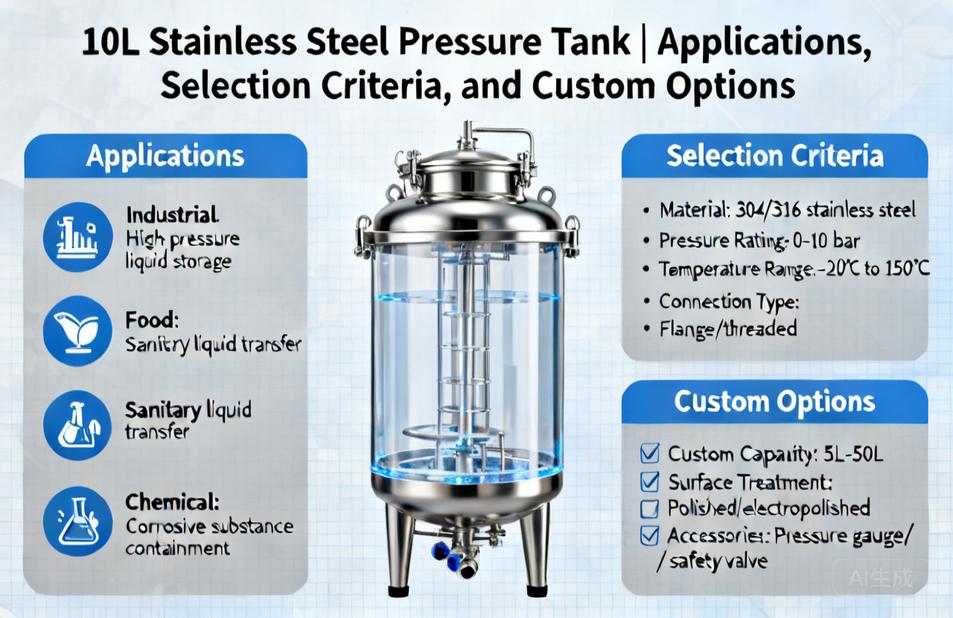
A 10L stainless steel pressure tank is a compact yet robust vessel designed to store and dispense liquids, adhesives, or semi-solid materials under controlled pneumatic pressure. Commonly used in industrial dispensing, chemical transfer, and food processing environments, this size offers a practical balance between capacity and portability. For B2B buyers, understanding the construction, working principle, and selection criteria of a 10L stainless steel pressure tank is essential for ensuring process efficiency, safety, and long-term reliability.
What Is a 10L Stainless Steel Pressure Tank?
A 10L stainless steel pressure tank, also known as a pressure vessel or pressure dispenser, is a sealed container rated to hold liquids under positive pressure. It typically features an inlet for compressed air or inert gas, a pressure gauge, a relief valve, and an outlet connected to a hose or dispensing nozzle. The tank’s 10-liter capacity makes it suitable for applications requiring moderate volumes, such as batch coating, adhesive application, or small-scale chemical dosing. Stainless steel construction, especially grades like 304 or 316, provides corrosion resistance, hygiene, and durability, making it a preferred choice across multiple industries.
Key Features and Construction
When evaluating a 10L stainless steel pressure tank, several design factors directly impact its performance and lifespan. The vessel wall thickness, welding quality, and surface finish determine its ability to withstand repeated pressurization without deformation or leakage. Most tanks use a clamp-style or threaded lid with a gasket to create an airtight seal. Pressure relief valves are mandatory safety components, preventing accidental over-pressurization. Additionally, many tanks come with an internal dip tube or bottom outlet to facilitate complete evacuation of the contents.
Material Grade and Finish
The choice between SS304 and SS316 depends on the fluid being handled. SS304 is suitable for general industrial use, while SS316 offers enhanced resistance to chlorides and acids, making it ideal for marine, pharmaceutical, or food contact applications. Electro-polished interiors reduce bacterial growth and ease cleaning, a critical requirement for food or cosmetic processing. A 10L stainless steel pressure tank with a mirror finish also minimizes fluid retention and simplifies maintenance.
Working Principle
The tank operates by introducing compressed air or nitrogen through the inlet, which exerts pressure on the liquid surface. This pressure forces the fluid up the dip tube and out through the discharge valve. An adjustable pressure regulator lets operators control the flow rate, ensuring consistent deposition. This simple mechanism eliminates the need for pumps, reducing maintenance and making the system easy to clean and swap between different fluids.
Common Industrial Applications
The 10L size is often chosen for manual or semi-automated processes where mobility and quick changeover matter. Below are typical scenarios where this tank proves valuable.
Adhesive and Sealant Dispensing
In packaging, woodworking, or assembly lines, precise adhesive application is critical. A 10L stainless steel pressure tank enables uniform application of low-to-medium viscosity adhesives, such as hot melts or solvent-based glues, through a hand-held valve or robotic nozzle. Operators can adjust air pressure to control bead width and flow, improving product quality.
Food and Beverage Transfer
For small-scale bottling, syrup dosing, or edible oil dispensing, a food-grade 10L stainless steel tank provides a sanitary solution. The inert nature of stainless steel does not alter taste or harbor bacteria, and the sealed design prevents contamination from ambient dust. Many facilities use these tanks for transferring fruit concentrates, liquid sweeteners, or flavorings.
Chemical and Lubricant Dosing
Maintenance workshops and laboratories use 10L pressure tanks to store and apply lubricants, release agents, or mild chemicals. The ability to pressurize the tank makes it easier to inject fluids into tight spaces, like bearing housings or mold release points. For aggressive chemicals, verify that the gasket material and the tank’s surface treatment are compatible to avoid corrosion.
Pharmaceutical and Cosmetic Manufacturing
Clean-room environments benefit from the easy-to-sanitize nature of a 10L stainless steel pressure tank. Whether it is transferring cream bases, liquid soap, or sterile solutions, the tank’s smooth internal surface and absence of dead zones reduce the risk of cross-contamination. Customization options like tri-clamp connections allow seamless integration with existing piping.
How to Choose the Right 10L Stainless Steel Pressure Tank
Selecting a tank requires matching its design to your specific application. Start by defining the viscosity, chemical compatibility, operating pressure, and required flow rate.
Determine Working Pressure and Safety Margin
Most tanks are rated for pressures between 2 to 8 bar (29 to 116 psi). Choose a tank with a maximum pressure rating at least 1.5 times your normal operating pressure. Verify the pressure gauge accuracy and the relief valve setting. For heated fluids or volatile solvents, consider adding thermal insulation or a cooling coil, though these are often custom solutions.
Assess Fluid Compatibility
Not all stainless steel grades react identically to all chemicals. Chlorinated solvents, strong acids, or saltwater can corrode standard 304, so opt for 316 or a specialized lining. Check the gasket material: Buna-N, EPDM, PTFE, or Viton offer different resistance levels. A reputable supplier will provide a compatibility chart for their tank’s seal and weld materials.
Consider Portability and Space
Although 10L is manageable, consider the tank’s overall dimensions, including the lid protrusion and handle design. In crowded production floors, a low-profile tank with a sturdy stand or wheels might be necessary. The weight of the empty tank plus liquid is significant; ensure your mounting structure can support it safely.
Customization and OEM Options
Buyers often require modifications to fit unique processes. Reputable manufacturers and factories offer several customization paths for a 10L stainless steel pressure tank.
Custom Inlets, Outlets, and Fittings
Standard tanks have 1/4 or 3/8 inch NPT ports. Manufacturers can adjust the diameter, add multiple outlets, or integrate quick-connect couplings. For food or pharmaceutical use, tri-clamp or flange connections are preferred to facilitate disassembly. If you need direct tank agitation, a top-mounted stirrer shaft can be added, but this usually requires a deeper custom design.
OEM Branding and Labeling
Many suppliers act as private label manufacturers. You can place your company logo, apply specific surface engraving, or specify a unique color coating on the outer shell. When ordering in bulk, OEM partners can provide custom packaging or user manuals to match your brand identity. Always request a pre-production sample to verify quality.
Volume and Rating Adjustments
While the tank is nominally 10L, the actual fill capacity may vary based on safety headspace. Some factories can increase the vessel’s height slightly to offer an 11-12L usable volume without changing the footprint. Similarly, if you need a higher pressure rating, the manufacturer may use thicker steel or improve the lid-sealing mechanism. Discuss your desired duty cycle with the engineering team to ensure the tank is not over-specified or under-designed.
Buying Considerations and Supplier Selection
When sourcing a 10L stainless steel pressure tank from a factory, supplier, or manufacturer, focus on quality assurance and after-sales support. Review the supplier’s certifications, such as ISO 9001 or pressure equipment directives, but do not assume they apply to every product. Request documentation of material test certificates and weld inspections for your specific batch. Inquire about standard lead times, but avoid accepting vague promises. A dependable supplier will ask about your application to recommend the correct pressure rating and fittings. They should also offer a spare parts kit, including gaskets and safety valves. Read customer feedback on the supplier’s website or independent platforms to gauge their responsiveness to problems. Since shipping costs for pressure vessels can be high, consider ordering in reasonable quantities to reduce per-unit freight.
Frequently Asked Questions
Can I use a 10L stainless steel pressure tank with very viscous liquids?
Yes, but you may need to raise the air pressure or use a larger-diameter outlet and hose. For extremely thick pastes or sealants, consider a tank with a ram plate that physically pushes the material, preventing air channeling. Most standard 10L tanks work well with fluids up to a few thousand centipoise, but confirm with the supplier for your specific material.
Is a 10L pressure tank suitable for carbonated beverages?
No, carbonated beverages require constant pressure to maintain dissolved CO2, and this tank is not designed for high-pressure gas saturation or continuous agitation. It is better suited for non-carbonated liquids or for dispensing pressurized gas as a propellant. Using it for carbonated drinks could lead to foaming or pressure fluctuations.
How do I clean a 10L stainless steel pressure tank?
After depressurizing and disconnecting air, open the lid and remove any residual fluid. Rinse with warm water and mild detergent, or use a caustic solution if the residue is tenacious. For food contact, follow with a sanitizing rinse using approved chemicals. Avoid abrasive pads that can scratch the surface. Periodically lubricate the lid gasket with food-grade grease to maintain the seal.
What is the typical guarantee or warranty on such tanks?
While warranties vary by factory, most reputable suppliers offer a 12-month warranty covering defects in materials and workmanship. The warranty does not cover damage from over-pressurization, chemical incompatibility, or improper use. Confirm whether the warranty includes the pressure gauge and safety valve, which are consumable items. Ask for a written warranty statement before purchase.
Conclusion
A 10L stainless steel pressure tank is a versatile tool for precise, low-to-moderate volume dispensing across many industries. Its success depends on choosing the right material grade, safety features, and port connections for your specific fluid. By evaluating working pressure, chemical resistance, and customization possibilities, you can avoid operational downtime and achieve consistent results. To find a trustworthy manufacturer or factory, focus on transparent technical communication and sample testing. If you have special requirements for fittings, capacity adjustments, or OEM branding, consult a supplier with proven engineering experience. They will help tailor a 10L stainless steel pressure tank to fit your process, ensuring a safe and productive installation. Reach out today to discuss your application and receive a quotation or further technical assistance.