

Epoxy Resin Dispensing Tank Supplier | Selection Guide for Adhesive Dispensing Systems
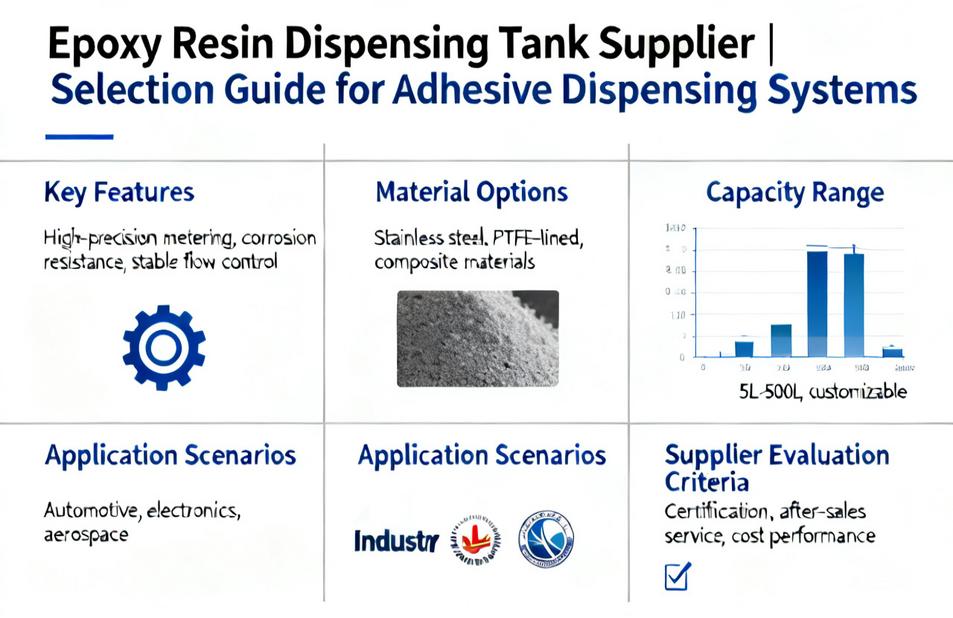
An epoxy resin dispensing tank is a core component in many industrial adhesive and resin dispensing systems, designed to store, pressurize, and deliver epoxy materials with consistent flow and pressure. Whether you are a system integrator, a manufacturer of dispensing equipment, or an end user looking to upgrade your production line, choosing the right epoxy resin dispensing tank supplier is a critical decision. The ideal supplier should provide not only a durable pressure vessel but also engineering support, customization options, and reliable after-sales service. This article explores the functions, design considerations, applications, and key criteria for selecting an epoxy resin dispensing tank supplier for industrial use.
Product Overview: What Is an Epoxy Resin Dispensing Tank?
An epoxy resin dispensing tank, also known as a pressure tank or pressure pot, is a sealed vessel used in dispensing systems to hold epoxy resin, hardener, or mixed adhesives. It operates by applying compressed air to the top of the tank, forcing the liquid material through a hose to a dispensing gun or valve. The tank’s role is to ensure a steady, controlled flow of material, which is essential for processes such as potting, encapsulation, sealing, and adhesive bonding. These tanks are commonly made from stainless steel or carbon steel, with internal coatings or liners to prevent chemical reaction and contamination. While some tanks are used with unmixed resin and hardener separately, others can be equipped with agitation systems for premixed materials.
Key Features of an Epoxy Resin Dispensing Tank
When evaluating a dispensing tank from a supplier, it is important to understand the features that affect performance, safety, and longevity. A well-designed epoxy resin dispensing tank typically includes the following elements:
- Pressure rating and control: Tanks are designed to withstand specific pressure levels, usually regulated by valves and gauges. The operating pressure range must match the viscosity of the epoxy and the requirements of the dispensing application.
- Material compatibility: Epoxy resins, especially those containing solvents or hardeners, can be corrosive. A tank must be made of materials that resist chemical attack, such as 304 or 316 stainless steel, or have an appropriate protective liner.
- Sealing system: A reliable lid seal with a clamp or bolt mechanism is essential to prevent leaks and maintain pressure. Seals should be compatible with the chemical properties of epoxy.
- Outlet and inlet connections: The tank should come with standard inlet and outlet ports that can be customized to fit existing hoses, pumps, or valves. Quick-disconnect fittings are a common option.
- Stirring or agitation system: For materials that tend to settle or for mixed epoxy with a limited pot life, an electric or pneumatic stirrer may be required inside the tank to maintain homogeneity.
- Safety features: Proper safety valves, pressure relief mechanisms, and compliance with relevant pressure vessel standards are critical for safe operation.
- Mobility and mounting: Depending on the workspace, tanks can be designed as stationary units or mounted on wheels, wall-mounted brackets, or custom frames.
Materials and Construction: What to Look For
The construction material of an epoxy resin dispensing tank is a primary factor in its durability and compatibility. Stainless steel is the most common choice for industrial epoxy dispensing because of its strength, corrosion resistance, and ease of cleaning. Carbon steel tanks are less expensive but may require internal coating if the material is acidic or reactive. Another consideration is the internal surface finish: a smooth, polished finish reduces the risk of material buildup and simplifies cleaning between batches. The type of seals and gaskets, typically made of PTFE, Viton, or EPDM, must also be resistant to the specific chemicals in the epoxy system. A reputable supplier will ask about your resin chemistry and operating conditions before recommending a construction material.
Applications Across Industries
Epoxy resin dispensing tanks are used in a wide range of industrial applications where precise, repeatable dispensing of adhesives or resins is required. Common sectors include:
- Electronics: Potting and encapsulation of circuit boards, sensors, and connectors to protect against vibration, moisture, and thermal shock.
- Automotive: Bonding of components, seam sealing, and application of structural adhesives in manufacturing.
- Aerospace: High-performance epoxy dispensing for composite assembly or precise coating of critical parts.
- Construction: Dispensing of epoxy grouts, anchoring adhesives, or concrete repair materials.
- Renewable energy: Encapsulation of solar panels and bonding of wind turbine blades.
- Medical devices: Assembly of disposable devices where clean and consistent adhesive application is required.
In all these applications, the choice of tank size and configuration depends on the production volume, material viscosity, required flow rate, and whether the epoxy is a single-component system or a two-component system that needs separate tanks prior to mixing.
How to Choose an Epoxy Resin Dispensing Tank
Selecting the right dispensing tank is not just about picking a standard model off a catalog. You need to match the tank’s specifications to your process. Here are the essential parameters to evaluate:
Capacity and Footprint
Consider the amount of epoxy you need to dispense before refilling. Tanks are available in various capacities, typically ranging from 2 liters to over 100 liters. Larger tanks reduce downtime for refilling but require more space and clean-out time. For high-volume production, inline tanks with automatic refill systems may be necessary.
Pressure Range and Flow Control
Different epoxy viscosities require different pressure levels. A low-viscosity resin may need less than 20 psi, while a high-viscosity paste may require up to 100 psi or more. Your supplier should be able to advise on the appropriate pressure settings and flow control valves for your material. If you require very precise dispensing, consider integrating a flow meter or servo-controlled valve.
Material and Seal Compatibility
Always confirm that the wetted parts of the tank, including seals and hoses, are compatible with your specific formulation. Some hardeners contain amines that can degrade certain elastomers. A reputable epoxy resin dispensing tank supplier will offer a range of seal materials and may recommend tests before committing to a full-size tank.
Heating and Temperature Control
Epoxy viscosity is temperature dependent. In regions with varying ambient temperatures, heated tanks or jacket heating can maintain consistent viscosity. If your process requires temperature control, look for tanks with a heating jacket and an integrated temperature controller.
Agitation and Degassing
Some formulations need continuous stirring to prevent filler settlement or to release entrained air. In such cases, an electric agitator or a vacuum chamber for degassing may be integrated into the tank design. Consider whether your application requires these features and discuss with your supplier during the quoting phase.
Customization and OEM Opportunities
For many manufacturers, standard off-the-shelf tanks do not perfectly integrate with existing dispensers or production lines. This is where a flexible supplier is valuable. An epoxy resin dispensing tank factory often provides OEM services to create customized vessels according to client drawings or specifications. Customization can include special flange sizes, additional ports, internal baffles, different outlet configurations, specialized clamps, and even complete assembly of the dispensing system. If you are an equipment manufacturer, you may want to source tanks with your own branding and specific performance parameters. Ensure that your supplier has experience with engineering custom designs and can provide necessary documentation, such as dimensional drawings and pressure test certificates.
Buying Considerations: Cost, Lead Time, and Support
When sourcing from an epoxy resin dispensing tank supplier, the initial price is only one part of the total cost equation. You should also evaluate the following aspects during your procurement process:
- Certification and compliance: Check if the tank is designed and tested according to international pressure vessel standards, such as CE in Europe or ASME in the United States. A supplier may be able to issue relevant certificates for the region of use.
- Lead time: Custom tanks usually require longer production cycles than standard models. Clarify expected delivery times, especially for stainless steel or custom-built units.
- After-sales support: Ask about warranty, spare parts availability, and technical support. Is the supplier able to help with installation or troubleshooting remotely?
- Sample testing: Before placing a large order, consider requesting a trial tank or a small batch to test with your actual epoxy material and dispensing equipment.
Supplier Selection: Factory vs. Trading Company
In the global market, you will encounter both manufacturing factories and trading companies that market themselves as epoxy resin dispensing tank suppliers. Choosing a direct factory generally offers more control over quality, more flexibility in customization, and often better pricing for large quantities. On the other hand, a well-established supplier with engineering knowledge can act as an extension of your team. When evaluating suppliers, request detailed product datasheets, ask about their manufacturing capabilities, and if possible, conduct a factory audit or a video walkthrough. Trust is built through transparent communication about technical capabilities and limitations. A good supplier will provide honest recommendations rather than simply pushing a product, helping you avoid costly mistakes.
Integration with Existing Dispensing Systems
An epoxy dispensing tank is rarely used in isolation. It is part of a larger system that includes pumps, metering valves, dispensing guns, and sometimes robotic arms. When selecting a tank, you must ensure it can be integrated with your current equipment. Key integration aspects include air inlet size and type, outlet thread size, maximum working viscosity range, and the type of fluid path for mixed or unmixed materials. Some suppliers offer complete feed systems that combine tank, transfer pump, and controls, simplifying integration and warranty responsibilities. If you are upgrading an existing line, provide your supplier with the specifications of your existing pump and hose so they can recommend the appropriate tank outlet connections.
Frequently Asked Questions
Can I use a stainless steel tank for all types of epoxy?
Stainless steel is generally suitable for most epoxy resins and hardeners, but you must verify chemical compatibility with the specific formulation, especially regarding corrosion and seal degradation. Some highly acidic or chlorinated materials may require specialty alloys or liners.
What is the difference between a pressure tank and a pump-based dispenser?
A pressure tank uses compressed air to push material from the vessel to the dispensing point, making it a simple and cost-effective system for low to medium viscosity liquids. Pump-based dispensers provide more precise flow control and can handle higher viscosity or paste materials, but they are typically more complex and costly.
How do I clean and maintain an epoxy resin dispensing tank?
Routine maintenance includes releasing pressure, disassembling the lid, and cleaning the internal surfaces with a compatible solvent before the epoxy cures. Regular checks of seals and valves are necessary to prevent leaks. Your supplier should provide a cleaning guide based on the material used.
Can a supplier design a tank that meets specific pressure vessel regulations in my country?
Many epoxy resin dispensing tank factories can design and manufacture tanks according to international standards such as PED in Europe or ASME in North America. When contacting a supplier, specify your target regulations and required documentation so they can evaluate their compliance capability.
Conclusion
Choosing the right epoxy resin dispensing tank supplier requires careful analysis of your material properties, desired flow rate, production environment, and integration needs. Do not settle for a generic product without first consulting the supplier about your application. The best results come from collaborating with a manufacturer or supplier that offers technical guidance, flexible customization, and transparent communication. Whether you need a standard 10-liter pressure tank for manual dispensing or a fully customized stainless steel vessel for an automated line, prioritize a partner that understands the complexities of epoxy handling. Contact a reliable epoxy resin dispensing tank supplier today to discuss your specifications and explore how their products can improve your dispensing process.