

Non Standard Pressure Tank | Custom Solutions for Specialized Industrial Applications
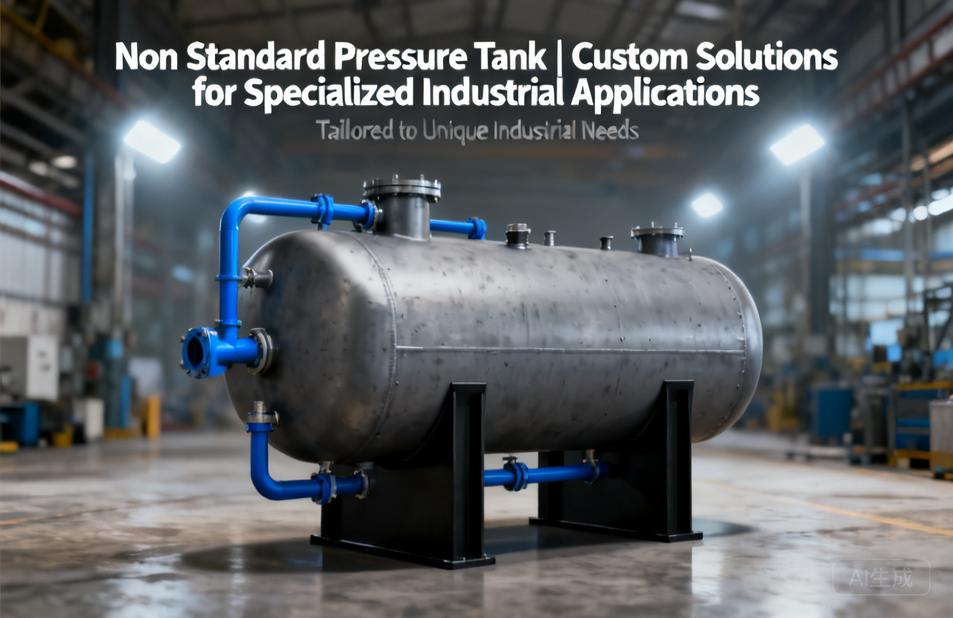
A non standard pressure tank refers to a pressure vessel manufactured according to unique specifications that fall outside typical industry standards or standard catalog dimensions. These tanks are designed for specific process requirements, unusual operating conditions, or space constraints where off-the-shelf pressure vessels cannot deliver optimal performance. Non standard pressure tanks are commonly used in chemical processing, pharmaceutical production, food processing, water treatment, and various OEM equipment applications where internal volumes, port configurations, materials, or pressure ratings must be precisely matched to the system design.
Product Overview
Non standard pressure tanks are engineered vessels built to contain gases or liquids under pressure when the required specifications deviate from standard models. This includes custom shell dimensions, non-standard nozzle placements, unusual support styles, special material grades, or tailored internal accessories such as baffles, coils, or agitator mounting flanges. Unlike standard pressure vessels that follow conventional sizing and connection patterns, a non standard pressure tank is developed from a detailed technical drawing or performance specification provided by the buyer, the end user, or their engineering consultant.
These tanks are manufactured by pressure vessel factories that have the capability to perform custom design calculations, select appropriate materials, and execute welding procedures compliant with the applicable pressure equipment directive or code in the destination market. Whether you need a small custom buffer tank for a pilot plant, a vertically mounted receiver for a skid package, or a large field-erected vessel with unique manway orientation, a non standard pressure tank offers the flexibility to solve engineering challenges without compromising safety or performance.
Key Features of Non Standard Pressure Tanks
Custom non standard pressure tanks are built around the principle of form fits function. Some of their key features include:
- Customized dimensional profiles including length, diameter, and orientation to match existing piping layouts or equipment footprints.
- Flexible nozzle configurations with specific flange ratings, sizes, locations, and orientations for inlet, outlet, drain, vent, and instrument connections.
- Selection of materials from carbon steel, stainless steel, duplex, or nickel alloys depending on fluid compatibility, temperature, and pressure requirements.
- Design pressure and temperature calculations tailored to the actual operating conditions and local regulatory requirements.
- Internal and external surface finishes, such as polished interior for hygienic service or protective coatings for corrosive environments.
- Additional supports, lugs, skirts, or saddles designed for the specific mounting method and load conditions of the application.
Because each custom tank is manufactured individually, manufacturers can also incorporate features that are not typically available in standard product lines, such as special observation windows, level gauges, heating jackets, or multiple compartments.
Materials and Construction
The material of construction for a non standard pressure tank is usually determined by the process fluid, operating pressure, temperature range, and environmental factors. Common materials include stainless steel for corrosion resistance and hygienic applications, while carbon steel offers a cost-effective option for general industrial service. When the fluid is highly corrosive or the pressure is extremely high, manufacturers may recommend alloy materials such as Hastelloy, Inconel, or titanium, although these are less common due to cost and availability.
Construction methods typically involve rolled and welded plate or seamless components, depending on the vessel geometry and code requirements. The welding procedures must be qualified and executed by certified welders to ensure weld integrity and pressure rating compliance. After fabrication, the custom pressure tank usually undergoes hydrostatic testing, pneumatic testing, or helium leak testing based on the design specification and customer requirements. Quality assurance documents, including material test certificates, welding maps, and non-destructive examination reports, are normally supplied with the purchase.
Applications Across Industries
Non standard pressure tanks find use in a wide array of industrial sectors where pressure must be contained in a way that standard vessels cannot achieve. In the chemical industry, for instance, they may serve as reaction vessels, storage tanks for intermediates, or blow-down receivers. Pharmaceutical and biotech applications often require pressure vessels with high interior finish, passivation, and cleanability, thereby making custom design necessary. In food and beverage, non standard pressure tanks can be used for carbonation, storage of liquid ingredients, or as part of CIP systems.
OEM machinery manufacturers frequently require custom hydraulic oil reservoirs or compressed air receiver tanks that fit within a specific frame size. These tanks are built to integrate seamlessly with other components, reducing the need for costly adaptors or extensive piping modifications. Water treatment facilities may require non-code horizontal or vertical pressure tanks for reverse osmosis or filtration systems, while mining and energy industries use custom surge vessels or pulsation dampeners.
How to Choose a Non Standard Pressure Tank
Choosing the correct non standard pressure tank involves several engineering and procurement considerations. First, define your operating pressure and temperature along with the volume and the fluid properties. These parameters determine the required wall thickness, material selection, and design code to follow. You should also consider where the vessel will be installed and what supporting structure will carry the load, since custom supports must be calculated.
Next, detail the necessary connections and internals. List every nozzle, its nominal size, pressure rating, and facing type. Indicate if you need a manway for internal inspection, brackets for mounting instruments, or a dip tube for liquid discharge. Providing clear engineering drawings or a detailed specification sheet to the supplier reduces the risk of misunderstandings. In the absence of full drawings, a trusted non standard pressure tank supplier can help translate your process requirements into a manufacturable design.
The selection of code and regulatory compliance is also essential. Vessels used in Europe should comply with the Pressure Equipment Directive (PED) and often CE marking, while in North America the ASME Boiler and Pressure Vessel Code Section VIII is typically required. In China, the GB150 and TSG 21 rules apply, while in Australia they may require the AS1210 standard. Your supplier should be experienced in the regulations of your target market, as well as any local inspection and certification requirements.
Customization Options and OEM Service
Visit a specialized non standard pressure tank manufacturer or factory, you can expect a high degree of customization. From the initial engineering calculation to the final surface finish, almost every aspect of the tank can be adjusted. For OEM projects, manufacturers can produce tanks in serial production with a consistent quality system while maintaining complete drawing control. They can also offer value-added services such as sandblasting, painting, insulation, heat tracing, or pre-mounted accessories.
When discussing your project with a supplier, ask about their design engineering resources, in-house welding capabilities, testing facilities, and quality management certifications. A reliable supplier will provide a clear fabrication schedule, milestones for inspections, and transparent communication during the drawing approval stage. For international orders, check their export experience and packing strategies to ensure safe transport and timely delivery.
Buying Considerations
There are several practical factors to bear in mind when purchasing non standard pressure tanks. First, never underestimate the importance of accurate measurements and thorough documentation. Slight deviations in nozzle orientation or shell length can lead to major problems during installation. Second, verify that the manufacturer is willing to perform required third-party inspections or to issue the appropriate certificates, such as a CSD-1 or CRN registration if needed in certain regions.
Compare quotations on the basis of total cost of ownership, including freight, customs duties, installation, and long-term maintenance. If you are buying directly from a factory in China or another low-cost production base, ensure you factor in compliance costs and quality supervision expenses. In contrast, choosing an overseas supplier might shorten lead times but increase unit price; thus, your decision should align with your project schedule and budget.
Finally, consider the after-sales services. Will the supplier provide a replacement for a defective part? Are they available for technical questions during installation? How do they handle possible warranty issues? Getting these points clarified in advance helps build a trusting long-term relationship.
Supplier Selection
Choosing the right non standard pressure tank supplier is as critical as the design itself. Look for a manufacturer with proven experience in custom vessels similar to your requirement. Request case studies or references from previous clients, and verify that the company has the necessary certifications and insurance coverage. A reputable supplier will be transparent about their capabilities and limitations, and they should be able to provide guidance on improving manufacturability and reducing cost through minor design modifications.
Arrange a visit to the factory if possible, or arrange a virtual walkthrough, to see their equipment and quality control practices. Pay attention to their welding procedures, material storage, and final inspection areas. For cross-border deals, consider hiring a local inspection agency to check the tank at progress stages, which can save you from dealing with nonconformities later.
Frequently Asked Questions
What is a non standard pressure tank?
A non standard pressure tank is a pressure vessel manufactured to specifications that lie outside standard catalog dimensions or standard engineering configurations. They are built to meet specific process needs, unique physical volume, unconventional nozzle placements, or special materials and pressure ratings that are not available as an off-the-shelf product.
What code do non standard pressure tanks normally follow?
The design code depends on the destination country and the intended service. In the United States, it is generally ASME BPVC Section VIII. In Europe, the Pressure Equipment Directive 2014/68/EU is applicable. In China, GB150/TSG 21 are common. Your supplier should clarify which code rules apply to your order and deliver documentation accordingly.
Can I order a non standard pressure tank with OEM branding?
Yes, many pressure vessel manufacturers provide OEM service. That means they fabricate tanks according to your design and brand them with your logo or part number. You must provide complete engineering drawings and specifications or work with the factory’s design team to develop a tank that meets your performance requirements while being competitive in cost.
Conclusion
Non standard pressure tanks are essential for many industrial applications where an off-the-shelf pressure vessel cannot satisfy the engineering realities. When dealing with these custom products, the key is to communicate your operating conditions, installation constraints, and regulatory requirements clearly. Choose a supplier with strong design capability, proven fabrication experience, and a commitment to quality documentation. Whether you are integrating the tank into a new OEM machine, replacing an outdated vessel, or expanding a process line, the long-term performance of a non standard pressure tank depends on careful specification and a trustworthy manufacturing partner. Always ask for a detailed quotation with a clear description of materials, dimensions, testing, and certification, and do not hesitate to reach out to a specialist for a consultation about your exact needs.