

Spray Paint Tank | A Reliable Solution for Efficient Industrial Spray Painting
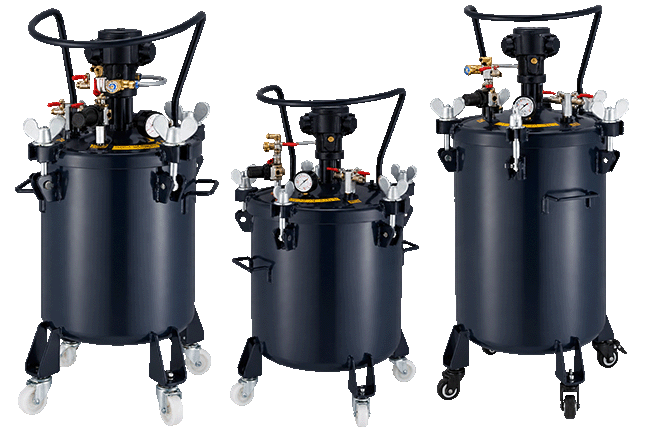
In professional coating applications, stable paint delivery is just as important as the spray gun itself. When operators need to work continuously on large surfaces or industrial production lines, constantly refilling a small paint cup can reduce efficiency and affect coating consistency.
A spray paint tank provides a practical solution by storing a larger volume of coating material and delivering it to the spray gun under controlled pressure. For manufacturers, workshops, furniture factories, automotive refinishing businesses, and metal coating companies, a reliable paint pressure tank can help create a more stable and efficient spraying process.
What Is a Spray Paint Tank?
A spray paint tank, also known as a paint pressure tank, pressure pot, or pressure pot for spray painting, is a container designed to hold paint, coatings, primers, or other liquid materials during spray application.
Compressed air is introduced into the tank, creating pressure that pushes the coating material through a fluid hose to the spray gun. Because the paint supply is separated from the spray gun, operators can use a larger volume of material without carrying a heavy paint cup.
This makes spray paint tanks particularly suitable for continuous or high-volume coating jobs.
Why Use a Paint Pressure Tank?
One of the main advantages of a spray paint tank is improved productivity.
With a traditional cup-fed spray gun, the operator must stop regularly to refill the paint container. These interruptions may seem small, but during long production cycles they can significantly reduce working efficiency.
A larger paint pressure pot allows more coating material to be prepared at one time. This helps reduce refilling frequency and allows operators to focus on the spraying process.
Stable fluid delivery is another important advantage.
When the tank pressure is properly adjusted, the coating material can be supplied to the spray gun at a consistent rate. A stable paint flow helps improve coating uniformity and may reduce problems such as uneven film thickness, inconsistent atomization, or irregular spray patterns.
Common Applications of Spray Paint Tanks
Spray paint tanks are widely used in many industrial coating environments.
Typical applications include:
- Furniture and wood finishing
- Metal product coating
- Machinery painting
- Automotive refinishing
- Industrial equipment coating
- Cabinet and door spraying
- Marine coating applications
- Steel structure painting
- Plastic product finishing
- General manufacturing and maintenance
For applications involving large workpieces or repeated production, an industrial spray paint tank can provide a more efficient solution than frequently refilling a small spray gun cup.
Choosing the Right Spray Paint Tank
Different spraying applications require different tank configurations. Before selecting a pressure tank, several factors should be considered.
Tank Capacity
The required capacity depends on the amount of coating material used during each production cycle.
Smaller tanks may be suitable for repair shops, sampling work, and short production runs. Larger tanks are more appropriate for continuous spraying or industrial production where frequent refilling should be avoided.
Choosing the correct tank size can help balance efficiency, material usage, and cleaning requirements.
Tank Material
Spray paint tanks are commonly manufactured from carbon steel or stainless steel.
Steel tanks are widely used for many standard coating applications, while stainless steel pressure tanks may be preferred when improved corrosion resistance or easier cleaning is required.
The coating material should always be compatible with the tank, seals, hoses, and fluid-contact components.
Working Pressure
The required working pressure depends on the coating viscosity, hose length, spray gun configuration, and application conditions.
A suitable pressure regulator allows operators to control the tank pressure and maintain stable fluid delivery.
The tank should always be operated within the manufacturer’s specified working pressure range.
Agitation System
Some coatings can settle or separate when stored for a period of time. In these applications, a spray paint tank equipped with a mixing or agitation system can help maintain a more uniform material consistency.
Agitation can be especially useful when working with coatings containing pigments or solids that may settle during continuous production.
Important Components of a Spray Paint Tank
A typical spray paint pressure tank may include several key components, such as:
- Pressure regulator
- Pressure gauge
- Safety valve
- Air inlet
- Fluid outlet
- Tank cover
- Sealing gasket
- Fluid tube
- Agitator, depending on the model
Each component contributes to the stability and safety of the coating system.
Before operation, users should check the sealing condition, pressure gauge, safety valve, air connections, and fluid hoses to ensure that the system is working properly.
Maintaining a Spray Paint Pressure Tank
Regular maintenance helps extend equipment service life and keeps the spray system operating reliably.
After each spraying job, remaining coating material should be handled according to the manufacturer’s recommendations. The tank, fluid hose, and related components should be cleaned with a suitable cleaning agent.
Operators should also inspect seals, hoses, regulators, valves, and fittings regularly.
Dried coating material inside the tank or fluid passage may restrict material flow and affect spray performance. Keeping the system clean helps reduce unnecessary downtime and makes future coating changes easier.
Improve Your Industrial Spray Painting Process
A high-quality spray paint tank is more than a simple paint container. It is an important part of a complete industrial spray painting system.
By providing a larger material capacity, stable fluid pressure, and continuous paint delivery, a paint pressure tank can help improve workflow efficiency and coating consistency.
Whether you are working with furniture, machinery, automotive parts, metal products, or other industrial components, selecting the right pressure pot for spray painting can make daily coating operations more efficient and manageable.
When choosing a spray paint tank, consider tank capacity, material compatibility, working pressure, coating viscosity, agitation requirements, and the configuration of your spray equipment.
A properly selected and maintained spray paint tank can support more reliable production and help achieve consistent coating results across a wide range of industrial applications.