

Chemical Dispensing Pressure Tank | A Practical Guide for Industrial Buyers
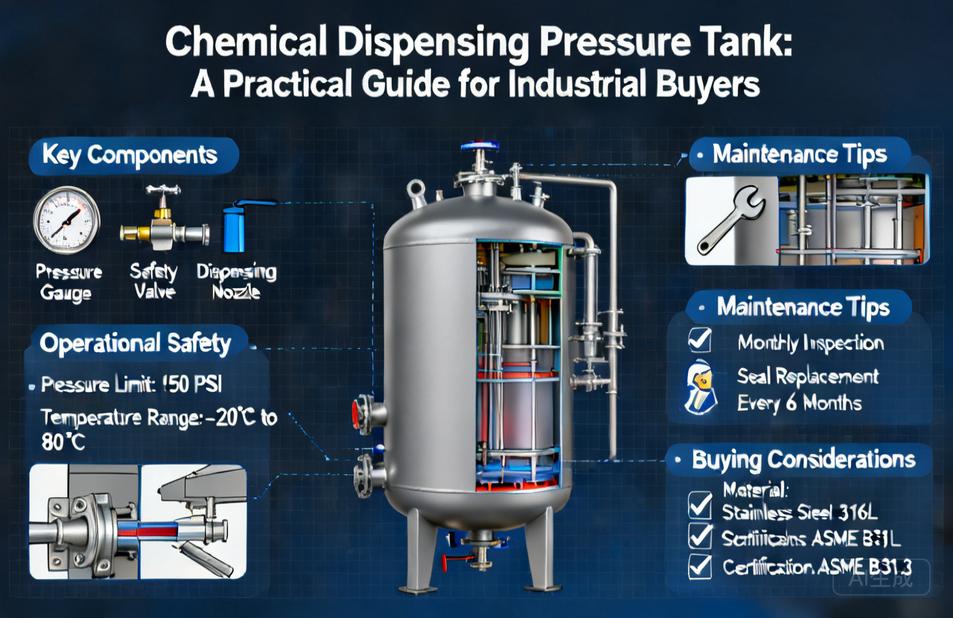
A chemical dispensing pressure tank is a sealed vessel that uses compressed air or inert gas to push chemical liquids, adhesives, solvents, coatings, or other fluids through hoses and dispensing valves at a controlled rate. It is widely used in industrial fluid handling, automated dispensing systems, packaging lines, electronics assembly, and general manufacturing processes where consistent material delivery matters. For overseas buyers, understanding how these tanks work, where they fit, and what to evaluate before requesting a quote can prevent costly integration problems later.
How a Chemical Dispensing Pressure Tank Works
Unlike a pump-based system, a pressure tank does not rely on mechanical suction at the point of use. Instead, the tank is partially filled with the chemical or fluid, sealed, and then pressurized from an external air or gas source. The pressure pushes the liquid out through a dip tube or outlet port toward a dispensing valve, nozzle, or manifold. When the valve opens, material flows; when it closes, flow stops. In many setups, the tank pressure is regulated to maintain a steady output, which helps reduce pulsation and improves repeatability in manual or automated dispensing.
This design is often chosen when the material is sensitive to shear, when users want fewer mechanical wear parts, or when the fluid must be delivered from a bulk container to a point of application without passing through a pump. Because the tank is a pressure vessel, its construction, sealing, and pressure ratings must be matched to the fluid and the working environment.
Typical Industrial Applications
Pressure tanks for chemical dispensing appear in many industrial settings, including:
- Adhesive and sealant dispensing in automotive and appliance assembly
- Potting, encapsulation, and conformal coating in electronics manufacturing
- Solvent, ink, and coating delivery in printing and surface treatment
- Chemical dosing in water treatment and process industries
- Lubricant and release agent application in molding operations
- Food-grade fluid transfer where sanitary construction is required
The same tank design can serve different industries, but the wetted materials, seals, and cleaning requirements may change significantly depending on the chemical and the process environment.
Key Features Buyers Should Look For
When evaluating a chemical dispensing pressure tank, procurement teams and process engineers usually focus on several practical features:
- Pressure regulation and relief: A reliable regulator and safety relief valve help protect the tank and the operator if pressure exceeds the set point.
- Level monitoring: Sight glasses, float switches, or electronic level sensors help operators know when to refill without opening the tank.
- Agitation or mixing: Some materials settle or separate, so an optional agitator or recirculation port may be needed.
- Quick-connect fittings: These simplify hose changes, tank swaps, and cleaning between batches.
- Discharge options: Bottom outlet, dip tube, or side discharge configurations affect how completely the tank empties and how easy it is to clean.
These features are not universal. A tank optimized for low-viscosity solvent may not suit a high-viscosity adhesive, so the application should drive the specification.
Materials and Construction
Material choice is one of the most important decisions because it affects chemical compatibility, service life, and maintenance. Common construction materials include:
- Stainless steel: Often selected for corrosion resistance, durability, and cleanability. Different grades may be used depending on the chemical and environment.
- Carbon steel: Used for some non-corrosive fluids and where cost is a primary concern, usually with an internal coating or lining.
- PTFE-lined or coated tanks: Considered when aggressive chemicals would attack bare metal.
- Plastic or composite tanks: Used in some lower-pressure or highly corrosive applications, though pressure ratings and temperature limits must be verified.
Seals, gaskets, and wetted fittings must also be compatible with the chemical being dispensed. A tank manufacturer or supplier should be able to review the fluid and recommend suitable materials, but final compatibility testing remains the buyer’s responsibility.
How to Choose the Right Tank for Your Process
Selecting a pressure tank is not only about volume. Buyers should consider:
- Fluid characteristics: Viscosity, corrosiveness, solids content, and temperature range
- Required flow rate: How much material must be delivered per minute or per cycle
- Working pressure: What pressure is needed to overcome line losses and valve resistance
- Duty cycle: Continuous operation, intermittent dispensing, or batch processing
- Environment: Indoor or outdoor use, washdown requirements, and hazardous area classification
- Integration: How the tank will connect to existing dispensers, robots, or PLC-controlled systems
If the application involves multiple fluids or frequent changeovers, a modular or skid-mounted configuration may reduce downtime. For automated lines, remote pressure monitoring and level feedback can help operators respond before a tank runs empty.
OEM and Customization Options
Many industrial buyers need more than a standard catalog tank. A qualified manufacturer or factory can often provide OEM and custom configurations, such as:
- Custom tank dimensions, port locations, and mounting brackets
- Special wetted materials or surface finishes
- Integrated regulators, gauges, relief valves, and level sensors
- Private-label branding or documentation packages
- Compatibility with specific dispensing valves, hoses, or robotic interfaces
When requesting a custom design, provide clear process data, fluid details, and interface requirements. This helps the supplier propose a workable configuration and reduces the risk of rework.
Buying Considerations for Overseas Procurement
Purchasing a chemical dispensing pressure tank from an international supplier involves several practical checks:
- Confirm that the tank meets the pressure and material requirements of the application
- Ask for dimensional drawings and port layouts before placing an order
- Review the supplier’s quality control process and documentation practices
- Clarify packaging, shipping, and spare parts availability
- Discuss lead time and whether custom work affects the schedule
- Check whether technical support is available for installation and troubleshooting
Price is important, but total cost of ownership often depends more on reliability, service life, and how well the tank integrates with the rest of the dispensing system.
Supplier Selection Tips
A reliable supplier should be able to explain how the tank works, recommend materials based on the chemical, and provide clear documentation. During evaluation, look for:
- Experience with industrial fluid handling and dispensing systems
- Ability to support OEM or custom projects
- Responsive communication and technical follow-up
- Consistent manufacturing quality across orders
- Willingness to provide references or sample documentation where appropriate
Visiting a factory or requesting a video walkthrough can also help confirm production capability and quality control practices.
Frequently Asked Questions
What is the difference between a pressure tank and a pressure pot?
In many industrial contexts, the terms are used interchangeably. Both refer to a sealed vessel pressurized with air or gas to push fluid out. Some suppliers use pressure pot for smaller or portable units, while pressure tank may describe larger or permanently installed vessels.
Can a chemical dispensing pressure tank handle high-viscosity fluids?
It can, but the design must account for the higher pressure needed to move thick material and for the larger outlet and hose sizes that reduce restriction. In some cases, heating or agitation may also be required to maintain flow.
Do I need a special tank for flammable solvents?
Flammable fluids may require grounding, non-sparking components, and materials compatible with the solvent. Local safety regulations and hazardous area classifications should be reviewed with the supplier before selecting a tank.
Can the tank be integrated with an existing dispensing valve?
Often yes, but the connection type, pressure range, and flow characteristics must match. Providing the valve model and operating parameters to the tank supplier helps ensure compatibility.
Conclusion
Choosing a chemical dispensing pressure tank starts with a clear understanding of the fluid, the required flow, the working pressure, and the environment. From there, buyers can evaluate materials, features, and customization options that fit the process rather than simply matching a catalog number. Working with a manufacturer or supplier that understands industrial dispensing systems can make specification, OEM projects, and long-term support much easier. If you are planning a new dispensing setup or replacing an existing tank, sharing your application details with a qualified supplier is a practical next step.