

Pneumatic Mixing Pressure Tank | A Complete Guide for Industrial Buyers
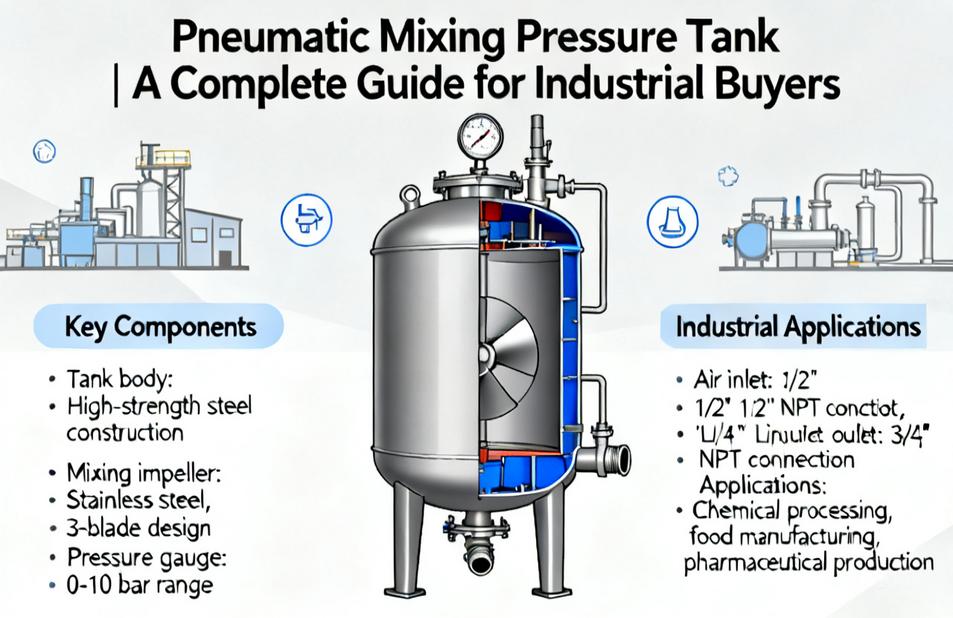
A pneumatic mixing pressure tank is a pressure vessel that uses compressed air to both pressurize and agitate fluids or semi-solids before they are dispensed, sprayed, or transferred. Unlike a standard pressure pot that only pushes material out, a mixing pressure tank keeps the contents homogeneous through pneumatic agitation, making it suitable for two-component adhesives, filled coatings, sealants, and other materials that tend to separate or settle during storage and use. For overseas buyers sourcing fluid handling equipment, understanding how these tanks work and what to evaluate before ordering is essential for matching the right unit to a production line.
How a Pneumatic Mixing Pressure Tank Works
The working principle is straightforward but effective. Compressed air enters the sealed tank and creates pressure on the liquid surface. At the same time, a pneumatic motor or air-driven agitator shaft rotates an impeller inside the tank. This continuous mixing prevents pigments, fillers, or reactive components from settling or curing unevenly. When the outlet valve opens, the internal pressure pushes the mixed material through hoses or pipes to a dispense valve, spray gun, or injection point.
Because both the pressure and the agitation are powered by air, the system is suitable for hazardous environments where electric motors may not be preferred. It also allows operators to adjust mixing speed and discharge pressure independently, which is useful when handling materials with different viscosities.
Key Features Buyers Look For
When evaluating a pneumatic mixing pressure tank, procurement teams typically focus on several practical features:
- Sealed tank design with a clamped or bolted lid for easy filling and cleaning.
- Air-driven agitator with adjustable speed to suit low- and high-viscosity materials.
- Pressure regulation through an air regulator and gauge for consistent flow.
- Safety relief valve to prevent over-pressurization.
- Material outlet positioned to minimize dead zones and ensure complete drainage.
- Portable or stationary mounting depending on whether the tank is moved between workstations.
These features affect daily usability, maintenance frequency, and the quality of the mixed material delivered to the application point.
Materials and Construction
The wetted parts of a mixing pressure tank are usually available in carbon steel, stainless steel 304 or 316, or sometimes PTFE-lined configurations for aggressive chemicals. Stainless steel is common in food, pharmaceutical, and cosmetic applications where corrosion resistance and cleanability matter. Carbon steel may be acceptable for industrial coatings and adhesives where the material itself is not corrosive.
Seals, gaskets, and agitator shafts must also be compatible with the fluid being processed. Buyers should confirm the elastomer type, such as nitrile, EPDM, or PTFE, before ordering. A reputable manufacturer or supplier will ask about the material to be mixed and recommend suitable construction rather than offering a one-size-fits-all unit.
Industrial Applications
Pneumatic mixing pressure tanks appear in a wide range of industrial applications where consistent material delivery is critical:
- Two-component adhesives and sealants that require homogeneous mixing before dispensing.
- Filled or pigmented coatings used in automotive, aerospace, and general finishing.
- Ceramic slurries and mold release agents in casting operations.
- Food-grade sauces, flavorings, and syrups where gentle agitation is needed.
- Pharmaceutical and cosmetic creams that must remain uniform during filling.
- Chemical transfer in environments where electrical equipment is restricted.
In each case, the tank supports a stable feed of material to a dispenser, spray system, or filling machine, reducing downtime caused by clogged lines or inconsistent mixture.
How to Choose the Right Unit
Selecting a pneumatic mixing pressure tank involves matching the equipment to the material, the process, and the production environment. Important questions include:
What is the viscosity and reactivity of the material?
Higher viscosity may require a more powerful air motor and a larger agitator blade. Reactive materials may need a tank that can be cleaned quickly between batches.
What pressure and flow rate are required?
The tank working pressure must be compatible with the downstream dispense valve or spray gun. Flow rate depends on pressure, outlet size, and material viscosity.
What is the batch size and duty cycle?
Tank volume should match typical batch size without excessive unused capacity. Continuous duty may call for a more robust agitator seal and cooling arrangement.
Is mobility required?
Portable tanks with casters and handles suit job shops, while stationary tanks with fixed piping suit automated lines.
Buyers should also confirm available spare parts, seal kits, and technical support before finalizing a purchase order.
Customization and OEM Options
Many industrial buyers need a unit that fits existing production layouts. Custom options may include tank volume, outlet port size and position, agitator type, lid clamping mechanism, cart or frame design, and surface finish. OEM manufacturing allows a distributor or equipment builder to specify branding, control panel configuration, and documentation language.
When approaching a factory for a custom pneumatic mixing pressure tank, provide drawings, material data sheets, required pressure range, and any site-specific constraints. A capable supplier will review the application and propose a configuration rather than simply quoting a catalog number.
Supplier Selection and Buying Considerations
Reliable supplier selection goes beyond price. Look for a manufacturer with experience in pressure vessels and air-driven agitation, clear communication during the specification stage, and a documented quality process. Ask for dimensional drawings, material certificates for wetted parts, and operation manuals in the required language.
Also consider after-sales support. Agitator seals and air motors are wear items, so access to replacement parts affects long-term cost of ownership. A supplier who understands industrial applications can help troubleshoot mixing or pressure issues after installation, which is valuable for overseas buyers managing equipment across different sites.
For small trial orders, confirm packaging and shipping details that protect the tank and its components during transport. For repeat orders, discuss consistent lead times, batch documentation, and whether the supplier can hold agreed specifications over time.
Frequently Asked Questions
Can a pneumatic mixing pressure tank handle high-viscosity materials?
Yes, but the agitator motor, shaft, and blade must be sized for the viscosity range. Thick pastes may require a slow-speed, high-torque air motor and a larger outlet. Always share the material viscosity with the manufacturer before ordering.
Is it possible to use one tank for different materials?
It is possible if the tank and seals are compatible with each material and if cleaning procedures are followed between batches. Reactive or incompatible materials may require dedicated tanks to avoid cross-contamination.
What information is needed for an OEM or custom order?
Provide tank volume, working pressure, material type, viscosity, required flow rate, outlet configuration, mounting preference, and any branding or documentation requirements. Drawings and site constraints are also helpful.
How do I maintain the agitator and seals?
Follow the operation manual for lubrication and inspection intervals. Replace worn seals and gaskets with parts specified by the supplier. Keep spare seal kits on hand for critical production lines.
Conclusion
A pneumatic mixing pressure tank is a practical solution for keeping fluids uniform while delivering them under pressure to dispensing, spraying, or filling equipment. When choosing a unit, focus on material compatibility, viscosity, pressure and flow requirements, cleaning needs, and the availability of spare parts. Buyers who need a tailored configuration should discuss their application with an experienced manufacturer or supplier that offers OEM and custom options. Sharing your material details, production setup, and specification requirements will help you receive a more accurate recommendation and a smoother purchasing process.