

Custom Dispensing Pressure Tank | A Buyer’s Guide for Industrial Dispensing Systems
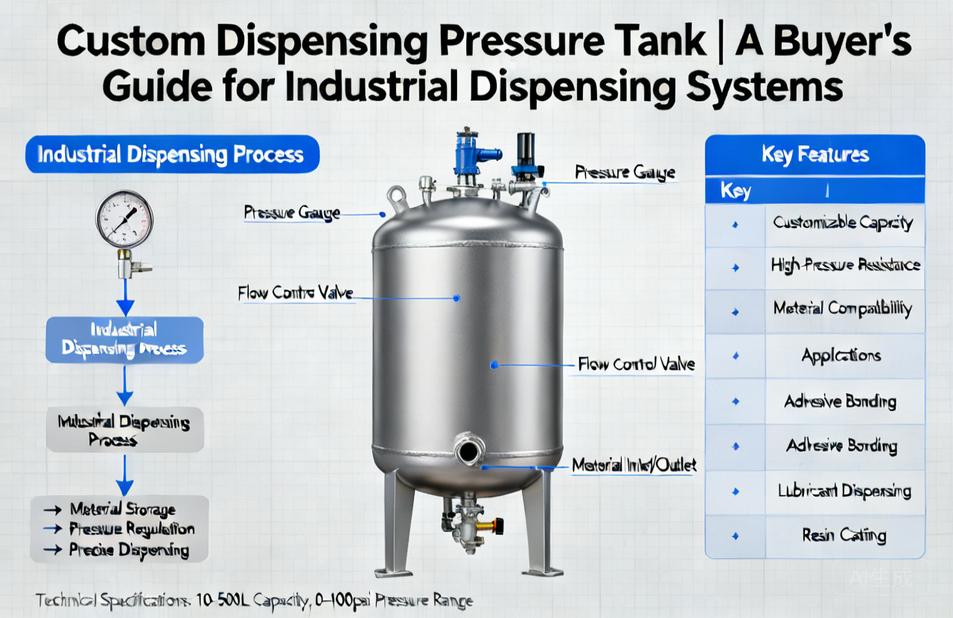
A custom dispensing pressure tank is a specialized vessel designed to hold and pressurize fluids, adhesives, sealants, or other media for controlled dispensing in industrial processes. Unlike standard off-the-shelf tanks, a custom dispensing pressure tank is built to match specific requirements such as fluid compatibility, pressure range, outlet configuration, and integration with existing dispensing equipment. It is widely used in automation lines, automotive assembly, electronics manufacturing, and general industrial dispensing where precise and consistent material flow is critical.
What Is a Custom Dispensing Pressure Tank?
At its core, a dispensing pressure tank is a sealed container that uses compressed air or another gas to pressurize the contents, pushing the material through a hose or nozzle to the point of application. When this tank is custom-built, it means the manufacturer tailors dimensions, port sizes, wetted materials, pressure ratings, and mounting options to fit a particular dispensing system or process. The goal is to ensure optimal flow characteristics, minimal waste, and reliable operation within the specific parameters of the application.
Custom dispensing pressure tanks are often used when standard tanks cannot accommodate unique fluids, space constraints, or performance requirements. They are common in applications such as dispensing two-part adhesives, potting compounds, lubricants, inks, and sealants. Because the tank directly affects dispensing accuracy and repeatability, selecting the right design is essential for maintaining product quality and process efficiency.
Key Features of a Custom Dispensing Pressure Tank
While designs vary, most custom dispensing pressure tanks share several important features that buyers should evaluate:
- Pressure vessel construction: Typically cylindrical with dished or flat heads, designed to withstand internal pressure safely.
- Material of construction: Often stainless steel for corrosion resistance, but carbon steel, aluminum, or specialty alloys may be used based on the fluid.
- Inlet and outlet ports: Sized and positioned to match feed lines and dispensing valves; can include additional ports for level sensors, relief valves, or agitation.
- Closure mechanism: Quick-opening or bolted covers for easy filling and cleaning, with appropriate gaskets for a tight seal.
- Pressure regulation: Integrated regulators, gauges, and safety relief devices to control and monitor internal pressure.
- Mounting options: Stand-mounted, wall-mounted, or integrated into a dispensing robot or fixture.
These features are not one-size-fits-all; they are configured during the customization process to align with the dispensing equipment and the material being used.
How a Dispensing Pressure Tank Works
The working principle is straightforward. The tank is filled with the dispensing material, sealed, and connected to a compressed air source. Regulated air pressure is applied to the interior of the tank, creating a force on the material. When the dispensing valve opens, the pressurized material flows through the outlet and delivery system to the application point. The pressure can be adjusted to control flow rate, and some systems use a follower plate or piston to minimize waste and improve evacuation of high-viscosity fluids.
For consistent results, the tank must maintain stable pressure throughout the dispensing cycle. Factors such as fluid viscosity, temperature, hose length, and valve type all influence performance. A custom tank allows these variables to be addressed through proper sizing and component selection.
Materials and Construction Considerations
Material choice is a critical decision in any custom dispensing pressure tank project. The wetted parts must be compatible with the fluid to prevent corrosion, contamination, or chemical degradation. Stainless steel grades such as 304 or 316 are common for water-based and solvent-based materials. For aggressive chemicals, higher alloys or plastic-lined tanks may be required. The exterior finish and overall construction should also match the operating environment, whether it is a cleanroom, a wash-down area, or a hazardous location.
Construction details like weld quality, surface finish, and passivation can affect cleanability and service life. Buyers should discuss these points with a qualified manufacturer to ensure the tank meets both process and regulatory requirements without over-specifying and driving up cost.
Typical Industrial Applications
Custom dispensing pressure tanks serve a wide range of industries and processes. Common applications include:
- Automotive: dispensing adhesives, sealants, and sound-deadening materials.
- Electronics: applying potting compounds, conformal coatings, and thermal interface materials.
- Packaging: feeding inks, glues, and labels in high-speed lines.
- Medical device manufacturing: dispensing silicones and biocompatible adhesives.
- Aerospace: applying sealants and structural adhesives with tight tolerances.
- General assembly: lubricants, greases, and thread-locking fluids.
In each case, the tank is matched to the fluid characteristics and the dispensing method to achieve repeatable beads, dots, or fills.
How to Choose the Right Custom Dispensing Pressure Tank
Choosing a custom tank involves more than picking a size. Start by defining the fluid properties: viscosity, density, solids content, and chemical compatibility. Next, determine the required flow rate and pressure range for your dispensing valve or nozzle. Consider the duty cycle and whether the tank will be refilled frequently or used in continuous operation. Space limitations, mounting orientation, and available utilities also play a role.
It is equally important to think about cleaning and maintenance. Quick-access covers, smooth internal surfaces, and drain ports can reduce downtime. If the fluid is moisture-sensitive or prone to settling, you may need features like desiccant breathers or agitation. Working with a supplier that understands dispensing systems will help you avoid costly mistakes and ensure the tank integrates seamlessly.
Customization and OEM Options
Many manufacturers offer OEM and custom fabrication services for dispensing pressure tanks. This can include non-standard dimensions, special port layouts, unique materials, private labeling, and documentation packages. If you are an equipment builder or distributor, an OEM arrangement can provide tanks that match your branding and technical specifications. Always request detailed drawings and material certificates before production to confirm that the design meets your expectations.
Buying Considerations and Supplier Selection
When evaluating potential suppliers, look for experience in pressure vessel fabrication and dispensing systems. A capable factory should be able to provide engineering support, recommend suitable materials, and offer testing or certification as needed. Ask about their quality control process, lead times, and ability to handle small or large batch orders. Communication is key: a supplier who asks detailed questions about your application is more likely to deliver a tank that performs as intended.
Price should be considered alongside total cost of ownership. A well-built custom tank may have a higher upfront cost but can reduce downtime, material waste, and maintenance expenses over its service life. Avoid suppliers who cannot provide clear technical information or who are unwilling to discuss customization in depth.
Frequently Asked Questions
What information do I need to provide to get a custom dispensing pressure tank quote?
You should provide the fluid type and properties, required pressure and flow rate, connection sizes, available space, mounting preferences, and any special features such as agitation or level sensing. Drawings or sketches of the intended installation are helpful.
Can a custom pressure tank be used with high-viscosity materials?
Yes, but the design must account for the higher resistance to flow. Features like larger outlet ports, follower plates, or heated jackets may be necessary. Discuss the material viscosity with your supplier to ensure proper sizing.
What are the typical materials for a dispensing pressure tank?
Stainless steel is the most common due to its corrosion resistance and cleanability. Carbon steel, aluminum, and specialty alloys are also used depending on the fluid and environment. The choice depends on chemical compatibility and operating conditions.
How do I ensure the tank meets safety requirements?
Work with a manufacturer that follows applicable pressure vessel codes and includes safety relief devices. Request documentation of design calculations and material certifications. Never operate a pressure tank without proper relief protection.
Conclusion
Selecting a custom dispensing pressure tank is a decision that affects dispensing accuracy, process reliability, and overall operating cost. By understanding your fluid, defining performance requirements, and choosing a manufacturer with the right experience, you can specify a tank that fits your system perfectly. Whether you need a single unit or an OEM partnership, clear communication and technical collaboration are essential. If you have questions about customization, materials, or integration with your dispensing equipment, reach out to a qualified supplier to discuss your application and receive a tailored solution.