

304 Stainless Steel Pressure Vessel | A Practical Guide for Industrial Buyers
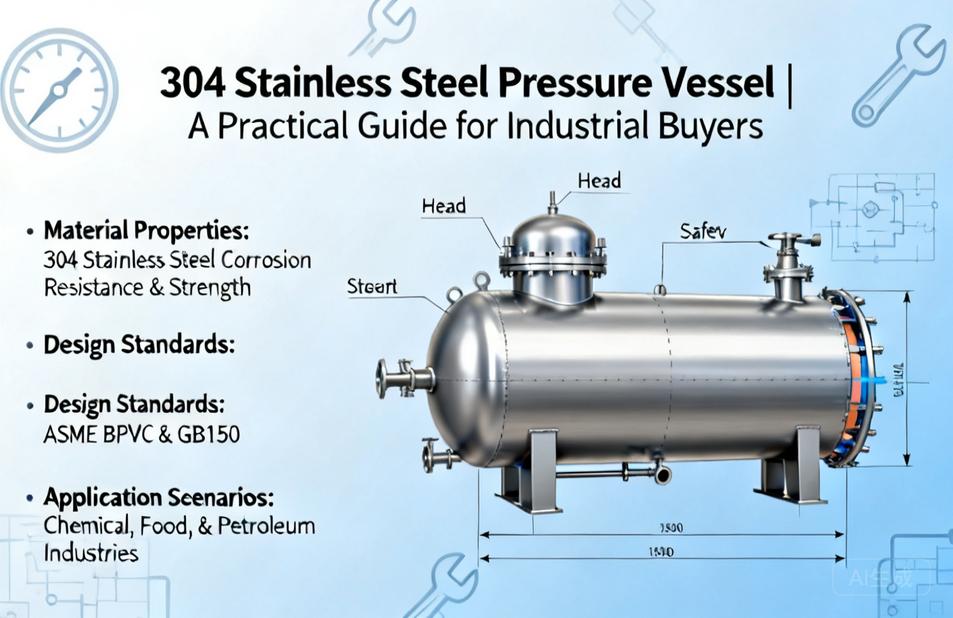
When selecting equipment for storing or processing liquids and gases under pressure, a 304 stainless steel pressure vessel is a common and reliable choice for many industrial applications. This type of vessel is fabricated from grade 304 stainless steel, an austenitic alloy known for its corrosion resistance, formability, and cleanability. It is widely used in food and beverage processing, chemical handling, pharmaceutical production, water treatment, and general manufacturing where a durable, hygienic, and pressure-resistant container is required. If you are sourcing pressure vessels for a new system or replacing an existing unit, understanding the material, design, and supplier landscape will help you make a better procurement decision.
What Is a 304 Stainless Steel Pressure Vessel?
A pressure vessel is a closed container designed to hold liquids or gases at pressures different from ambient conditions. The 304 stainless steel designation refers to the material used for the shell, heads, and often the internal components. Grade 304 contains 18% chromium and 8% nickel, which provides good resistance to oxidation and many corrosive media. It is not the most corrosion-resistant stainless steel available, but it offers a practical balance of performance and cost for many non-marine and non-high-chloride environments. These vessels can be vertical or horizontal, with capacities ranging from small tanks to large process columns, depending on the application.
Key Features and Construction Details
Industrial buyers often look for specific construction features when evaluating a 304 stainless steel pressure vessel. Common characteristics include welded or seamless construction, dished or flanged heads, and various port configurations for inlet, outlet, vent, and instrumentation. Surface finishes may range from industrial mill finish to sanitary polished interiors for food and pharmaceutical use. Insulation, jackets for heating or cooling, and mounting legs or skirts are also available. The vessel may be designed for internal pressure, external pressure, or both, and may include internal baffles or distributors depending on the process requirement.
Materials and Fabrication
Beyond the 304 grade itself, the fabrication quality matters. Reliable manufacturers use certified raw material and controlled welding procedures. They may perform non-destructive testing such as dye penetrant or radiographic examination on critical welds. However, the specific testing regime should be agreed upon during the quotation stage and should not be assumed unless documented. Buyers should request material certificates and weld procedure specifications when the application demands traceability.
Common Configurations
Pressure vessels in 304 stainless steel are available in several standard configurations. Vertical tanks with dished tops and bottoms are common for storage and surge control. Horizontal vessels are often used where headroom is limited or where a lower profile is needed. Some vessels are designed as receivers for compressed air or gas systems, while others serve as reactors, mixing tanks, or buffer vessels in continuous processes. The choice depends on the process flow, available space, and maintenance access.
Industrial Applications
The use of 304 stainless steel pressure vessels spans many sectors. In the food and beverage industry, they are used for holding, blending, and carbonation processes where hygiene and corrosion resistance are important. Chemical plants use them for intermediate storage and reaction steps involving mildly corrosive fluids. Pharmaceutical manufacturers require smooth, cleanable surfaces for product contact. Water treatment facilities use pressure vessels for filtration, softening, and reverse osmosis systems. Other applications include HVAC expansion tanks, hydraulic accumulators, and air receiver tanks in industrial compressed air systems.
How to Choose the Right Vessel for Your Process
Selecting a pressure vessel involves several engineering and commercial considerations. First, define the operating pressure and temperature range, as these determine the required wall thickness and material grade. Second, consider the fluid or gas being handled and its compatibility with 304 stainless steel, especially regarding chloride content and acidity. Third, determine the required volume and whether the vessel should be vertical or horizontal. Fourth, think about connection sizes, port locations, and any internal components needed for your process. Finally, consider the installation environment, including indoor or outdoor placement, seismic requirements, and available space for maintenance.
Customization and OEM Options
Many suppliers offer custom fabrication and OEM services for 304 stainless steel pressure vessels. This can include modifications to dimensions, nozzle orientation, surface finish, insulation, and control interfaces. If your application requires a non-standard configuration, working directly with a manufacturer or factory that provides engineering support can reduce the risk of mismatches. Custom vessels may also involve third-party inspection or compliance with specific design codes, so it is important to clarify these requirements early in the sourcing process.
Buying Considerations for International Procurement
When sourcing from overseas suppliers, buyers should evaluate several factors beyond price. Technical documentation, including drawings, material certificates, and test reports, is essential for verifying compliance. Communication clarity and responsiveness during the inquiry stage often indicate how a supplier will handle order execution. Shipping and packaging methods should protect the vessel during transit. It is also wise to understand the supplier’s experience with similar applications and their ability to provide after-sales support or spare parts. Requesting references or sample documentation, where available, can provide additional confidence.
Supplier Selection Checklist
Use a structured approach when comparing potential suppliers. Confirm their manufacturing capability and whether they produce vessels in-house or outsource. Ask about their quality control procedures and whether they can accommodate third-party inspection. Review their experience with your industry and any relevant standards. Discuss lead times openly, but avoid treating any estimate as a guaranteed delivery date until it is confirmed in a contract. Finally, clarify warranty terms and the availability of replacement components.
Frequently Asked Questions
What is the difference between 304 and 316 stainless steel for pressure vessels?
Grade 316 contains molybdenum, which improves resistance to chlorides and certain acids. Grade 304 is generally more economical and suitable for many non-chloride environments. The choice depends on the specific fluid and operating conditions.
Can I order a custom size or configuration?
Yes, many manufacturers offer custom fabrication and OEM services. Provide detailed drawings or specifications, including pressure, temperature, and connection requirements, so the supplier can quote accurately.
What information should I provide for a quotation?
Include the required volume, operating pressure and temperature, fluid or gas type, orientation, port sizes and locations, surface finish, and any applicable design codes or inspection requirements.
How do I verify the quality of a pressure vessel before shipment?
Request material certificates, dimensional inspection reports, and weld test records. If needed, arrange for a third-party inspection at the factory before shipment.
Conclusion
Choosing a 304 stainless steel pressure vessel is a decision that balances material performance, design requirements, and supplier reliability. By clearly defining your process conditions and evaluating manufacturers on technical capability and communication, you can reduce procurement risks. Whether you need a standard vessel or a custom OEM solution, discussing your specifications with a qualified supplier is the next step. Reach out to request drawings, material options, and customization possibilities for your application.