

Adhesive Dispensing Pressure Tanks | Reliable Fluid Control for Industrial Applications
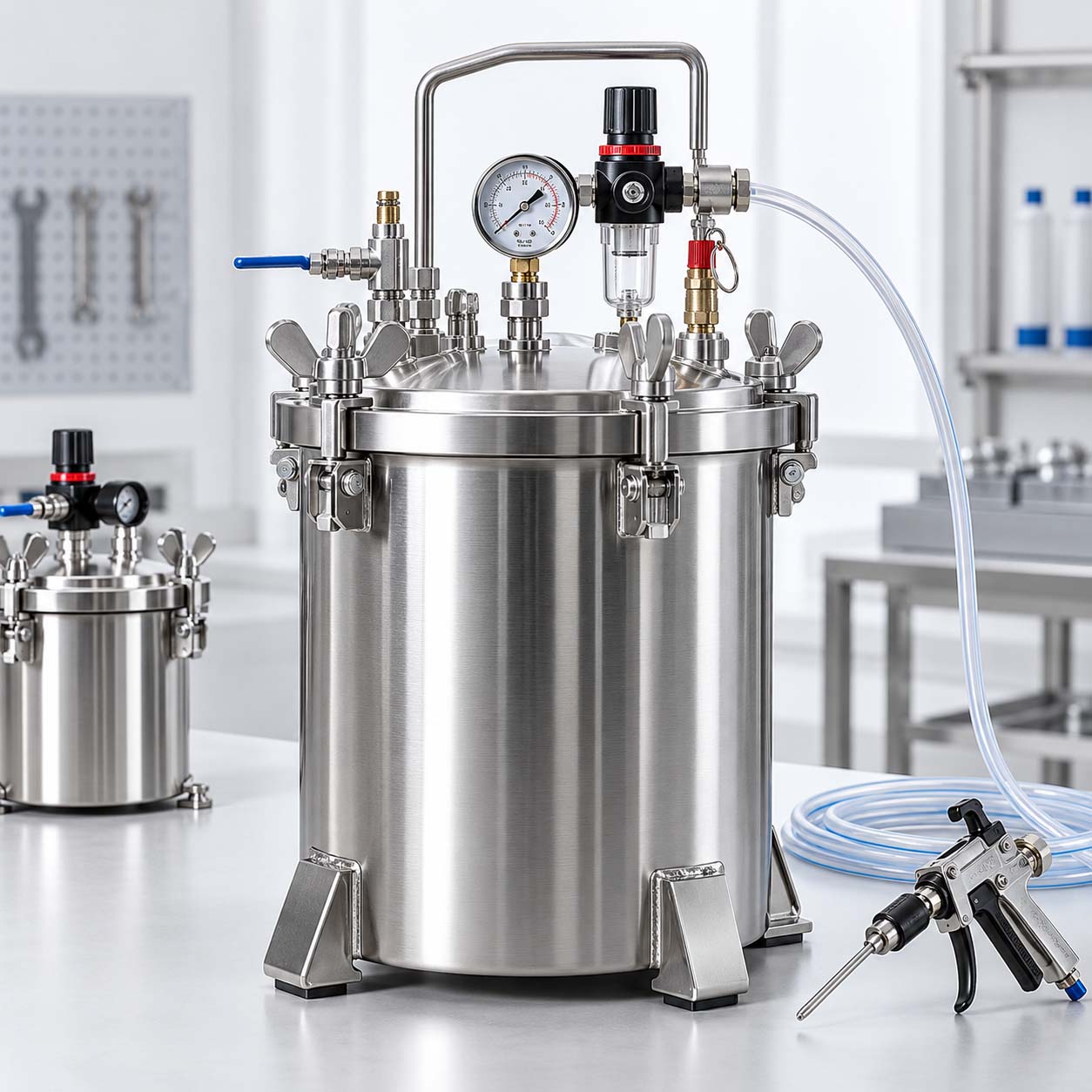
In modern manufacturing, consistent adhesive delivery plays an important role in product quality, production efficiency, and material control. For applications that require stable pressure and continuous fluid feeding, adhesive dispensing pressure tanks provide a practical and reliable solution.
These systems are widely used in electronics, automotive assembly, packaging, LED manufacturing, battery production, furniture, medical devices, and many other industries. By storing adhesive in a sealed tank and using controlled air pressure to push the material toward the dispensing valve or applicator, pressure tanks help manufacturers achieve smoother and more repeatable dispensing performance.
What Are Adhesive Dispensing Pressure Tanks?
Adhesive dispensing pressure tanks are pressurized containers designed to store and supply liquid adhesives, sealants, coatings, resins, and other industrial fluids.
Unlike manual feeding methods, a pressure tank can maintain a stable material supply over a longer period. Compressed air is introduced into the tank, creating pressure above the liquid. This pressure forces the adhesive through the outlet and into the dispensing system.
Depending on the application, pressure tanks can be used with:
- Epoxy adhesives
- UV glue
- Silicone
- Anaerobic adhesive
- Cyanoacrylate
- Acrylic adhesive
- Sealants
- Coatings
- Lubricants
- Low- and medium-viscosity fluids
For manufacturers that need continuous dispensing, pressure tanks can reduce frequent refilling and improve process consistency.
Why Use an Adhesive Dispensing Pressure Tank?
One of the main advantages of an adhesive pressure tank is stable fluid delivery.
In automated production, even small changes in material pressure can affect dispensing volume, bead width, dot size, or coating thickness. A properly designed pressure tank helps maintain a more consistent feeding condition, especially when combined with precision regulators, dispensing valves, and automated control systems.
Another benefit is improved production efficiency. Operators do not need to refill small cartridges as frequently, making pressure tanks suitable for medium- and high-volume manufacturing.
They can also help reduce adhesive waste by providing controlled fluid transfer from the tank to the dispensing point.
Stainless Steel Pressure Tanks for Industrial Adhesives
Material selection is an important consideration when choosing adhesive dispensing pressure tanks.
Stainless steel is commonly used because it offers good corrosion resistance, durability, and ease of cleaning. Depending on the adhesive and operating environment, manufacturers may select stainless steel grades such as SUS304 or SUS316.
A stainless steel pressure tank can be especially suitable for applications involving sensitive fluids, aggressive chemicals, or production environments that require clean equipment.
Typical tank features may include:
- Stainless steel tank body
- Pressure regulator
- Safety relief valve
- Pressure gauge
- Air inlet
- Material outlet
- Sealing cover
- Optional agitator
- Optional liquid level detection
- Custom fittings and connectors
The final configuration should always be selected according to fluid characteristics and process requirements.
Choosing the Right Tank Capacity
Pressure tank capacity depends on adhesive consumption, production cycle, available workspace, and refill frequency.
Small tanks may be suitable for laboratories, prototyping, or low-volume dispensing. Larger tanks are better suited for continuous industrial production.
Common capacities can include 2L, 5L, 8L, 10L, 20L, 30L, 50L, and other customized sizes.
When selecting a tank, buyers should consider not only total capacity but also usable volume. Enough internal space may be required for safe pressurization, mixing, or fluid expansion.
Matching the Tank to Adhesive Viscosity
Viscosity directly affects adhesive flow.
Low-viscosity liquids are generally easier to push through tubing and dispensing valves. Medium-viscosity materials may require higher pressure, larger tubing, or different outlet designs.
For thicker adhesives, a standard pressure tank may not always be sufficient. In such cases, piston tanks, follower plate systems, pumps, or other specialized feeding methods may be more suitable.
Before purchasing a pressure tank, it is useful to provide the supplier with information such as:
- Adhesive type
- Viscosity
- Tank capacity
- Required operating pressure
- Dispensing rate
- Hose length
- Outlet size
- Production environment
These details help determine a more appropriate dispensing solution.
Optional Mixing for Adhesive Dispensing
Some adhesives may separate, settle, or require continuous mixing during production.
For these applications, an adhesive mixing pressure tank can be equipped with a pneumatic or electric agitator. The mixing system keeps the material more uniform while the tank supplies adhesive to the dispensing equipment.
This type of solution can be useful for coatings, filled adhesives, resins, and other materials containing suspended particles.
The mixing speed and agitator design should be matched to the fluid to avoid excessive air bubbles or unwanted material changes.
Safety Matters in Pressure Tank Design
Because these tanks operate under pressure, safety should always be considered.
A reliable pressure tank should be designed for its specified working pressure and equipped with suitable safety components. Depending on local regulations and application requirements, pressure vessel standards or certifications may also need to be considered.
Users should never exceed the rated working pressure of the tank.
Regular inspection of seals, valves, regulators, hoses, and safety relief devices can also help maintain safe and reliable operation.
Custom Adhesive Dispensing Pressure Tanks
Different production lines require different configurations. Standard tanks may not always match the available space, adhesive properties, or automation equipment.
A professional pressure tank manufacturer can provide customized options such as:
- Custom tank capacity
- Custom working pressure
- SUS304 or SUS316 stainless steel
- Special inlet and outlet connections
- Customized lid design
- Pneumatic agitator
- Electric agitator
- Level sensor
- Heating or insulation options
- Multiple fluid outlets
- Customized mounting structure
- OEM and ODM solutions
Customized pressure tanks can be integrated into automatic dispensing machines, robotic glue dispensing systems, adhesive spraying equipment, and fluid transfer systems.
Applications of Adhesive Dispensing Pressure Tanks
Adhesive pressure tanks can support many industrial processes, including:
- Electronic component bonding
- LED potting and encapsulation
- Automotive parts assembly
- Battery manufacturing
- PCB dispensing
- Packaging and carton sealing
- Furniture bonding
- Glass bonding
- Medical device assembly
- Appliance production
- Industrial coating
- Automated glue dispensing
Their versatility makes them suitable for both standalone dispensing stations and fully automated production lines.
How to Select a Reliable Pressure Tank Supplier
When sourcing adhesive dispensing pressure tanks, buyers should evaluate more than price.
A capable supplier should understand fluid dispensing applications and be able to recommend suitable tank materials, pressure ranges, seals, fittings, and accessories.
It is also important to confirm manufacturing quality, pressure testing procedures, customization capabilities, delivery time, and after-sales support.
For OEM projects, providing drawings, application details, or sample requirements can help the manufacturer develop a pressure tank that better matches the production process.
Conclusion
Adhesive dispensing pressure tanks provide a simple and effective way to achieve continuous, controlled adhesive feeding in industrial dispensing systems.
By selecting the correct tank capacity, material, operating pressure, outlet configuration, and optional mixing system, manufacturers can improve dispensing stability while reducing manual handling and unnecessary material waste.
For industrial users with unique production requirements, customized stainless steel pressure tanks can provide greater flexibility and easier integration with automated dispensing equipment.
Whether the application involves glue, resin, sealant, coating, or another industrial fluid, choosing the right pressure tank is an important step toward building a more stable and efficient dispensing process.