

Pressure Tank With Agitator | A Practical Guide for Industrial Buyers
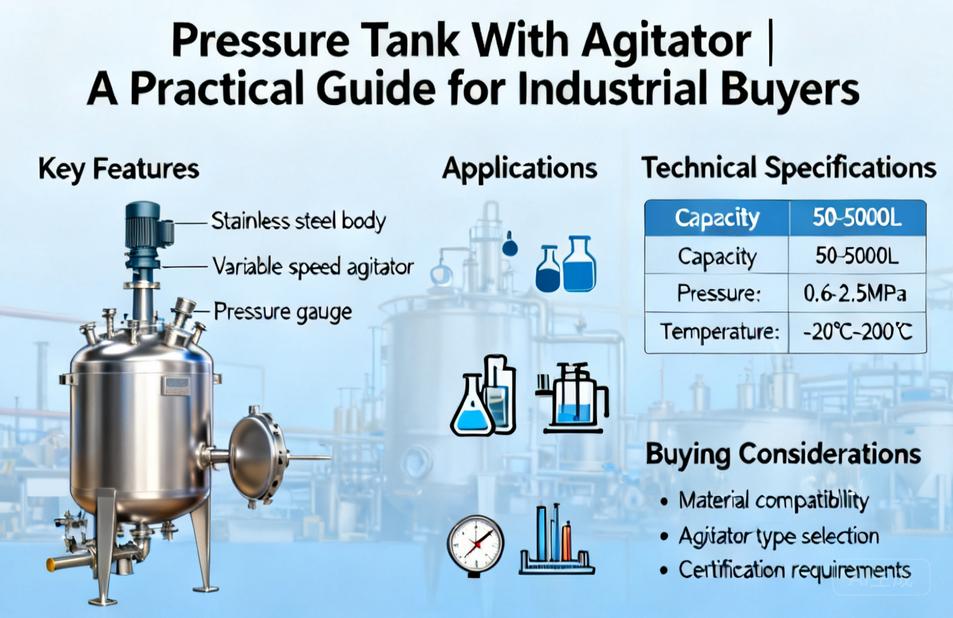
A pressure tank with agitator is a vessel that holds liquids, slurries, or viscous materials under controlled pressure while a mechanical agitator keeps the product uniformly mixed. Unlike a standard pressure vessel, this design combines two functions: maintaining internal pressure to push material through a downstream line and continuously stirring the contents to prevent settling, separation, or inconsistent flow. Overseas buyers often source this equipment for adhesive dispensing, chemical dosing, coating supply, food processing, and wastewater treatment where a steady, homogeneous feed is critical.
What Is a Pressure Tank With Agitator?
At its core, the unit consists of a sealed pressure vessel, an agitator shaft and impeller, a drive motor or air motor, and inlet and outlet connections. The tank is pressurized by compressed air or an inert gas, which forces the product out through a discharge valve or pump. The agitator runs independently or in sync with the discharge process, depending on the application. This configuration is common in systems where the material would otherwise thicken, settle, or cure inside the tank. For example, two-component adhesives, pigment slurries, and starch solutions all benefit from continuous agitation under pressure.
Purchasers searching for a pressure tank with agitator often need a complete solution rather than a simple storage vessel. They may require a specific discharge rate, a particular agitator type, or a tank that fits into an existing production line. Understanding the basic working principle helps buyers ask the right questions before contacting a manufacturer or supplier.
Key Features Buyers Should Evaluate
When reviewing a pressure tank with agitator, several features directly affect performance and maintenance. The agitator type is the first consideration. Propeller or paddle agitators suit low to medium viscosity fluids, while anchor, helical, or scraped-surface designs handle high-viscosity or sticky materials. The drive can be electric, pneumatic, or hydraulic, depending on the plant environment and explosion-proof requirements.
Pressure control is another critical feature. Some tanks use a simple pressure regulator and relief valve, while others include a pressure gauge, safety valve, and level sensor. The discharge method also matters: gravity, pressure-assisted, or pump-assisted discharge changes the tank design and the connection sizes. Buyers should also review the seal arrangement, as a leaking shaft seal can cause pressure loss and product contamination.
Materials and Construction
Material selection depends on the chemical compatibility and hygiene requirements of the application. Common options include carbon steel, stainless steel 304 or 316L, and occasionally special alloys or plastic-lined vessels. Stainless steel is widely used in food, pharmaceutical, and cosmetic production because it resists corrosion and is easy to clean. Carbon steel may be suitable for industrial chemicals where corrosion is not a concern.
Construction details such as weld quality, surface finish, and internal polishing affect cleanability and service life. For sanitary applications, buyers often request a mirror-polished interior and sanitary fittings. For aggressive chemicals, the tank may need a protective lining or a higher-grade alloy. A reliable pressure tank with agitator manufacturer will ask about the medium, concentration, temperature, and cleaning method before recommending a material.
Typical Industrial Applications
The pressure tank with agitator is used across many industries. In adhesive and sealant processing, it keeps two-part resins mixed and delivers them to a dispensing valve. In the coating industry, it supplies paint or varnish to spray guns or rollers without pigment settling. In water treatment, it can dose flocculants, slurries, or lime milk while maintaining a uniform concentration.
Food and beverage producers use these tanks for syrup, chocolate, starch, and sauce transfer. Pharmaceutical and cosmetic manufacturers rely on them for creams, gels, and lotions where consistency is essential. Other applications include agricultural chemical mixing, ceramic slip handling, and wastewater sludge conditioning. Because the agitator can be customized, the same basic tank platform can serve very different process requirements.
How to Choose the Right Pressure Tank With Agitator
Choosing the correct unit starts with a clear process definition. Buyers should document the product viscosity, density, temperature, and whether the material is shear-sensitive or abrasive. The required discharge rate and pressure determine the tank size and outlet configuration. The agitation speed and impeller type must match the viscosity and the desired mixing effect.
Next, consider the installation environment. Available floor space, ceiling height, and access for cleaning or maintenance influence the tank orientation and agitator mounting. Explosion-proof or washdown requirements may dictate the motor enclosure and electrical classification. Finally, review the control interface. Some buyers prefer a simple manual panel, while others need integration with a PLC or SCADA system.
It is also important to clarify the scope of supply. Does the supplier provide only the tank and agitator, or a complete skid with pump, valves, and controls? A clear scope avoids unexpected engineering and assembly costs later.
Customization and OEM Options
Many industrial buyers need a custom pressure tank with agitator rather than a standard catalog model. Customization can include tank volume, agitator design, connection type, material grade, surface finish, and control method. OEM service is common in this category, where the manufacturer builds the tank to the buyer’s drawing, brand, or system requirements.
When requesting a custom or OEM solution, provide detailed specifications and, if possible, a process flow diagram. This helps the factory recommend the right agitator and pressure rating without over-engineering. A good supplier will also advise on maintenance access, spare parts, and documentation such as material certificates and test reports.
Supplier Selection and Buying Considerations
Selecting a pressure tank with agitator supplier involves more than comparing prices. Buyers should evaluate the manufacturer’s engineering capability, fabrication experience, and quality control process. Ask about the design standard, welding procedure, pressure testing method, and surface treatment. For sanitary or hazardous applications, confirm that the supplier understands the relevant industry requirements.
It is also useful to discuss lead time, packaging, and after-sales support. A supplier that offers technical consultation, spare parts, and responsive communication can reduce downtime and project risk. Whenever possible, request references from similar industrial applications, but avoid relying on unverified claims. A factory visit or third-party inspection can provide additional confidence for larger orders.
Frequently Asked Questions
What is the difference between a pressure tank and a pressure tank with agitator?
A standard pressure tank stores and discharges material under pressure but does not mix it. A pressure tank with agitator includes a mechanical mixing device that keeps the product homogeneous during storage and discharge, which is important for slurries, suspensions, and viscous fluids.
Can the agitator run while the tank is pressurized?
Yes, in most designs the agitator is sealed and can operate under pressure. The shaft seal and motor mounting must be selected for the working pressure and the product characteristics. Buyers should confirm this with the manufacturer before ordering.
What information is needed for a custom pressure tank with agitator?
Provide the product type, viscosity, density, temperature, required pressure, discharge rate, connection sizes, material preference, and any hygiene or explosion-proof requirements. A sketch or process diagram helps the supplier propose a suitable configuration.
How do I maintain the agitator and pressure system?
Regular maintenance includes checking the shaft seal, lubricating bearings if applicable, inspecting the agitator impeller for wear or buildup, and testing the pressure relief valve. The specific schedule depends on the application and should be confirmed with the supplier’s manual.
Conclusion
Choosing a pressure tank with agitator requires a clear understanding of the process, the material, and the installation environment. Buyers should focus on agitator compatibility, pressure control, material construction, and the supplier’s engineering support. Whether you need a standard unit or a fully custom or OEM solution, working with an experienced manufacturer helps ensure the tank performs reliably in your industrial application. For specifications, application review, or customization inquiries, contact a qualified supplier with your process details.
