

Glue Feeding Tank for Industrial Adhesive Systems | What Buyers Need to Know
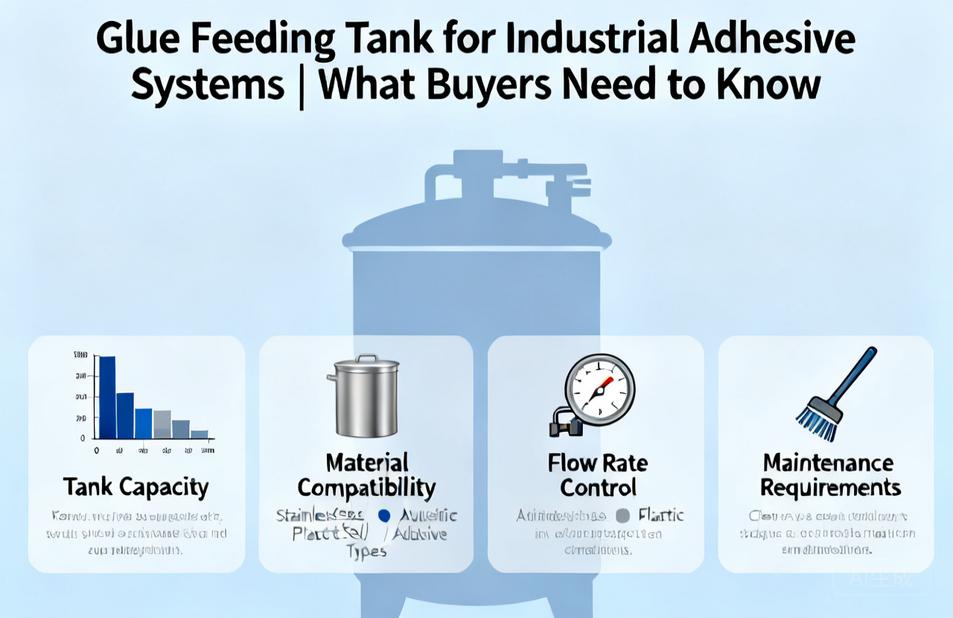
A glue feeding tank is a vessel used to store, condition, and supply adhesive or glue to a dispensing system at a controlled rate. It is commonly found in packaging lines, woodworking operations, automotive assembly, electronics manufacturing, and other industrial applications where consistent adhesive flow is critical. For overseas buyers sourcing glue feeding equipment, understanding how these tanks work and what to evaluate before purchasing can reduce downtime and improve dispensing accuracy.
What Is a Glue Feeding Tank?
A glue feeding tank, sometimes called a glue supply tank or adhesive reservoir, holds liquid adhesive and delivers it to pumps, hot melt units, or dispensing valves. Depending on the system design, the tank may use gravity, pressure, or a pump to move glue to the point of application. In automated production, the tank is often part of a larger glue feeding system that includes hoses, filters, level sensors, and controls.
Unlike simple containers, industrial glue tanks are designed to maintain stable flow, reduce waste, and protect adhesive from contamination or premature curing. They are available in different configurations, including heated and non-heated models, and can be custom built to match specific adhesive types and line layouts.
How a Glue Feeding Tank Works
The basic working principle is straightforward. Adhesive is loaded into the tank, where it may be heated, stirred, or pressurized depending on the glue chemistry. A feed line then transports the material to a dispenser, spray gun, roller, or nozzle. Level controls help maintain a consistent supply, and some systems include recirculation to keep adhesive moving and prevent stagnation.
For hot melt adhesives, the tank may include heating elements and temperature controls to keep glue at a workable viscosity. For cold glue or water-based adhesives, the focus is often on preventing skin formation and maintaining uniform consistency. The right configuration depends on the adhesive type, production speed, and dispensing method.
Key Features Buyers Should Evaluate
When comparing glue feeding tanks from different manufacturers, several features directly affect performance and maintenance.
- Tank capacity and refill method: Match capacity to production volume and refill frequency to avoid unnecessary interruptions.
- Heating capability: Heated tanks are necessary for hot melt and some high-viscosity adhesives.
- Level monitoring: Sensors and alarms help prevent dry running and inconsistent dispensing.
- Material compatibility: Wetted parts must be compatible with the adhesive chemistry to avoid corrosion or contamination.
- Cleaning and maintenance access: Easy access for cleaning reduces downtime during adhesive changeovers.
- Integration with existing equipment: Mounting, connections, and control signals should match the dispensing system.
Materials and Construction
Glue feeding tanks are typically fabricated from stainless steel for corrosion resistance and easy cleaning. Some applications may use carbon steel with appropriate coatings, while others require specific grades of stainless steel depending on the adhesive. Internal surfaces should be smooth to prevent adhesive buildup. Seals, gaskets, and hoses must also be selected for compatibility with the glue being used.
Construction quality affects service life. Buyers should ask about welding quality, surface finish, and whether the tank is designed for the operating temperature and pressure of their process. For custom projects, a factory can adjust dimensions, port locations, and mounting brackets to fit available space.
Industrial Applications of Glue Feeding Tanks
These tanks support many adhesive dispensing processes across different industries.
- Packaging: Carton sealing, case erecting, tray forming, and label application.
- Woodworking: Edge banding, panel laminating, and furniture assembly.
- Automotive: Interior trim bonding, gasket application, and component assembly.
- Electronics: Potting, encapsulation, and small-part bonding.
- Textile and nonwoven: Lamination and bonding of fabrics and filters.
- Bookbinding: Spine gluing and cover attachment.
Each application has its own requirements for viscosity, open time, and dispensing accuracy, so the tank should be selected as part of the complete adhesive supply system.
How to Choose the Right Glue Feeding Tank
Choosing a glue feeding tank starts with the adhesive. Identify whether it is a hot melt, water-based, solvent-based, or reactive adhesive, and confirm the required temperature range and viscosity. Next, review the dispensing equipment to understand required flow rate, pressure, and connection type. Production environment matters as well, including ambient temperature, humidity, and available floor space.
Buyers should also consider maintenance. Tanks that are difficult to clean or inspect can lead to adhesive degradation and inconsistent output. If the line runs multiple adhesive types, a design that supports quick changeover is valuable. Finally, confirm that the supplier can provide technical support, spare parts, and documentation for the specific configuration.
Customization and OEM Options
Many glue feeding tank suppliers offer OEM and custom manufacturing services. Customization can include tank volume, port configuration, heating zones, agitation, level sensors, control interfaces, and mounting arrangements. OEM production is common for equipment builders and distributors who need tanks branded or integrated into their own systems.
When requesting a custom tank, provide drawings or clear specifications, including adhesive type, operating temperature, required flow, connection sizes, and available space. A reliable factory will review these details and propose a suitable design rather than offering a standard unit that may not fit the application.
Supplier Selection and Buying Considerations
When evaluating a glue feeding tank manufacturer or supplier, look for experience in adhesive dispensing and industrial fluid handling. Ask for technical documentation, material certificates where applicable, and details about quality control during fabrication. It is reasonable to request references from similar applications, though specific customer information may be confidential.
Buyers should also clarify lead times, packaging, shipping terms, and after-sales support. For international orders, confirm voltage and control specifications match the destination country. If the tank will be integrated into a larger machine, discuss interface requirements early to avoid compatibility issues.
Frequently Asked Questions
What is the difference between a glue feeding tank and a glue pump?
A glue feeding tank stores and supplies adhesive, while a glue pump moves the adhesive through the system. Many installations use both together. The tank provides a reservoir and may condition the glue, while the pump generates the pressure or flow needed for dispensing.
Can a glue feeding tank be used with hot melt adhesive?
Yes, but it must be designed for the required temperature. Heated tanks and heated hoses are often used with hot melt adhesives to maintain viscosity. The tank materials and seals must also be rated for the operating temperature of the adhesive.
How do I determine the right tank size for my production line?
Start with adhesive consumption per hour or per shift, then consider refill intervals that fit your workflow. The tank should be large enough to avoid frequent refills but not so large that adhesive sits too long and degrades. Dispensing rate, hose length, and production schedule all influence the appropriate size.
Can glue feeding tanks be customized for OEM equipment?
Yes. Many manufacturers offer custom and OEM tanks with modified dimensions, connections, controls, and mounting. Providing detailed specifications and drawings helps the supplier propose a suitable design for integration into your equipment.
Conclusion
Selecting a glue feeding tank requires matching the tank to the adhesive, the dispensing system, and the production environment. Focus on material compatibility, heating and level control, cleaning access, and the supplier’s ability to support customization or OEM requirements. For buyers comparing options, a clear specification and a technical discussion with the manufacturer will lead to a more reliable adhesive supply system. If you have a specific application, contact a qualified glue feeding tank supplier to discuss your requirements and request a suitable configuration.