

Adhesive Feeding Tank for Industrial Dispensing | A Buyer’s Guide to Selection, Customization, and Supplier Evaluation
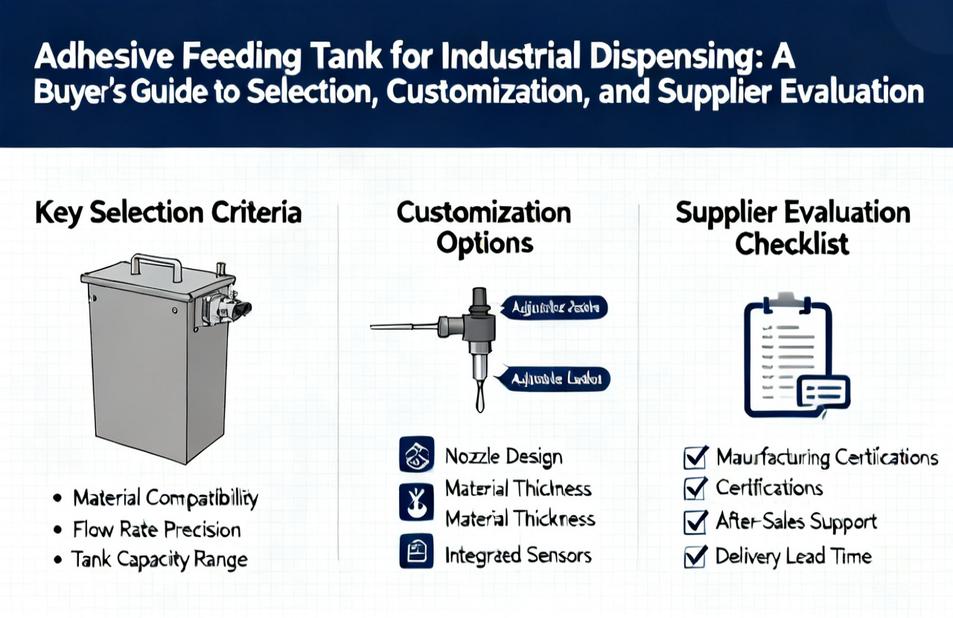
An adhesive feeding tank is a pressurized or gravity-fed vessel used to store, condition, and deliver adhesives, sealants, and other viscous materials to dispensing equipment in industrial production lines. It is commonly found in automated glue application systems, packaging machinery, automotive assembly, woodworking, electronics, and general manufacturing where consistent adhesive flow and stable pressure are important for repeatable bond quality. For overseas buyers sourcing dispensing equipment or replacement components, understanding how an adhesive feeding tank works and what to evaluate before purchase can reduce downtime and improve process reliability.
What Is an Adhesive Feeding Tank and How Does It Work?
An adhesive feeding tank, sometimes called an adhesive pressure tank or glue supply tank, holds adhesive material and feeds it to a dispensing valve, nozzle, or robot. Depending on the system design, the tank may use compressed air to pressurize the adhesive, a pump to transfer material, or gravity to move less viscous fluids. The tank typically includes a sealed lid, a material outlet, an air inlet, and sometimes a level sensor or agitation feature. The goal is to maintain steady flow without introducing air bubbles, curing the adhesive inside the tank, or causing pressure fluctuations that affect dispensed volume.
In many automated lines, the adhesive feeding tank is part of a larger material supply system that may include hoses, filters, pressure regulators, and dispensing controllers. The tank must match the adhesive chemistry, viscosity, and operating temperature to avoid clogging or inconsistent output. Buyers often look for a feeding tank that can be integrated with existing dispensers rather than replacing the entire system.
Common Industrial Applications
Adhesive feeding tanks serve a wide range of industrial applications. In packaging, they supply hot melt or cold glue to case sealers and carton erectors. In automotive, they feed structural adhesives or sealants to robotic dispensing cells. In woodworking, they support edge banding and panel bonding. Electronics manufacturers use them for potting compounds, conformal coatings, and surface mount adhesives. Other applications include footwear assembly, bookbinding, filter production, and appliance manufacturing.
Because adhesive formulations vary from low-viscosity cyanoacrylates to high-viscosity polyurethanes and silicone sealants, the feeding tank must be selected with the material characteristics in mind. A tank that works well for one adhesive may not perform reliably with another. This is why many buyers request a custom or OEM adhesive feeding tank configured for their specific adhesive and production speed.
Key Features Buyers Should Evaluate
When reviewing adhesive feeding tank options, purchasing teams should focus on several practical features. First, the tank construction material must be compatible with the adhesive. Stainless steel is common for water-based and solvent-based adhesives, while some reactive adhesives may require specific coatings or non-reactive interior surfaces. Second, the sealing design affects pressure stability and moisture ingress. Third, the tank capacity should match the production run length and refill frequency without creating excessive material waste.
Other considerations include the pressure rating, outlet size, lid closure type, and whether the tank supports agitation or heating. Level monitoring and quick-change connections can improve operator efficiency. For automated systems, the feeding tank should be able to communicate with the dispenser controller or at least maintain consistent output pressure as the material level drops.
Materials and Construction
Most industrial adhesive feeding tanks are made from stainless steel because it resists corrosion and is easy to clean. The interior surface should be smooth to prevent adhesive buildup. Some tanks use carbon steel with an internal coating for specific adhesives, but this depends on the chemical compatibility. Seals and gaskets are typically made from materials such as PTFE, Viton, or EPDM, selected according to the adhesive chemistry and operating temperature.
Construction quality matters for safety and longevity. Welds should be clean and leak-free. The lid should seal properly to maintain pressure. Fittings should be compatible with standard hose and pipe connections. Buyers should ask the supplier for material certificates or datasheets when the adhesive is sensitive to contamination.
How to Choose the Right Adhesive Feeding Tank
Choosing the right adhesive feeding tank starts with defining the adhesive type, viscosity, and required flow rate. Next, determine the operating pressure and temperature range. Then consider the available space and how the tank will connect to the dispenser. The tank capacity should balance refill intervals with material shelf life and waste. If the adhesive cures quickly, a smaller tank with frequent refills may be better than a large tank that leads to waste.
Integration is another key factor. The tank outlet size, thread type, and hose connections must match the existing dispensing system. If the tank includes level sensors or agitators, check whether the controller can accept those signals. For multi-color or multi-material lines, consider whether separate tanks are needed or if a manifold system is more practical.
Customization and OEM Options
Many adhesive feeding tank manufacturers offer customization and OEM services. Custom options may include specific tank volumes, special outlet positions, additional ports for sensors or agitation, and alternative seal materials. OEM production can include private labeling and design modifications to fit a particular machine or production line. When requesting a custom adhesive feeding tank, buyers should provide detailed drawings or specifications, adhesive datasheets, and operating conditions. A reputable supplier will review compatibility and propose a suitable configuration rather than simply quoting a standard tank.
Customization can also address cleaning and maintenance requirements. For example, a tank with a removable lid and smooth interior may be easier to clean for adhesives that leave residue. Quick-release fittings can reduce changeover time. These details are often negotiated during the quotation stage.
Buying Considerations and Supplier Selection
When selecting an adhesive feeding tank supplier, evaluate technical support, production capability, and communication. A good supplier will ask about the adhesive, pressure, temperature, and dispensing equipment before recommending a tank. They should be able to provide drawings, material specifications, and installation guidance. If the supplier is a factory or manufacturer, they may offer more flexibility for custom orders and OEM projects.
Buyers should also consider after-sales support, spare parts availability, and whether the supplier has experience in similar industrial applications. Requesting references or examples of previous projects can help, but always verify the information independently. Price should not be the only factor; a tank that fails prematurely or causes production downtime can cost far more than the initial purchase.
Frequently Asked Questions
What adhesive types can be used in an adhesive feeding tank?
Adhesive feeding tanks can handle many adhesives, including hot melt, water-based, solvent-based, polyurethane, epoxy, silicone, and some cyanoacrylates. The compatibility depends on the tank materials, seals, and whether heating or agitation is required. Always confirm with the supplier using your adhesive datasheet.
How do I determine the right tank capacity?
Capacity depends on your production rate, adhesive consumption, refill frequency, and material shelf life. A smaller tank may be better for fast-curing adhesives, while a larger tank reduces refill labor for high-volume lines. Calculate daily usage and consider the cost of waste versus refill time.
Can the tank be integrated with my existing dispensing system?
In many cases, yes. The key is matching outlet size, pressure range, and control signals. Provide the supplier with details of your dispenser, hoses, and controllers. Custom fittings and adapters may be available for OEM projects.
What should I ask a potential supplier before ordering?
Ask about material compatibility, pressure and temperature limits, sealing design, cleaning procedure, available custom options, and after-sales support. Request drawings and specifications, and clarify warranty terms. A supplier that asks detailed questions is often more reliable than one that quotes immediately.
Conclusion
Selecting an adhesive feeding tank requires a clear understanding of your adhesive, dispensing equipment, and production environment. Focus on material compatibility, pressure stability, capacity, and integration rather than just price. If you need a custom or OEM adhesive feeding tank, work with a supplier who can review your specifications and recommend a suitable configuration. To discuss your application or request a quotation, contact the supplier with your adhesive details and system requirements.
