

Custom Pressure Tanks | The Complete Guide to Sourcing Build-to-Spec Pressure Vessels
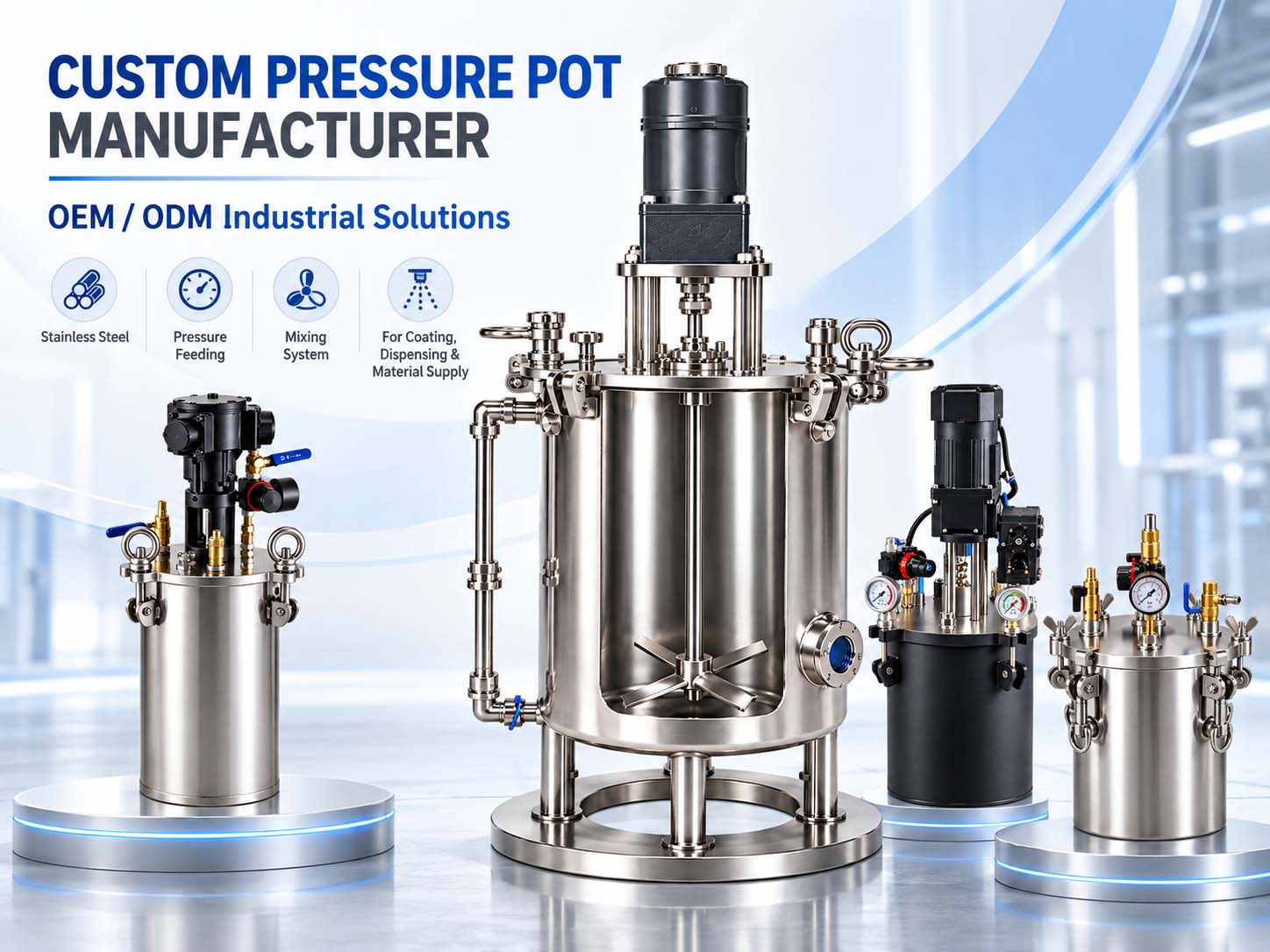
What Are Custom Pressure Tanks?
A custom pressure tank is a sealed vessel engineered to store liquids, gases, or compressed air at a controlled pressure above the surrounding atmosphere. Unlike standard off-the-shelf tanks, a custom pressure tank is designed and manufactured around your exact specifications — capacity, working pressure, material, connections, and finish. Whether you are expanding a water treatment plant, upgrading a compressed air system, or building a pharmaceutical production line, a tank built to your drawing performs better, fits your footprint, and keeps your project compliant from day one.
Why Buyers Choose Custom Pressure Tanks
Off-the-shelf tanks solve generic problems. Custom tanks solve yours. The most common reasons importers move to custom manufacturing are:
- Exact dimensional fit. You save floor space and integrate the vessel into existing piping and structures without costly adapters.
- Application-matched materials and coatings. Chemicals, food products, and aggressive water all demand different alloys and linings.
- Regulatory compliance. A custom build lets you target the exact code and certification your market requires — ASME, CE/PED, or a local stamp.
- Performance and longevity. You control wall thickness, corrosion allowance, and weld quality instead of accepting a one-size-fits-all design.
In short, a custom pressure tank is an engineered asset, not just a container.
Industries That Rely on Custom Pressure Tanks
Custom pressure vessels appear wherever fluid or gas must be stored safely under pressure:
- Water treatment and hydropneumatic systems — bladder and diaphragm tanks for pressure boosting and surge control.
- Compressed air — receiver tanks that smooth pulsation and store energy.
- Chemical and petrochemical — storage and reaction vessels built for corrosive and hazardous media.
- Pharmaceutical and food & beverage — hygienic stainless tanks with sanitary finishes.
- HVAC and building services — expansion tanks and buffer tanks.
- Oil and gas — separators, scrubbers, and high-pressure storage.
Because each industry carries different safety demands, working with a manufacturer who understands your end application matters as much as the steel itself.
Key Customization Options
A reliable supplier lets you define nearly every variable of the vessel:
- Material. Carbon steel for general industrial duty; stainless steel 304 or 316L for corrosion resistance, hygiene, and chemical service; alloy or lined options for extreme conditions.
- Capacity and dimensions. From small portable tanks to large horizontal or vertical vessels sized to your site.
- Pressure and temperature rating. Designed against your actual working pressure and safety margin.
- Orientation and supports. Horizontal with saddles, vertical with legs or skirts, or wall-mounted configurations.
- Connections. Flanged, threaded, or welded nozzles positioned to match your piping.
- Internal surface. Epoxy, rubber, or glass linings; polished or passivated stainless interiors.
- Accessories. Manholes, sight glasses, instrumentation ports, heating or cooling jackets, and insulation.
The goal is a vessel that drops into your system and performs with no rework.
Standards and Certifications That Matter
Certification is not paperwork — it is your market entry. Before ordering, confirm which code your destination requires:
- ASME Section VIII, Division 1 (U stamp) — the benchmark for pressure vessels in North America and much of the world.
- CE marking under the Pressure Equipment Directive (PED) — required for the EU market.
- CRN registration — needed for vessels installed in Canada.
- GB/T or local national codes — depending on the country of final installation.
A competent manufacturer issues the pressure test report, material certificates (mill test certificates), and the full documentation pack that lets your vessel pass local inspection and be insured.
How to Work with a Custom Pressure Tank Manufacturer
Sourcing a custom vessel is a collaborative process. To get it right:
- Send a detailed inquiry. Provide working pressure, temperature, capacity, media, connections, and any drawings or datasheets.
- Request a proposal and GA drawing. Review the general arrangement drawing before production begins.
- Verify material certificates. Ask for mill test certificates for the plates and consumables.
- Confirm testing. Standard practice includes a hydrostatic test and non-destructive testing (RT, UT, MT, or PT) on critical welds.
- Clarify lead time and shipping. Custom builds typically take several weeks; plan around production slots and export packaging for sea freight.
A transparent supplier gives you a clear drawing, a binding price, and a realistic schedule before you commit.
Quality and Safety Considerations
Pressure vessels fail only when design, material, or welding is compromised. Protect your investment by insisting on:
- A proper design code with a calculated safety margin and corrosion allowance.
- Qualified welders and documented welding procedures (WPS/PQR).
- Hydrostatic testing to 1.3–1.5 times the design pressure, witnessed and recorded.
- Independent inspection and third-party certification when your market demands it.
Good quality is visible in the documentation as much as in the finished shell — so never accept a vessel without its full inspection file.
Frequently Asked Questions
What is the difference between a custom and a standard pressure tank? A standard tank uses fixed sizes and ratings. A custom tank is engineered to your capacity, pressure, material, and connection requirements, so it integrates directly into your system.
Do I need to provide a full drawing? No. A responsible manufacturer works from your key parameters and produces the engineering drawing for your approval before fabrication.
Which certifications can I get? Most manufacturers can supply ASME, CE/PED, and CRN documentation depending on their scope; confirm your target market’s requirement before ordering.
How long is the lead time for a custom tank? It depends on size, material availability, and testing requirements — typically a few weeks. Confirm the schedule in writing before placing the order.
Choosing a Long-Term Partner
The real value of custom pressure tanks comes from the manufacturer behind them. Look for a supplier with certified engineers, in-house welding and testing capability, proven export experience, and a track record of on-time delivery. With the right partner, your custom pressure tank becomes a reliable, compliant, and efficient asset for years of service.
Ready to specify your next vessel? Send your requirements, and a qualified engineer will turn them into a compliant, buildable design.
