

Mixing Pressure Tank | A Complete Guide for Industrial Buyers and OEM Projects
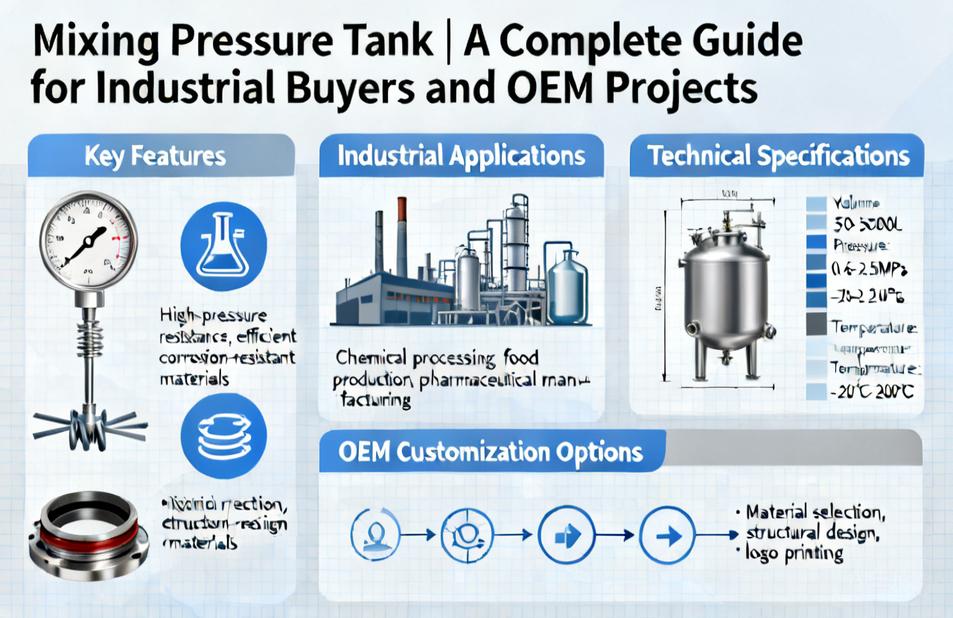
A mixing pressure tank is a specialized vessel that combines two functions in one unit: it stores fluid or semi-fluid material under pressure and continuously mixes it to prevent separation, sedimentation, or inconsistent viscosity before the material is dispensed, sprayed, or transferred. In industrial settings, these tanks are widely used in coating, adhesive, sealant, ink, chemical, food, and pharmaceutical processes where a uniform mixture must be delivered at a stable pressure. For procurement teams, understanding how a mixing pressure tank works, where it fits, and what to evaluate before placing an order is essential for selecting the right equipment and a reliable manufacturer or supplier.
What Is a Mixing Pressure Tank and How Does It Work?
A mixing pressure tank typically consists of a pressure vessel, a top-mounted or side-mounted agitator, an air or gas inlet for pressurization, a material outlet, and various ports for filling, venting, and instrumentation. The vessel is sealed and pressurized, usually with compressed air or inert gas, which pushes the material through a hose or pipe to a dispense point, spray gun, or downstream equipment. At the same time, the agitator keeps the material in motion, ensuring that pigments, fillers, or multiple components remain evenly distributed.
The combination of pressure and agitation solves a common production problem: many fluids tend to settle or separate when left static. A standard pressure tank without mixing may deliver an inconsistent product over time. A mixing pressure tank maintains homogeneity throughout the entire production run, which is critical for quality control in coating, bonding, and sealing applications.
Key Features Buyers Usually Look For
When reviewing mixing pressure tank specifications, industrial buyers often focus on several functional features. The agitator type and speed range determine how well the tank handles different viscosities, from low-viscosity solvents to high-viscosity adhesives. Some units use paddle or anchor agitators for gentle mixing, while others use dispersing discs for more demanding formulations. The pressure rating and control method are equally important; manual regulators, pilot-operated regulators, and electronic pressure control systems offer different levels of precision and automation.
Other common features include removable or hinged lids for easy cleaning, quick-release clamps for fast product changeover, level sensors, temperature control jackets, and sanitary connections for food or pharmaceutical use. A well-designed mixing pressure tank should also be easy to drain completely, which reduces material waste and simplifies maintenance.
Materials and Construction Considerations
The wetted parts of a mixing pressure tank are usually made from stainless steel, carbon steel, or specialty alloys. Stainless steel grades such as 304 and 316L are common in applications where corrosion resistance and cleanability are priorities. Carbon steel may be used for less corrosive materials or where cost is a major factor, often with an internal coating. For aggressive chemicals, higher-alloy materials or lined tanks may be required.
Surface finish also matters. A polished interior reduces residue buildup and supports cleaning protocols, while external finishes can be selected for durability or appearance. Welding quality, pressure boundary integrity, and seal compatibility with the intended fluid should all be reviewed as part of the specification process. Buyers should confirm that the tank construction matches the pressure and temperature conditions of their process and the chemical compatibility of the material being handled.
Typical Industrial Applications
Mixing pressure tanks appear in a wide range of industrial applications. In the coating and painting industry, they supply mixed paints, primers, and lacquers to spray systems. In adhesive and sealant production, they keep two-part or filled adhesives uniform before dispensing. The electronics and automotive industries use them for potting compounds, encapsulants, and lubricants. Chemical processing plants rely on them for transferring mixed reagents or intermediates. Food and pharmaceutical manufacturers use sanitary versions for sauces, syrups, gels, and topical formulations where hygiene and consistency are essential.
Because the tank can be integrated with pumps, valves, robots, and dispensing controllers, it is often a central component in automated fluid delivery systems. This makes it relevant not only to end users but also to equipment integrators and OEM manufacturers who build custom dispensing or spraying machines.
How to Choose the Right Mixing Pressure Tank
Choosing the correct tank starts with defining the material and process requirements. Viscosity, density, solids content, and reactivity will influence the agitator design, port sizes, and construction material. Required flow rate and dispense pressure will determine the tank capacity and pressure rating. If the material must be kept at a specific temperature, a jacketed or insulated tank may be necessary. Cleaning requirements, changeover frequency, and available floor space also affect the final selection.
Buyers should also consider the level of automation needed. A basic manual tank may be sufficient for low-volume operations, while a production line with multiple dispense points may benefit from automated pressure control, level monitoring, and remote integration. It is helpful to work with a supplier who can review the entire fluid path and recommend a configuration that matches the existing pump, hose, valve, and dispense equipment.
Customization and OEM Options
Many mixing pressure tank manufacturers offer custom and OEM solutions because standard tanks may not fit specific machinery layouts or process conditions. Customization can include tank dimensions, port locations, agitator type and motor mounting, pressure control method, material grade, surface finish, and mobility features such as casters or lifting lugs. Private-label and OEM projects may also involve branding, documentation, and packaging requirements for equipment builders who resell the tank as part of a larger system.
When requesting a custom tank, buyers should provide clear information about the material to be mixed, operating pressure and temperature, required capacity, connection standards, and any electrical or control voltage requirements. Detailed drawings or 3D models help reduce miscommunication and shorten the approval process.
Supplier Selection and Buying Considerations
Selecting a reliable supplier is as important as selecting the right product. A qualified factory should be able to explain its manufacturing process, quality control procedures, and experience with similar applications. Buyers can ask for technical drawings, material certificates, and references to past projects without expecting confidential client details. It is reasonable to request samples or pilot units for testing before committing to a larger order.
Other practical considerations include lead time, spare parts availability, technical support, and after-sales service. Communication during the quotation stage often reveals how responsive and capable a supplier will be during production and after delivery. For OEM projects, confirming intellectual property arrangements, tooling ownership, and change management procedures early can prevent problems later.
Frequently Asked Questions
What is the difference between a pressure tank and a mixing pressure tank?
A standard pressure tank stores and delivers material under pressure but does not actively mix it. A mixing pressure tank includes an agitator that keeps the material uniform, which is important for formulations that tend to separate or settle.
Can a mixing pressure tank handle high-viscosity materials?
Yes, but the agitator type, motor power, and tank geometry must be selected for the specific viscosity range. High-viscosity materials may require a stronger motor, a larger agitator, or a different mixing principle than low-viscosity fluids.
Is it possible to order a custom or OEM mixing pressure tank?
Many manufacturers offer custom and OEM options, including modified dimensions, port configurations, materials, and branding. The key is to provide detailed process requirements so the supplier can propose a suitable design.
How do I maintain a mixing pressure tank?
Regular maintenance typically includes inspecting seals and gaskets, checking agitator bearings, cleaning the interior according to the material being handled, and verifying pressure control components. Following the manufacturer maintenance schedule helps extend service life.
Conclusion
A mixing pressure tank is more than a simple storage vessel; it is a process component that directly affects product consistency, dispense accuracy, and production efficiency. Buyers should evaluate material compatibility, viscosity, pressure and temperature requirements, cleaning needs, and automation level before making a selection. Working with an experienced manufacturer or supplier who can support custom and OEM projects makes it easier to match the tank to existing equipment and long-term production goals. If you are reviewing options for an upcoming project, speaking directly with a supplier about your application, specifications, and customization needs is a practical next step.
