

Industrial Fluid Tank Selection Guide for B2B Buyers | Types, Materials, and Customization
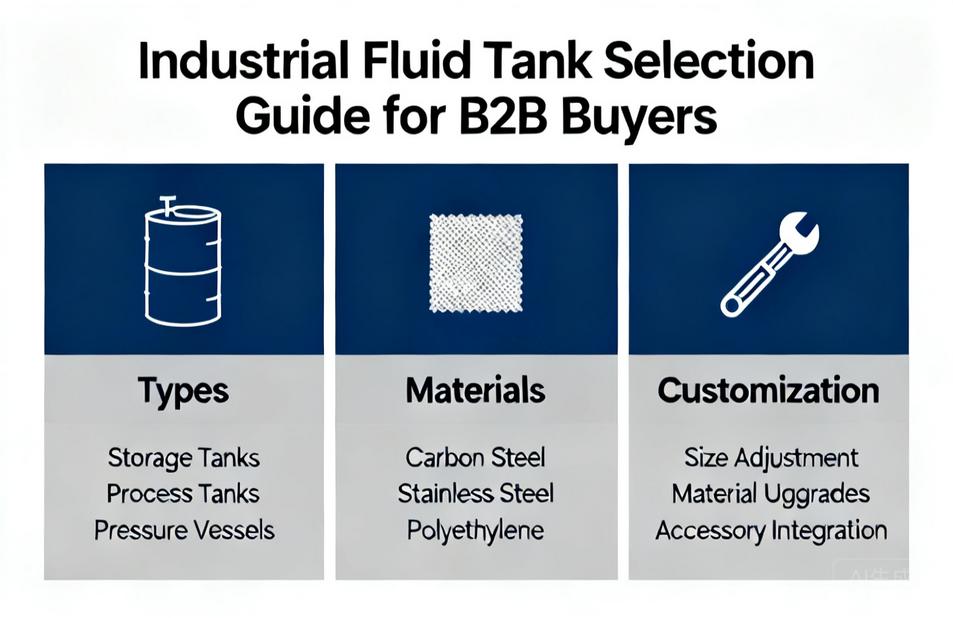
An industrial fluid tank is a core component in many manufacturing, chemical, food processing, and water treatment operations. It serves as a safe and controlled vessel for storing, mixing, heating, cooling, or dispensing liquids and semi-liquids. Whether you are setting up a new production line or replacing an existing unit, understanding the technical and commercial factors behind these tanks helps you make a more informed purchasing decision and avoid costly downtime.
What Is an Industrial Fluid Tank?
At its most basic, an industrial fluid tank is a container designed to hold liquids under specific process conditions. Unlike simple storage drums, industrial tanks are engineered for integration with pumps, agitators, level sensors, heating or cooling jackets, and piping systems. They are used across industries such as chemical blending, pharmaceutical manufacturing, food and beverage processing, wastewater treatment, and cosmetic production. Depending on the application, a tank may be open-top, closed-loop, pressurized, or atmospheric. It can be stationary or mobile, and it can be customized to fit a specific footprint within a factory floor.
Common Types and Configurations
Buyers often encounter several tank categories when sourcing for industrial applications. Each type is defined by its construction, operating method, and intended use.
Storage and Holding Tanks
These are designed primarily to hold fluids for extended periods. They may include features such as level indicators, breather vents, and access hatches for cleaning. Storage tanks are common in water treatment plants, chemical warehouses, and food ingredient storage.
Mixing and Agitation Tanks
Mixing tanks come equipped with agitators, impellers, or recirculation lines to blend multiple liquids or maintain suspension. They are widely used in paint and coating production, pharmaceutical compounding, and beverage preparation. The agitation method and motor power should match the viscosity and volume of the fluid being processed.
Process and Reaction Vessels
These tanks are often part of a larger process system. They may include heating or cooling jackets, pressure ratings, and instrumentation for temperature, pH, or pressure control. Reaction vessels are typically found in chemical synthesis and specialty material production.
Dispensing and Pressure Tanks
Used in adhesive, sealant, and fluid dispensing systems, these tanks hold material under pressure and feed it to dispensing valves or applicators. They are often smaller in size and built for frequent refilling and precise flow control.
Materials and Construction: What to Consider
The material of an industrial fluid tank must be compatible with the stored or processed fluid, as well as the cleaning and operating environment. Common materials include stainless steel (such as 304 or 316L), carbon steel, fiberglass-reinforced plastic (FRP), polyethylene, and polypropylene. Stainless steel is frequently chosen for food, pharmaceutical, and corrosive chemical applications due to its cleanability and resistance to rust. Plastic tanks are often used for water treatment and mild chemicals where cost and chemical resistance are priorities. The construction method—welded, molded, or bolted—also affects durability, maintenance, and lead time. A reliable manufacturer or supplier will ask about your fluid properties, temperature range, and cleaning requirements before recommending a material.
Key Industrial Applications
Industrial fluid tanks support a wide range of operations. In the chemical industry, they are used for raw material storage, mixing, and intermediate processing. In food and beverage production, they hold ingredients, syrups, and cleaning solutions. Water treatment facilities rely on them for chemical dosing, filtration, and sludge handling. In manufacturing plants, fluid tanks are part of coolant systems, lubrication circuits, and hydraulic power units. Automotive and aerospace assembly lines use dispensing tanks for adhesives, sealants, and paints. Because each application has unique requirements, buyers should clearly define the fluid type, operating temperature, pressure, and flow rate before contacting a factory or OEM partner.
How to Choose the Right Industrial Fluid Tank
Selecting the correct tank involves more than checking volume. Here are practical factors that B2B buyers should evaluate:
- Fluid characteristics: viscosity, corrosiveness, solids content, and temperature range.
- Capacity and dimensions: available floor space, future expansion, and transport constraints.
- Operating conditions: atmospheric or pressurized, indoor or outdoor, hygiene level.
- Integration: compatibility with existing pumps, valves, sensors, and control systems.
- Cleaning and maintenance: access points, surface finish, and drain design.
- Regulatory needs: food-grade, pharmaceutical, or chemical handling standards that apply in your region.
Matching these factors early reduces the risk of rework, performance issues, or safety concerns after installation.
Customization and OEM Options
Many industrial fluid tank manufacturers and suppliers offer OEM and custom fabrication services. Customization can include specific dimensions, nozzle placement, material grade, surface finish, insulation, and control panel integration. If your process requires a non-standard connection or a unique mounting arrangement, working directly with a factory that provides engineering support can be more efficient than modifying a standard product later. When discussing customization, provide detailed drawings or specifications, and ask about the manufacturer’s experience with similar industrial applications. A capable OEM partner will review your requirements and suggest practical design adjustments without overcomplicating the build.
Buying Considerations for Overseas Procurement
Price is only one part of the total cost of ownership. Buyers should also consider shipping volume, packaging, documentation, and after-sales support. For international orders, clarify the scope of supply: does the tank include fittings, valves, and instrumentation, or are they separate? Ask about surface treatment, testing procedures, and marking requirements. If the tank will be integrated into a larger system, request dimensional drawings and connection details early. A transparent supplier will provide a clear quotation with itemized components and realistic production timelines. Avoid assuming that a lower initial price always means a better deal; maintenance, downtime, and replacement costs can quickly offset upfront savings.
Supplier Selection: What to Look For
Choosing a reliable industrial fluid tank supplier is as important as choosing the right tank. Look for a manufacturer with a clear production process, quality control steps, and experience in your industry. Ask for technical clarification on material selection, welding standards, and inspection methods. A good supplier will be willing to discuss your application in detail and provide references to similar projects without disclosing confidential client information. Communication speed, engineering support, and willingness to handle custom or OEM requests are strong indicators of a dependable partner. If possible, request a sample or visit the factory, or ask for video documentation of the production line and quality checks.
Frequently Asked Questions
What information do I need to provide before ordering an industrial fluid tank?
You should prepare details about the fluid type, operating temperature, pressure requirements, capacity, available space, and any integration needs with existing equipment. Drawings or sketches of the installation area can also help the manufacturer propose a suitable design.
Can industrial fluid tanks be customized for my specific process?
Yes. Many manufacturers offer custom fabrication and OEM services, including changes to dimensions, materials, port locations, agitation systems, and surface finishes. The key is to communicate your process conditions clearly so the supplier can recommend a practical configuration.
How do I compare quotes from different suppliers?
Compare the scope of supply, material specifications, included components, testing, documentation, and after-sales support—not just the unit price. A detailed quotation helps you evaluate total value and avoid hidden costs later.
What maintenance is required for an industrial fluid tank?
Maintenance depends on the application but generally includes regular cleaning, inspection of seals and fittings, checking for corrosion or wear, and verifying instrumentation. Following the manufacturer’s maintenance guidelines helps extend service life and maintain process safety.
Conclusion
Selecting an industrial fluid tank requires a clear understanding of your fluid, process conditions, and integration needs. Focus on material compatibility, construction quality, and the supplier’s ability to support customization or OEM requirements. A well-matched tank improves operational reliability and reduces long-term costs. If you are evaluating options for your next project, reach out to a qualified manufacturer or supplier to discuss your specifications, application details, and any custom fabrication needs. Their technical input can help you move from general requirements to a practical, production-ready solution.
