

How to Select an Industrial Pressure Tank for Adhesive Dispensing
An industrial pressure tank for adhesive dispensing is a pressure vessel that stores adhesive under controlled pressure and delivers it consistently to a dispensing valve or nozzle. Its main use case is supplying single-component adhesives, sealants, or similar fluids in manufacturing processes where a steady, repeatable flow is required. Unlike a pump, the pressure tank does not generate flow; it stores and pressurizes the fluid, and the dispensing valve controls the actual dispense. Therefore, selecting the right tank requires understanding both the fluid characteristics and the dispensing requirements.
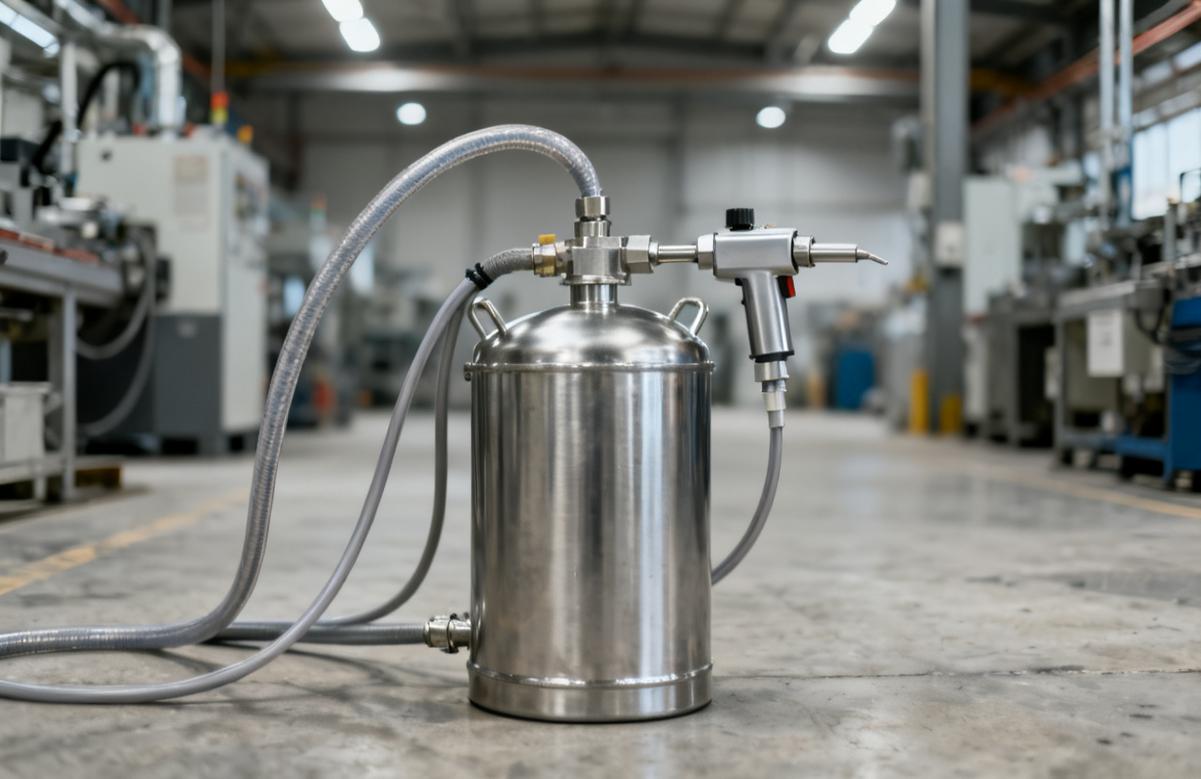
How a Pressure Tank Works in an Adhesive Dispensing System
In a typical setup, the pressure tank is filled with adhesive and sealed. Compressed air or another gas is introduced into the tank to pressurize the fluid. The pressurized adhesive travels through a hose to a dispensing valve, which opens and closes to control the flow. The tank pressure, fluid viscosity, hose size, and valve characteristics together determine the dispense rate. The tank itself does not meter or mix; those functions are handled by separate components such as metering pumps or static mixers. It is important to distinguish the tank’s role from that of the dispensing valve: the tank provides a pressurized reservoir, while the valve governs the timing and pattern of the dispense.
Key Selection Criteria
Choosing the appropriate pressure tank involves several factors that must be verified with the manufacturer’s datasheet and applicable engineering reviews. Below are the primary considerations.
1. Pressure Requirements
The tank must be rated for the maximum pressure used in the system. This rating should be clearly stated on the nameplate and supported by manufacturer documentation. Never exceed the rated pressure. The required pressure depends on the adhesive viscosity, hose length, and desired flow rate. Higher viscosity or longer hoses may require higher pressure, but this must remain within the tank’s rating and the dispensing valve’s limits.
2. Capacity and Refill Frequency
Tank capacity affects how often the tank must be refilled. Larger tanks reduce refill frequency but may be heavier and require more space. The appropriate capacity depends on production volume, adhesive shelf life, and downtime tolerance. There is no universal “best” size; it varies by application.
3. Material Compatibility
The wetted materials of the tank, including the inner surface, seals, and outlet fittings, must be compatible with the adhesive. Adhesives can be corrosive, abrasive, or sensitive to moisture and air. Common tank materials include carbon steel and stainless steel, but the specific grade and surface finish should be confirmed with the manufacturer for the intended adhesive. Some adhesives may require a tank with a lining or a specific surface treatment.
4. Adhesive Characteristics
Consider viscosity, pot life, reactivity, and whether the adhesive cures with moisture or air. For moisture-sensitive adhesives, a tank that can be sealed and possibly purged with dry air or nitrogen may be necessary. For reactive adhesives, the tank should allow for easy cleaning and minimize dead zones where material can stagnate.
5. Integration with Dispensing Valve and Controls
The tank must be compatible with the dispensing valve and any pressure regulators, gauges, and safety devices. The outlet size and type should match the hose and valve inlet. Some systems require agitation or heating, which may influence tank design. Electronic pressure control and monitoring can improve consistency but add complexity.
6. Regulatory and Safety Considerations
Pressure-containing equipment must be selected and operated according to the actual nameplate, manufacturer documentation, and applicable local requirements. This includes proper relief valves, gauges, and training for operators. Do not assume that a tank is certified for a specific application without evidence from the supplier.
Comparison of Common Tank Types
The table below outlines typical characteristics of pressure tanks used in adhesive dispensing. Actual specifications vary by model and must be confirmed with the manufacturer.
| Feature | Carbon Steel Tank | Stainless Steel Tank |
|---|---|---|
| Typical use | General-purpose adhesives | Corrosive or high-purity adhesives |
| Material compatibility | May require lining for某些 adhesives | Generally better corrosion resistance |
| Cost | Usually lower | Higher |
| Maintenance | Regular inspection for corrosion | Easier cleaning, but still requires inspection |
Note: The choice between carbon steel and stainless steel depends on the specific adhesive and environment. Always verify compatibility with the tank manufacturer.
Installation and Maintenance Best Practices
Proper installation and maintenance extend the life of the pressure tank and ensure safe operation. Follow these steps:
- Verify that the tank’s pressure rating meets or exceeds the maximum system pressure.
- Install a pressure relief valve and gauge as recommended by the manufacturer.
- Use hoses and fittings rated for the same pressure and compatible with the adhesive.
- Before filling, ensure the tank is clean and free of contaminants.
- Pressurize the tank slowly and check for leaks.
- Establish a regular inspection schedule for the tank, fittings, and relief valve.
- Clean the tank according to the adhesive manufacturer’s instructions to prevent buildup.
When a Pressure Tank May Not Be Suitable
Pressure tanks are not ideal for all adhesive dispensing applications. They may be unsuitable for two-component adhesives that require precise mixing ratios, for very small dispense volumes that need high accuracy, or for adhesives that cure rapidly inside the tank. In such cases, alternative systems such as metering pumps or cartridge dispensers may be more appropriate. Also, if the required pressure exceeds the tank’s rating, a different solution must be considered.
Information Buyers Should Provide to Suppliers
To receive an accurate recommendation and quotation, buyers should provide: the adhesive type and viscosity, required dispense rate, maximum operating pressure, available compressed air supply, tank capacity preferences, material compatibility requirements, environmental conditions, and any regulatory or certification needs. This information helps suppliers suggest a suitable tank and identify any additional components.
Supplier Evaluation Checklist
When evaluating suppliers, consider the following verifiable criteria:
- Is the tank’s pressure rating clearly marked and documented?
- Does the supplier provide material certificates and compatibility data?
- Are safety devices such as relief valves included or available?
- Can the supplier provide references or case studies for similar applications?
- Is technical support available for integration and troubleshooting?
- Are spare parts and service accessible?
These factors help ensure a safe and reliable system. Avoid suppliers who cannot provide documentation for pressure ratings or material specifications.
Frequently Asked Questions
What is the difference between a pressure tank and a dispensing valve?
A pressure tank stores and pressurizes the adhesive, while a dispensing valve controls the flow and timing of the dispense. They are separate components that work together in a dispensing system.
Can any pressure tank be used for adhesive dispensing?
No. The tank must be compatible with the adhesive, rated for the operating pressure, and suitable for the application. Always verify with the manufacturer’s documentation.
How do I determine the right tank capacity?
Capacity depends on production volume, refill frequency, and adhesive shelf life. There is no universal size; it should be based on your specific process requirements.
What safety devices are needed with a pressure tank?
A pressure relief valve, pressure gauge, and proper training are essential. Specific requirements depend on local regulations and the manufacturer’s recommendations.
What information should I provide to a supplier for a quote?
Provide adhesive type, viscosity, required pressure and flow rate, capacity needs, material compatibility, and any certification requirements. This helps the supplier recommend a suitable tank.
Company Information and Technical Inquiries
Company: Hejikang (Guangdong) Metal Surface Treatment Co., Ltd.
Address: No. 3, Liuhua Industrial Road, Dongcheng Subdistrict, Dongguan, Guangdong, China
Phone: +8613253611781
Email: 847317465@qq.com
