

5L Stainless Steel Pressure Tank | Applications, Selection, and Customization
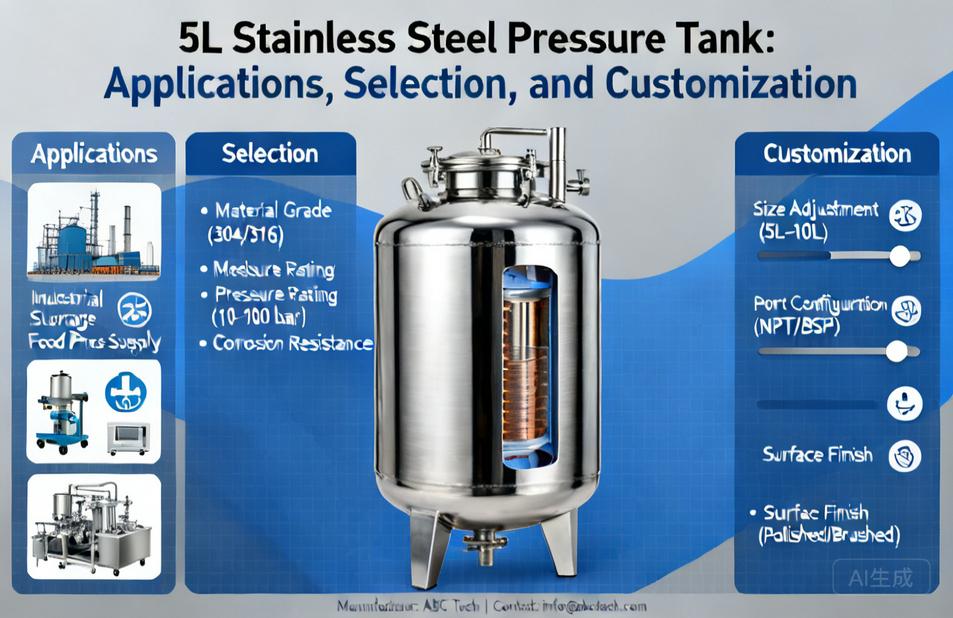
A 5L stainless steel pressure tank is a compact yet versatile vessel commonly used in industrial fluid handling, adhesive dispensing, and lubrication systems. Designed to hold and pressurize liquids such as sealants, inks, paints, and lubricants, this tank ensures a steady and controlled flow of material to application points. Its 5-liter capacity strikes a balance between portability and adequate supply, making it ideal for small-batch production, maintenance operations, and precise dispensing tasks. For procurement professionals and engineers seeking a reliable and easy-to-integrate pressure tank, understanding its key features, material quality, and customization potential is essential.
What Is a 5L Stainless Steel Pressure Tank?
A 5L stainless steel pressure tank is a pressure-rated container constructed from stainless steel, typically 304 or 316 grades, designed to hold liquids under pressure. The tank operates by introducing compressed air or inert gas through a regulator, which forces the liquid out through an outlet valve or hose. The 5-liter volume is suited for applications that require moderate amounts of fluid without frequent refilling, such as manual dispensing stations, low-volume production lines, or portable repair kits. These tanks are often used with pneumatic pumps, dispense guns, or metering systems to achieve consistent application.
Key Features of a 5L Stainless Steel Pressure Tank
When evaluating a 5L stainless steel pressure tank, consider the following features that contribute to safe and efficient operation:
- Pressurization system: Most tanks include an air inlet valve and a pressure gauge, allowing precise control of internal pressure. Some models incorporate a safety valve to prevent over-pressurization.
- Sealing and closure: A quick-release clamp or threaded lid ensures a tight seal, minimizing leakage and making cleaning and refilling straightforward.
- Portability: The compact size and manageable weight of a 5L tank make it easy to move between workstations or integrate into mobile carts.
- Multiple outlet options: Outlet ports may be customized to accommodate various hose sizes or fittings, depending on the application.
- Material finish: A smooth, polished internal surface reduces residue buildup and facilitates thorough cleaning, particularly important for food-grade or cosmetic applications.
Materials and Construction Quality
The construction material of a stainless steel pressure tank directly impacts its corrosion resistance, durability, and compliance with food or chemical regulations. Stainless steel 304 is commonly used because it offers good corrosion resistance and is cost-effective for most industrial applications. For environments involving high chloride exposure or acidic chemicals, 316 stainless steel provides enhanced resistance and is preferred in marine, pharmaceutical, and certain food processing settings. Pay attention to weld quality and wall thickness; well-executed welds and adequate thickness prevent premature failure and extend tank lifespan. Reputable manufacturers and suppliers often provide detailed material certificates and hydrostatic test reports, which are valuable for validation.
Applications of a 5L Stainless Steel Pressure Tank
Thanks to its moderate capacity and robustness, a 5L stainless steel pressure tank is suitable in numerous industries:
- Dispensing adhesives and sealants: In assembly lines, a 5L tank delivers consistent application of liquids, pastes, or semi-solids, improving product quality.
- Lubrication systems: It supplies precise amounts of oil or grease to machinery in manufacturing plants, reducing downtime.
- Printing and packaging: Used for transferring inks, dyes, or coatings into printing heads or rollers.
- Food and beverage: For small-scale syrup or additive dispensing, where hygiene and easy cleaning are critical.
- Automotive repair: Portable 5L pressure tanks help apply undercoating, rust inhibitors, or lubricants efficiently.
- Chemical processing: Handling low-viscosity chemicals that require protection from contamination.
Because the tank’s outlet and pressurization system can be customized, it is adaptable to specific needs, including OEM designs.
How to Choose the Right 5L Stainless Steel Pressure Tank
Selecting the appropriate 5L pressure tank involves more than just checking volume. Here are essential factors to evaluate:
Operating Pressure and Commodity
Identify the working pressure required for your application. Different models have varying maximum pressure ratings, usually expressed in bar or psi. Consider the viscosity of the fluid: thicker liquids require higher pressure to flow smoothly, but the tank must be rated for that pressure. Always consult the technical data sheet to ensure the pressure range meets your process demands while maintaining safety margins.
Connection and Integration
Check the inlet and outlet connection types. Female or male threads, quick-connect couplers, and flange sizes vary. For seamless integration into your existing setup, you may need adapters. A manufacturer can supply tanks with custom outlet configurations or additional ports for level sensors or return lines.
Cleaning and Maintenance
If your application involves frequent product changes or does color changes, consider a tank with a fully openable top (via clamp) for easy access. A smooth interior and rounded corners reduce cleaning effort and prevent material build-up.
Regulatory Compliance
Depending on your industry, the tank may need to comply with standards such as ATEX for explosive environments, FDA for food contact, or CE marking for pressure equipment. Verify that the tank supplier offers certifications and test documents that align with your requirements.
Customization Options and OEM Services
Each application has unique requirements, and a reliable manufacturer or factory should offer flexible customization. Common customization options include:
- Material grade: Choose between 304 and 316 stainless steel for optimal corrosion resistance or chemical compatibility.
- Volume variation: While the keyword specifies 5L, some tanks may be provided with a larger capacity if needed, but a true 5L tank is designed to meet that volume specification.
- Port configuration: Modify the number of outlets, their positions, and thread sizes to suit your dispensing equipment.
- Safety accessories: Add a pressure relief valve, in-line filter, or high-pressure hose for enhanced safety.
- Surface treatment: A polished interior (e.g., 0.8 µm Ra) is available for high-purity applications.
- Branding: Some OEM projects include nameplate engraving or custom paint for the tank exterior.
Before contacting a supplier, define your process conditions, including pressure, temperature, and fluid type, to guide the discussion.
Buying Considerations: Manufacturer vs. Trading Company
When sourcing a 5L stainless steel pressure tank, you may encounter both manufacturers and trading companies. Choosing a direct manufacturer (factory or supplier) offers advantages in terms of cost, communication, and customization. Factories typically have engineering staff who can advise on tank design and materials. They are also more likely to maintain quality control over production and provide samples or drawings for approval. However, some trading companies offer broader product portfolios and can source from multiple factories, which may be useful if you only need a single tank. Weigh the trade-offs between technical support, lead time, and minimum order quantities. A good supplier should be transparent about material origins, testing procedures, and delivery schedules.
Frequently Asked Questions
What is the typical working pressure of a 5L stainless steel pressure tank?
The maximum working pressure varies by tank model and manufacturer. Standard tanks often support pressures from 3 to 6 bar, but some are rated for up to 15 bar or more. Always check the pressure rating on the tank’s label or spec sheet and use an appropriate pressure regulator to avoid over-pressurization. Never exceed the recommended limits.
Can I use a 5L pressure tank for food applications?
Yes, but you must ensure the tank is made of food-grade stainless steel (e.g., 304 or 316) and that the seals and gaskets are FDA-compliant. Many manufacturers offer versions designed specifically for food and beverage use, with a sanitary finish and easy disassembly for cleaning. Confirm with the supplier that the tank is certified for contact with food products.
How do I clean and maintain the tank?
Depressurize the tank completely before opening. Disassemble the lid and any hoses, and rinse the interior with warm water or a suitable cleaning solvent that is compatible with the fluid used. Use a soft brush or cloth to avoid scratching. You can also use a clean-in-place (CIP) system if the tank is equipped for it. Regularly check the pressure gauge and safety valves for proper function, and replace any worn seals.
Can I get a custom tank with a different volume or port arrangement?
Yes, many manufacturers offer OEM and customization services. If you need a different capacity, such as 2L or 10L, or additional inlet/outlet ports, they can design a tank to meet your specifications. Provide detailed dimensions and drawings to facilitate the process. Some factories have minimum order quantities, so verify the MOQ before placing an order.
Conclusion
Choosing a 5L stainless steel pressure tank involves considerations that align with your specific application and operational environment. By understanding the construction, materials, and customization options, you can select a tank that performs reliably and efficiently. As a sourcing professional, you should not only focus on price but also on the supplier’s capability to meet your technical requirements. Working with a reputable manufacturer or supplier ensures that the tank is built safely and backed by genuine after-sales support. If you need help clarifying your system’s compatibility or want to discuss customized solutions, do not hesitate to contact us with your process parameters and expected usage. Our engineering team is ready to provide practical advice and dependable products.