

Automatic Dispensing Tank | How It Works and How to Select the Right Unit for Your Production Line
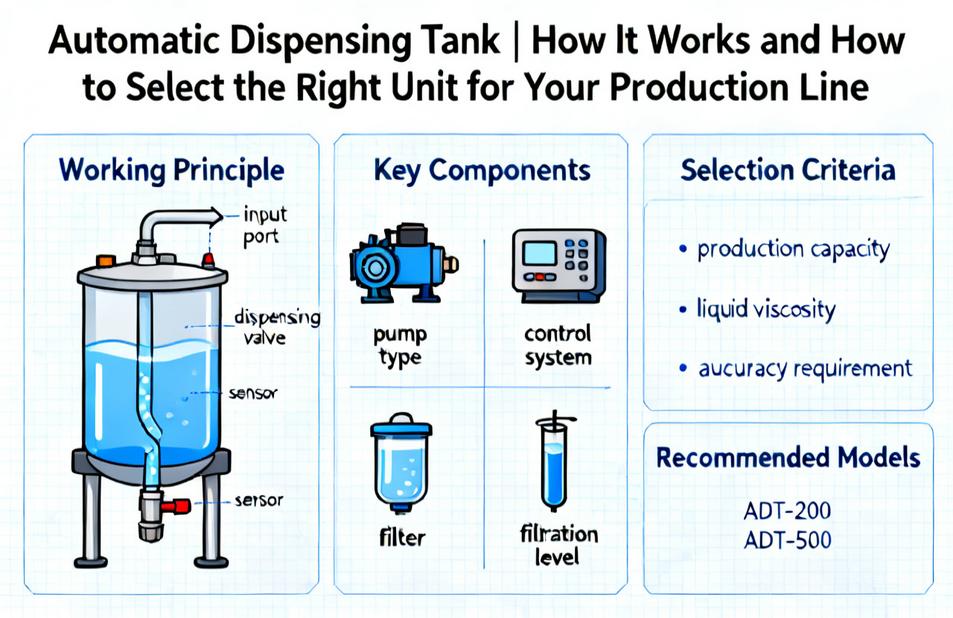
An automatic dispensing tank is a key component in modern fluid dispensing systems, designed to store, pressurize, and deliver adhesives, sealants, lubricants, and other liquids in a controlled and repeatable manner. These tanks are commonly used in industrial assembly lines, packaging operations, and automated manufacturing environments where precision material application is critical. By integrating an automatic dispensing tank into your process, you can improve output consistency, reduce material waste, and minimize downtime associated with manual fluid handling.
Product Overview: What Is an Automatic Dispensing Tank?
An automatic dispensing tank, also known as a pressure tank or dispensing pressure vessel, is a sealed container that holds a liquid or semi-liquid material and uses air pressure to push the material through a dispensing valve, gun, or nozzle. The automatic aspect refers to the tank’s ability to maintain a constant pressure and, in some advanced models, to interface with robotic or PLC-controlled systems for automated dispensing sequences. Unlike simple gravity-fed reservoirs, these tanks ensure a steady flow rate regardless of the material level, making them ideal for precise application in high-volume production environments.
How Does an Automatic Dispensing Tank Work?
The working principle is straightforward: the tank is filled with material, the lid is sealed, and compressed air is introduced through a regulator. The air pressure forces the material out through an outlet at the bottom or side of the tank. The regulator controls the output pressure, which directly influences the flow rate. In an automatic dispensing tank, pressure sensors and electronic controls may be used to maintain a set pressure, or the tank may be integrated with an external dispensing controller that opens and closes the fluid path at exact intervals. Some models feature a follower plate that moves down as the tank empties, ensuring a consistent seal on the material and preventing air pockets from forming. This is particularly important when handling high-viscosity materials like sealants or greases.
Key Features to Consider in an Automatic Dispensing Tank
When evaluating an automatic dispensing tank for your operations, several features are critical to ensuring reliable performance:
- Pressure range: The tank must be capable of operating within the pressure range suitable for your material viscosity and dispensing distance. Low-pressure tanks are fine for runny fluids, while thicker materials require higher pressure.
- Follower plate: As mentioned, a follower plate is essential for consistent evacuation of the material and for preventing separation of components in mixed materials.
- Material compatibility: Tanks are available in stainless steel, carbon steel, and sometimes plastic-lined versions. The tank interior must be compatible with the chemical nature of the fluid—especially if it is acidic, solvent-based, or requires sanitary conditions.
- Volume capacity: Automatic dispensing tanks come in various sizes, typically from 1 liter to over 200 liters. Your choice should match your production volume and the frequency of material refills.
- Sealing mechanism: A quick-release clamp or bolted flange is important for easy refilling and cleaning. Also check the type of gasket or O-ring used to ensure it can withstand your material and cleaning solvents.
- Safety features: Look for tanks with pressure relief valves and proper certification marks that are recognized in your region.
- Integration options: If you plan to automate your dispensing process, verify that the tank can be equipped with level sensors, low-level alerts, and interfaces for connection to your existing control system.
Materials and Construction: Stainless Steel Options
One of the most common materials for automatic dispensing tanks is stainless steel, particularly grades 304 and 316. Stainless steel tanks are favored for their durability, corrosion resistance, and ease of cleaning. Grade 316 offers better resistance to harsh chemicals and saline environments, making it suitable for marine or offshore applications. The interior surface can be polished to a fine finish to reduce material adhesion and simplify cleaning. For applications involving food or pharmaceutical products, electropolished stainless steel is often required to meet hygiene standards. Additionally, some tanks feature a vacuum jacket for materials that need to be kept at a constant temperature, although this is a more specialized option.
Common Industrial Applications for Automatic Dispensing Tanks
Automatic dispensing tanks are used across a wide range of industries. Some typical applications include:
- Electronics assembly: Applying solder paste, conformal coatings, and UV adhesives precisely on circuit boards.
- Automotive manufacturing: Dispensing structural adhesives, seam sealers, and sound-deadening materials on vehicle bodies and components.
- Aerospace: Delivering liquid sealants, primers, and specialized coatings in high-precision operations.
- Medical device production: Metering biocompatible adhesives and filling medical devices with small volumes of fluid.
- Packaging: Applying hot melt adhesives (though these often require tank systems with heating capabilities) or other liquid glues in carton sealing.
- General industrial: Lubricating moving parts, metering coolants, or applying rust inhibitors.
How to Choose an Automatic Dispensing Tank: A Practical Guide
Define Your Material and Application Parameters
Before consulting with a manufacturer or supplier, you should have a clear understanding of your material’s viscosity, chemical compatibility, and required flow rate. You also need to know the exact output pattern—whether you need a continuous flow or rapid intermittent dispensing. This information will help the supplier recommend the right tank size, pressure range, and sealing materials.
Consider Your Existing Equipment and Layout
Will the tank be placed on a cart, on a bench, or integrated into a larger machine? Measure the available space, and check the dimensions of the tank, particularly the height and inlet/outlet positions. Also, consider the type of pump or dispensing valve you intend to use downstream. The outlet size and threading should match the rest of your fluid path.
Evaluate Your Production Volume
For high-volume production, a larger tank with a fast-filling mechanism and a low-level alarm will reduce downtime. For small-scale or intermittent operations, a portable tank might be more flexible.
Regulatory and Safety Compliance
Depending on your industry, there may be standards that govern pressure vessels. Ensure that the tank you purchase meets relevant local or international codes, such as the ASME Boiler and Pressure Vessel Code in the US, the Pressure Equipment Directive in Europe, or other regional regulations. A responsible supplier will be able to provide this information.
Customization and OEM Options
Because production requirements vary, many manufacturers offer custom automatic dispensing tanks. Customization can include a special pressure rating, a particular capacity, a different inlet configuration, additional ports for sensors, or a unique mounting bracket. If you have a proprietary dispensing system, you may need an OEM tank that is engineered to your exact specifications. In such cases, work with a factory that has experience in designing and testing customized pressure vessels. They should be able to provide engineering support, drawings, and prototypes before mass production.
Buying Considerations: Direct from Factory vs. Distributor
When sourcing an automatic dispensing tank, you have the option of buying directly from a factory or through a distributor. Direct factory purchasing can offer more flexibility in customization and often results in lower unit costs, especially for large orders. However, if you need immediate availability or local technical support, a distributor might be the better choice. Regardless of the source, always ask for material test certificates, pressure test reports, and leak test validation. A reliable supplier should be transparent about the manufacturing process and quality control standards.
Supplier Selection: What to Look For
Choosing the right automatic dispensing tank supplier is as important as choosing the tank itself. Look for a company with a solid track record in fluid handling equipment. Ask about their experience with your specific material or industry. Ideally, a supplier should offer after-sales support, carrying spare parts such as seals, gaskets, and regulators. They should also be able to provide documentation on material traceability and compliance. Reading independent reviews or speaking with existing customers can give you insight into their reliability and communication.
Frequently Asked Questions
How often should I clean my automatic dispensing tank?
The cleaning frequency depends on the material you use. If you dispense two-part adhesives that cure quickly, you should clean the tank at least once per shift or after each batch. For materials with a slower curing time or that remain fluid at room temperature, you may only need to clean when changing material, or weekly. Always follow the material manufacturer’s recommendations.
Can I use an automatic dispensing tank for food-grade materials?
Yes, but the tank must be made of food-grade stainless steel (typically 316) and have a surface finish that meets hygiene standards. Any seals or hoses also need to be food-grade certified. You must also ensure that the air supply is clean and free of oil to prevent contamination.
What is the difference between a pressure tank and a cartridge dispenser?
A pressure tank holds a large volume of material and uses compressed air to push it to the point of application, which is ideal for high-volume or automated processes. A cartridge dispenser, on the other hand, uses a pre-filled cartridge and is typically used for lower volume or manual operations. The pressure tank offers more control over supply stability and can be integrated with metering pumps.
Conclusion
An automatic dispensing tank is a versatile investment that enhances the precision and efficiency of your fluid application processes. By carefully evaluating your material, pressure needs, production scale, and regulatory requirements, you can select a tank that serves your operation well for years. Whether you need a standard model or a fully customized OEM design, partnering with an experienced manufacturer or supplier ensures you get a product that meets your exact specifications. If you are currently comparing options or have a specific application in mind, reach out to a qualified professional to discuss your needs—they can provide detailed technical advice and quotations tailored to your project.