

Stainless Steel Dispensing Tank | Key Considerations for Industrial Fluid Handling
A stainless steel dispensing tank is a specialized vessel used to store, pressurize, and dispense liquids, adhesives, sealants, and other flowable materials in industrial processes. Unlike standard storage tanks, dispensing tanks are designed with integrated fittings, ports, and sometimes agitation or heating elements to deliver material consistently to dispensing valves, nozzles, or filling machines. When sourced from a qualified manufacturer or supplier, these tanks become a critical component in automated assembly, packaging, and chemical dosing systems.
What Is a Stainless Steel Dispensing Tank?
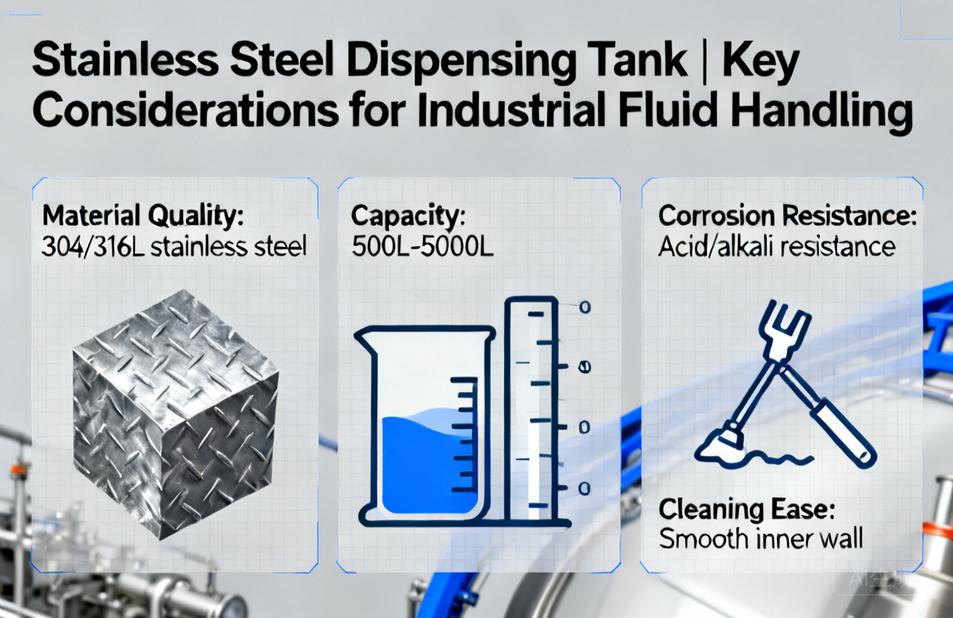
At its core, a stainless steel dispensing tank is a pressure vessel or reservoir that feeds material to a dispensing system. It often operates under pressure (using compressed air or inert gas) or gravity, depending on the application and material viscosity. The tank may be part of a larger dispensing system that includes pumps, regulators, hoses, and valves. Stainless steel is the material of choice for many industries because it resists corrosion, withstands cleaning agents, and maintains product purity. Common grades include 304 and 316L, though the specific grade should be selected based on the chemical compatibility and environmental conditions of your process.
Key Features and Design Elements
Industrial dispensing tanks are not one-size-fits-all. They are engineered with features that ensure reliable material delivery and ease of maintenance. Typical design elements include:
- Pressure-rated construction with safety relief valves and pressure gauges.
- Quick-open or clamped lids for fast refilling and cleaning.
- Multiple inlet and outlet ports for filling, venting, and dispensing.
- Optional agitation to keep suspended solids or pigments mixed.
- Heating or cooling jackets for temperature-sensitive materials.
- Level sensors and controls for automated refill and low-level alarms.
- Sanitary connections (e.g., Tri-Clamp) for food, pharmaceutical, or cosmetic applications.
These features allow the tank to integrate seamlessly with dispensing robots, time-pressure valves, progressive cavity pumps, or peristaltic systems. The goal is to maintain consistent flow and pressure at the point of dispense, which directly affects product quality and production efficiency.
Materials and Construction
Stainless steel is selected for its mechanical strength, weldability, and resistance to rust and chemical attack. For aggressive chemicals or high-purity applications, 316L stainless steel offers better corrosion resistance than 304. The interior surface finish also matters: a smooth, polished finish minimizes material buildup and simplifies cleaning, which is essential in food, medical, and semiconductor manufacturing. Some tanks are passivated to enhance corrosion resistance after welding. A reputable manufacturer will provide material certificates and documentation to verify the alloy composition.
Typical Industrial Applications
Stainless steel dispensing tanks serve a wide range of industries and processes. Common applications include:
- Adhesive and sealant dispensing in automotive and electronics assembly.
- Potting and encapsulation of electrical components.
- Food and beverage: sauces, syrups, chocolate, and dairy products.
- Pharmaceutical and cosmetic: creams, gels, and liquid medications.
- Chemical processing: dosing of additives, catalysts, and solvents.
- 3D printing and additive manufacturing: resin or binder supply.
- Packaging lines: filling and dosing of liquids into containers.
In each case, the tank must be compatible with the material being dispensed, the required flow rate, and the operating environment. For example, a tank used for highly viscous adhesive may need heating and a follower plate to ensure complete evacuation.
How to Choose the Right Dispensing Tank
Selecting the correct tank requires a systematic review of your process parameters. Start by defining the material characteristics: viscosity, density, corrosiveness, and sensitivity to temperature or moisture. Then consider the required dispensing pressure and flow rate, which will dictate the tank’s pressure rating and outlet size. The tank volume should match your production batch size and refill frequency; too small a tank leads to frequent downtime, while too large a tank increases material waste and cleaning time. Space constraints, available utilities, and integration with existing dispensing equipment also play a role. Finally, think about maintenance: easy access for cleaning and inspection will reduce long-term operating costs.
Customization and OEM Options
Many suppliers offer custom and OEM dispensing tanks to fit specific system requirements. Customization can include non-standard dimensions, specialized port configurations, alternative materials (e.g., hastelloy or PTFE linings), and integrated controls. If you are developing a new dispensing system or replacing an existing tank, working with a manufacturer that provides OEM services can streamline the design and ensure compatibility. When discussing customization, be prepared to share drawings, material specifications, and operational details. A good factory will ask about your dispensing method, cleaning procedures, and regulatory requirements to propose a suitable design.
Buying Considerations for Global Sourcing
When sourcing stainless steel dispensing tanks from overseas suppliers, evaluate the manufacturer’s technical capability and quality control. Look for experience in your industry and ask for documentation on material traceability, pressure testing, and surface finish. Review the supplier’s ability to provide after-sales support, spare parts, and technical guidance. Communication is critical: clear specifications and regular updates during production help avoid costly mistakes. Also, consider logistics and packaging to prevent damage during transport. While price is a factor, it should not override reliability and compliance with your process needs.
Supplier Selection and Evaluation
Choosing a reliable supplier is about more than comparing quotes. Assess their engineering support, production capacity, and willingness to collaborate on custom projects. Request references from similar industrial applications, if available, and verify their quality management systems. A manufacturer that specializes in stainless steel fabrication for dispensing systems will typically have in-house welding, polishing, and testing capabilities. If you require OEM production, confirm that the factory can handle your branding and documentation. Visit the facility if possible, or request video audits to confirm capabilities.
Frequently Asked Questions
What is the difference between a dispensing tank and a pressure tank?
A dispensing tank is designed specifically to feed material to a dispensing system, often with features like agitation or level control. A pressure tank is a broader term for any tank that operates under pressure. Many dispensing tanks are pressure vessels, but not all pressure tanks are configured for dispensing.
Can I use a stainless steel dispensing tank for food products?
Yes, if the tank is made from food-grade stainless steel (typically 304 or 316L) and meets sanitary design standards, such as smooth interior finishes and cleanable connections. It should also comply with relevant food safety regulations in your region.
How do I determine the right tank size for my application?
Consider your production rate, material consumption per shift, and available floor space. The tank should hold enough material to minimize refills without causing excessive waste or stagnation. Your dispensing equipment supplier can help calculate the optimal volume.
What information should I provide to a custom tank manufacturer?
Share details about the material to be dispensed (viscosity, corrosiveness, temperature), required pressure and flow rate, connection types and sizes, available space, cleaning method, and any industry-specific standards. Drawings or sketches are helpful for accurate quoting.
Conclusion
Selecting a stainless steel dispensing tank involves understanding your material, process, and integration needs. Focus on material compatibility, pressure requirements, cleanability, and the supplier’s ability to support customization or OEM projects. Whether you are upgrading an existing line or building a new dispensing system, working with an experienced manufacturer can ensure the tank performs reliably and efficiently. For specifications, application questions, or custom design inquiries, contact a qualified supplier to discuss your project in detail.
