

High Viscosity Glue Pressure Tank | A Complete Guide for Industrial Dispensing Systems
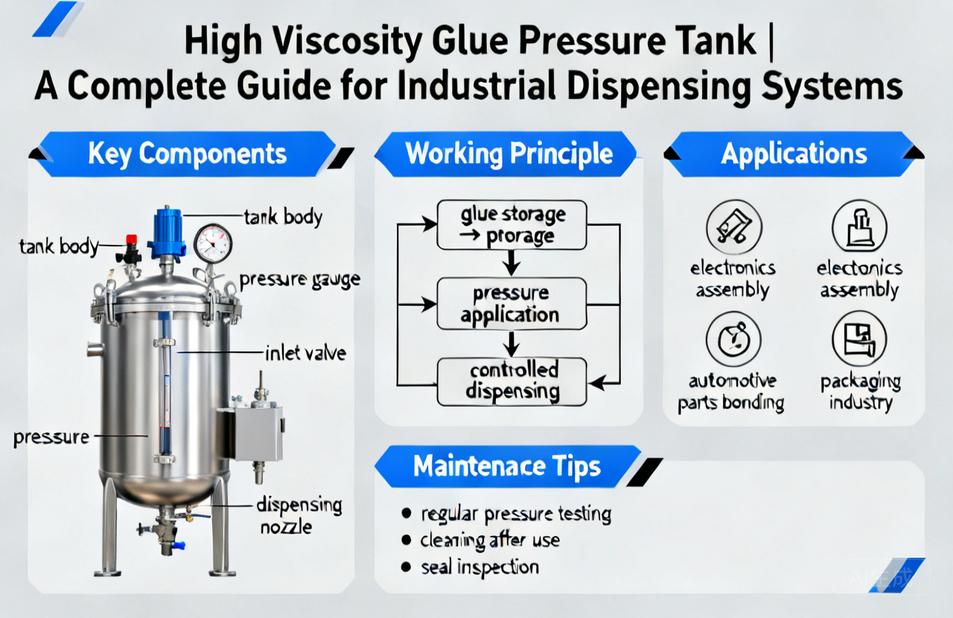
A high viscosity glue pressure tank is a specialized vessel that uses regulated air pressure to feed thick adhesives, sealants, and pastes from a bulk container to a dispensing valve or applicator. Unlike simple gravity-fed reservoirs, this type of tank is designed to overcome the high resistance of materials such as polyurethane, epoxy, silicone, and mastic glues, delivering a steady, consistent flow in industrial assembly, packaging, and bonding operations. For manufacturers working with demanding adhesives, selecting the right pressure tank is a critical decision that affects dispense accuracy, material waste, and production uptime.
How a High Viscosity Glue Pressure Tank Works
The operating principle is straightforward but requires careful engineering. The tank holds the adhesive in a sealed chamber. Compressed air enters the chamber and presses down on a follower plate or directly on the glue surface. This pressure pushes the thick material through an outlet hose toward a dispense valve, nozzle, or robot end effector. Because high viscosity glue does not flow easily, the tank must maintain stable pressure and often includes a follower plate that scrapes the tank wall to minimize waste and prevent air pockets. Some systems also use a pump-assisted design, but the pressure tank itself remains the central reservoir that buffers pulsation and ensures a smooth supply.
Key components typically include a pressure vessel, a lid with an air inlet and pressure regulator, a material outlet, a follower plate, and safety relief valves. The quality of these components determines how well the tank handles thick glues without channeling, cavitation, or inconsistent flow.
Key Features Buyers Should Evaluate
When comparing high viscosity glue pressure tanks from different suppliers, purchasing teams should look beyond the tank volume. Several design details directly influence performance and maintenance costs.
- Pressure control: A precise air regulator and gauge help maintain consistent output as the glue level drops. Without stable pressure, beads can vary in width and volume.
- Follower plate design: A well-fitted follower plate reduces leftover material and prevents the glue from sticking to the tank walls. This is especially important for expensive adhesives.
- Sealing system: High-quality gaskets and seals prevent air leaks and material curing inside the tank. They also simplify cleaning when switching between adhesive types.
- Material outlet and hose compatibility: The outlet size and hose connection must match the viscosity and flow rate of the glue. A restricted outlet can cause pressure drops and inconsistent dispensing.
- Safety features: Pressure relief valves, locking mechanisms, and rated vessels are essential for safe operation in industrial environments.
Materials and Construction
High viscosity adhesives can be abrasive, chemically aggressive, or sensitive to moisture and contamination. Therefore, the wetted parts of a pressure tank are often made from stainless steel, carbon steel with internal coating, or aluminum. Stainless steel is a common choice for water-based glues and applications where corrosion resistance and easy cleaning are priorities. Carbon steel tanks may be used for solvent-free materials in controlled environments. The choice of material should be based on the adhesive chemistry, cleaning method, and production environment. OEM and custom pressure tank manufacturers can select the appropriate construction based on the specific glue being used.
Industrial Applications
High viscosity glue pressure tanks serve a wide range of industries and processes. In automotive assembly, they supply structural adhesives for panel bonding and hem sealing. In furniture and woodworking, they feed thick PVA and hot melt adhesives to edge banding and profile wrapping lines. In packaging, they deliver heavy-duty hot melt and cold glue to case sealers and carton erectors. Electronics and appliance manufacturers use them for potting, sealing, and gasketing with silicone and polyurethane. Construction and building material producers rely on them for dispensing mastic, tile adhesive, and sealant. Any process that requires a continuous, metered supply of thick adhesive can benefit from a properly sized pressure tank.
How to Choose the Right Pressure Tank
Selecting a high viscosity glue pressure tank involves matching the tank to the adhesive, the dispense equipment, and the production rhythm. Buyers should consider the following factors:
Adhesive Characteristics
Viscosity, density, cure time, and filler content all affect how the glue moves through the system. Highly filled or thixotropic adhesives may require a larger outlet, a follower plate with a specific profile, or a tank that can be heated to reduce viscosity.
Production Requirements
Daily glue consumption, dispense frequency, and the number of dispensing points determine the appropriate tank capacity. A tank that is too small requires frequent refilling; one that is too large may expose the adhesive to air and moisture for extended periods.
Equipment Compatibility
The pressure tank must integrate with existing dispensers, valves, hoses, and robots. Check the outlet thread, pressure rating, and control signal requirements. Some suppliers offer complete systems, while others provide tanks that connect to third-party equipment.
Cleaning and Maintenance
Consider how often the adhesive type changes and how difficult it is to clean the tank. Quick-release lids, removable follower plates, and smooth internal surfaces reduce downtime and labor.
Customization and OEM Options
Many industrial glue pressure tanks are available as standard models, but custom configurations are common. A manufacturer or supplier may offer OEM pressure tanks with specific tank sizes, outlet positions, mounting brackets, heating jackets, agitation, level sensors, and control interfaces. Custom pressure tanks can also be designed for particular adhesives that are difficult to handle, such as moisture-curing polyurethane or highly filled epoxy. When requesting a custom or OEM solution, buyers should provide detailed information about the adhesive, required flow rate, pressure range, and the surrounding dispensing system. This helps the factory recommend a suitable design without over-engineering.
Supplier Selection and Buying Considerations
Choosing a reliable pressure tank supplier is as important as choosing the product itself. A good supplier understands adhesive dispensing and can provide technical support, spare parts, and documentation. Buyers should ask about the supplier’s experience with high viscosity materials, their ability to provide custom or OEM tanks, and their quality control process. It is also wise to request references from similar industrial applications, although specific customer names may be confidential. Evaluate the supplier’s communication, lead time planning, and after-sales service. A factory that builds pressure tanks specifically for adhesive systems will often offer better guidance than a general pressure vessel manufacturer.
Price should be considered alongside total cost of ownership. A lower-priced tank may require more maintenance, cause material waste, or fail to maintain consistent pressure. Look for a balance between initial investment, durability, and long-term reliability.
Frequently Asked Questions
What types of glue can a high viscosity pressure tank handle?
These tanks are suitable for thick adhesives such as polyurethane, epoxy, silicone, mastic, butyl, and highly filled glues. The exact compatibility depends on the tank materials, seals, and whether heating or agitation is required.
Can the tank be used with a dispensing robot?
Yes. Many pressure tanks are designed to work with robotic dispensers. The tank supplies material under pressure to the robot’s valve or nozzle. It is important to match the pressure and flow characteristics with the robot’s dispensing control.
How do I prevent glue from curing inside the tank?
Proper sealing, minimizing exposure to air, and cleaning the tank after use are essential. For moisture-curing adhesives, a dry air supply and a well-sealed lid help extend working time. Some tanks also offer purge or solvent flush options.
Can I order a custom pressure tank for my specific adhesive?
Yes. Many manufacturers and suppliers offer custom and OEM pressure tanks. Provide details about your adhesive, required pressure, flow rate, and equipment interface, and the factory can propose a suitable design.
Conclusion
Choosing the right high viscosity glue pressure tank starts with a clear understanding of your adhesive, production process, and dispensing equipment. Focus on pressure stability, follower plate design, sealing quality, and material compatibility. Consider whether a standard model meets your needs or whether a custom or OEM tank is more appropriate. Finally, select a supplier or factory that understands adhesive dispensing and can support you with technical advice and reliable after-sales service. If you are evaluating options for your application, contact a qualified pressure tank supplier to discuss your specifications and customization requirements.