

Glue Pressure Tank for Industrial Dispensing | A Buyer’s Guide to Selection and Customization
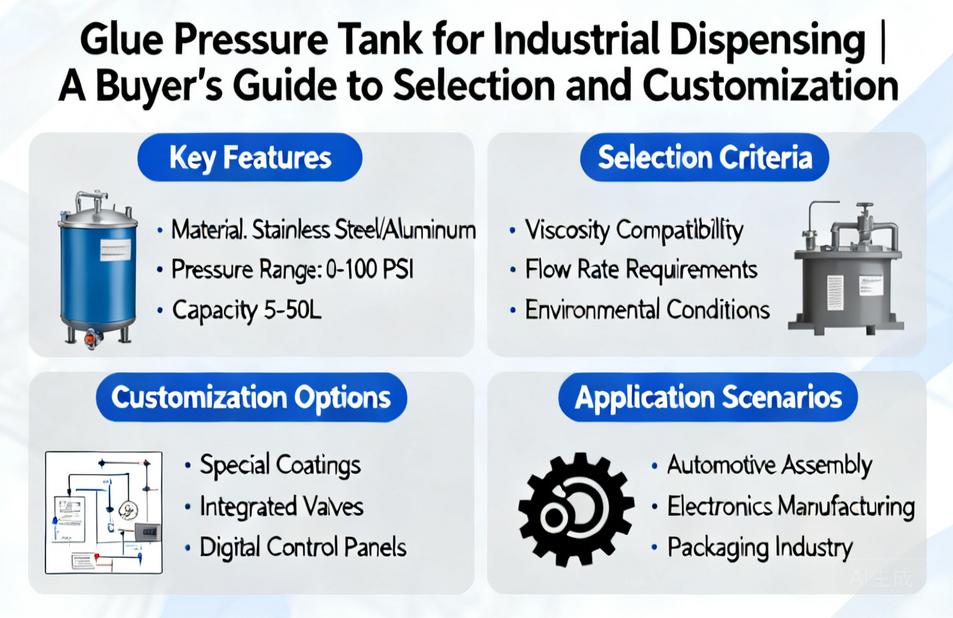
A glue pressure tank is a pressurized vessel that stores and delivers adhesive, sealant, or other viscous fluids to dispensing equipment at a consistent pressure. It is commonly used in automated production lines, packaging, woodworking, automotive assembly, and electronics manufacturing, where precise and repeatable glue application is critical. Unlike simple gravity-fed systems, a pressure tank uses compressed air to push the adhesive through hoses to dispensing valves, guns, or nozzles, ensuring a steady flow even as the tank level drops. For overseas buyers sourcing dispensing equipment, understanding how these tanks work and what to consider before purchasing can prevent costly downtime and improve production quality.
How a Glue Pressure Tank Works
A typical glue pressure tank consists of a sealed container, a pressure regulator, an air inlet, a fluid outlet, and a lid with clamps. Compressed air enters the tank and pressurizes the adhesive inside. The pressure forces the glue out through a dip tube and into the dispensing line. The operator adjusts the air pressure to control the flow rate, while the dispensing valve or gun controls the deposit size and pattern. Some tanks include agitators or heaters to maintain adhesive viscosity, especially for reactive or temperature-sensitive materials like polyurethane or hot melt adhesives. Because the tank is sealed, the adhesive is protected from moisture, contamination, and premature curing, which extends its working life.
Key Features to Evaluate
When comparing glue pressure tanks from different manufacturers or suppliers, focus on features that affect performance, maintenance, and compatibility with your adhesive. Look for tanks with a large, easy-to-open lid for fast refilling and cleaning. A reliable pressure regulator and gauge are essential for consistent flow. Check whether the tank includes a safety relief valve to prevent over-pressurization. For adhesives that tend to separate or settle, an agitator may be necessary. If your process requires heated adhesive, a tank with a built-in heating jacket or immersion heater is a better choice. Also consider the number of fluid outlets; some tanks support multiple dispensing stations, which can improve efficiency in multi-point applications.
Materials and Construction
The material of construction directly impacts durability, chemical compatibility, and maintenance. Stainless steel is a common choice for industrial glue pressure tanks because it resists corrosion and is easy to clean. Carbon steel tanks may be suitable for non-corrosive adhesives but often require an internal coating. For water-based adhesives or those with aggressive solvents, stainless steel or plastic-lined tanks are preferred. Seals and gaskets must be compatible with the adhesive to avoid swelling, leakage, or contamination. Buyers should confirm the wetted parts materials with the supplier and verify that they match the chemical properties of the adhesive being used.
Typical Industrial Applications
Glue pressure tanks are used across many industries. In packaging, they supply adhesives for carton sealing, labeling, and case forming. In woodworking, they feed glue to edge banders, dowel inserters, and laminating lines. Automotive assembly uses them for applying sealants, sound-deadening materials, and structural adhesives. Electronics manufacturing relies on pressure tanks for precise dispensing of conductive adhesives, underfill, and potting compounds. Other applications include bookbinding, footwear production, and filter manufacturing. Because adhesive properties vary widely, the tank design, pressure range, and accessories should be matched to the specific application and production speed.
How to Choose the Right Glue Pressure Tank
Selecting the correct tank involves several steps. First, identify the adhesive type and its viscosity, as this affects the required pressure and whether heating or agitation is needed. Second, determine the required flow rate and the number of dispensing points. Third, check the maximum working pressure of your dispensing valves and hoses to ensure the tank can operate within that range. Fourth, consider the tank capacity and refill frequency; larger tanks reduce downtime but take up more floor space. Fifth, evaluate the available air supply and whether an air dryer or filter is needed to prevent moisture from affecting the adhesive. Finally, think about cleaning and maintenance access. A tank that is difficult to clean can lead to adhesive curing inside, causing blockages and inconsistent dispensing.
Customization and OEM Options
Many industrial buyers require custom glue pressure tanks to fit specific equipment layouts or adhesive formulations. Customization can include tank capacity, port positions, outlet quantity, agitator type, heating method, and control interfaces. OEM services allow buyers to integrate a pressure tank into their own branded dispensing systems or to private-label the equipment. When working with a custom manufacturer, provide detailed specifications such as adhesive type, operating pressure range, temperature requirements, and connection sizes. A reliable supplier will ask about your process and may suggest design adjustments to improve performance. Prototyping and sample testing can help verify that the custom tank meets your production needs before full-scale ordering.
Buying Considerations and Supplier Selection
Before placing an order, request detailed technical drawings and material certificates from the supplier. Confirm that the tank is pressure-tested and that safety features are included. Ask about the warranty period, spare parts availability, and technical support. For international buyers, consider the supplier’s experience with export packaging and documentation. A factory with in-house machining and assembly capabilities can often offer better quality control and faster lead times for custom orders. It is also wise to review the supplier’s other products, such as dispensing valves, hoses, and fittings, to ensure compatibility. Communication is key: a supplier who responds promptly and asks clarifying questions is more likely to deliver a tank that fits your application.
Frequently Asked Questions
What adhesive types can be used in a glue pressure tank?
Most pressure tanks handle a wide range of adhesives, including water-based, solvent-based, epoxy, polyurethane, silicone, and hot melt. However, the tank materials, seals, and heating options must be compatible with the specific adhesive chemistry. Always check with the supplier before using a new adhesive.
Can I use a glue pressure tank with my existing dispensing system?
Yes, if the tank’s outlet size, pressure range, and fluid compatibility match your system. You may need adapters or custom fittings. Provide your existing equipment specifications to the tank supplier to ensure a proper match.
How do I maintain a glue pressure tank?
Regular cleaning is essential to prevent adhesive buildup and curing. Follow the manufacturer’s instructions for flushing and cleaning. Inspect seals, gaskets, and the pressure regulator periodically, and replace worn parts as needed. Proper maintenance extends the tank’s service life and ensures consistent dispensing.
What information should I provide to get a custom glue pressure tank quote?
Provide the adhesive type and viscosity, required working pressure, tank capacity, number of outlets, temperature requirements, connection sizes, and any automation or control needs. If you have a drawing or sample, share it with the supplier to receive an accurate quotation.
Conclusion
Choosing the right glue pressure tank is about matching the tank’s design, materials, and features to your adhesive and production process. Focus on pressure control, compatibility, ease of maintenance, and the supplier’s ability to support custom or OEM requirements. Whether you need a standard unit or a fully customized solution, working with an experienced manufacturer or supplier who understands industrial dispensing can save time and reduce risk. If you have specific specifications or application questions, reach out to a qualified supplier to discuss your needs and request a tailored recommendation.