

Dispensing Pressure Tank Manufacturer | A Buyer’s Guide for Industrial Fluid Systems
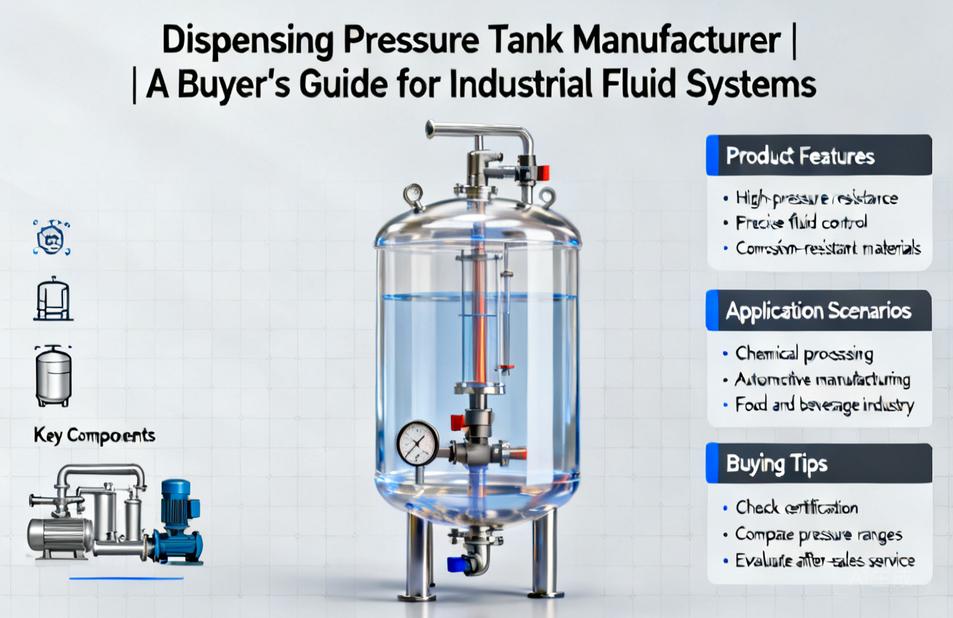
When you need to move adhesives, sealants, inks, or other viscous fluids through a production line, a dispensing pressure tank is often the quiet workhorse behind consistent output. As a dispensing pressure tank manufacturer, the goal is to provide a vessel that holds material under controlled air or gas pressure and delivers it to a dispense valve, nozzle, or robot. Whether you are integrating a new automated cell or replacing an existing reservoir, understanding how these tanks are built and selected helps you avoid downtime, inconsistent beads, and unnecessary maintenance.
What a Dispensing Pressure Tank Does in a Fluid System
A dispensing pressure tank, sometimes called a pressure pot or material reservoir, stores liquid or paste under regulated pressure. Compressed air or inert gas pushes the material from the tank through a hose to a dispensing valve. The valve opens and closes to place a precise amount of material onto a part. Unlike a simple gravity feed cup, a pressure tank maintains steady flow even as the material level drops, which is critical for repeatable dots, lines, and fills. These tanks are common in electronics assembly, automotive gasketing, packaging, medical device manufacturing, and general industrial bonding.
Key Features Buyers Look For
Industrial buyers rarely purchase a tank as a standalone item. They evaluate how the tank interacts with the dispense valve, the material chemistry, and the production environment. Important features include:
- Pressure regulation: A reliable regulator and gauge set allow operators to adjust flow without changing the valve opening.
- Tank geometry: Cylindrical or conical bottoms help material flow toward the outlet and reduce dead zones.
- Lid and clamp design: Quick-open lids simplify refilling and cleaning, which matters in high-mix production.
- Port configuration: Air inlet, material outlet, vent, and fill ports should match your existing hose and valve connections.
- Level monitoring: Optional level sensors or sight glasses help operators know when to refill before a line stops.
These features do not exist in isolation. A dispensing pressure tank manufacturer should be able to discuss how each choice affects purge time, material waste, and operator safety.
Materials and Construction Considerations
Material compatibility is one of the first questions a supplier should ask. A tank that works well for a solvent-based ink may not be suitable for a moisture-curing polyurethane or a food-grade lubricant. Common construction materials include carbon steel with an internal coating, stainless steel, and occasionally specialty alloys or plastic-lined vessels. Stainless steel is often chosen for its corrosion resistance and ease of cleaning, but the specific grade and surface finish should match the fluid and the cleaning chemicals used in your plant. Wetted parts, including the dip tube, fittings, and seals, must also be compatible. When evaluating a custom or OEM tank, request a wetted parts list and confirm that elastomers and seals can handle the material.
Typical Industrial Applications
Dispensing pressure tanks appear in many production environments. In electronics, they feed underfill, conformal coating, and thermal interface materials. In automotive, they supply anaerobic flange sealants and structural adhesives. Packaging lines use them for hot melt and cold glue, while medical device assembly may require precise micro-dispensing of silicone or epoxy. Food and beverage applications sometimes use pressure tanks for flavoring or marking fluids, provided the construction meets the relevant hygiene requirements. Because each application has different viscosity, pot life, and cure behavior, the tank should be selected as part of the entire fluid delivery system rather than as an isolated component.
How to Choose the Right Tank for Your Process
Start with the material. Its viscosity, fillers, and curing mechanism determine whether you need agitation, a heated jacket, or a simple pressurized vessel. Next, define the dispense volume and cycle time. A larger tank reduces refill frequency but may increase material waste if the fluid has a short pot life. Consider the maximum pressure your valve and hose can safely handle, and ensure the tank’s pressure rating and relief device are appropriate. Port size and hose length affect pressure drop, especially with high-viscosity fluids. Finally, think about changeover. If your line runs multiple materials, a tank with quick-clean features and interchangeable reservoirs can reduce downtime.
Customization and OEM Options
Many dispensing pressure tank manufacturers offer customization because standard tanks rarely fit every machine layout. Custom options may include special mounting brackets, unique port locations, extended dip tubes, level sensor integration, or heating and agitation. OEM programs can provide private-label tanks or tanks designed to fit a specific dispense robot or valve brand. When discussing a custom build, provide drawings, material data sheets, and operating conditions. A capable supplier will ask about pressure cycles, cleaning methods, and ambient temperature. Avoid assuming that a cosmetic change is the only difference; internal geometry and surface finish often matter more than external dimensions.
Buying Considerations and Supplier Selection
Price is only one factor. Evaluate the supplier’s ability to document materials, provide replacement parts, and support troubleshooting. Ask how they test tanks before shipment, but do not expect a specific test protocol unless it is part of their published quality system. A good dispensing pressure tank supplier will help you match the tank to your valve and material, not just quote a vessel. Look for clear communication about lead times, packaging, and after-sales support. If your application involves hazardous fluids, confirm that the tank design and any pressure relief devices meet your site safety requirements. For OEM projects, clarify ownership of drawings and tooling before production begins.
Frequently Asked Questions
What is the difference between a pressure tank and a pressure pot?
In most industrial contexts, the terms are used interchangeably. Both describe a sealed vessel that holds material under pressure and delivers it to a dispense point. Some suppliers use pressure pot for smaller, portable units and pressure tank for larger or stationary reservoirs, but the operating principle is the same.
Can I use a dispensing pressure tank with high-viscosity adhesives?
Yes, but the tank must be sized and configured for the material. High-viscosity fluids may require a larger outlet, a follow plate, or elevated pressure. The dip tube and hose diameter also affect flow. Discuss the adhesive’s viscosity and shear behavior with the tank manufacturer before ordering.
How do I know if I need a custom tank or a standard model?
If your existing dispense valve, robot, or production line has fixed connections and space constraints, a custom tank may be necessary. Standard tanks work well for general bench-top or simple automated setups. A supplier can review your layout and recommend the most practical option.
What information should I prepare before contacting a supplier?
Gather the material type, viscosity, required dispense volume, operating pressure, available space, port connections, and cleaning method. If you have drawings or photos of the current setup, include them. This information helps the manufacturer propose a suitable tank and identify any customization needs.
Conclusion
Choosing a dispensing pressure tank is a system decision, not just a component purchase. Focus on material compatibility, pressure control, port configuration, and ease of maintenance. Work with a dispensing pressure tank manufacturer that asks about your fluid, your valve, and your production environment. Whether you need a standard reservoir, a custom build, or an OEM solution, clear communication about specifications and operating conditions leads to a better fit and fewer surprises on the line. If you are evaluating options for an upcoming project, contact a supplier with your application details and ask how their tanks can be configured for your process.
