

Stainless Steel Glue Tank | A Practical Guide for Industrial Adhesive Supply Systems
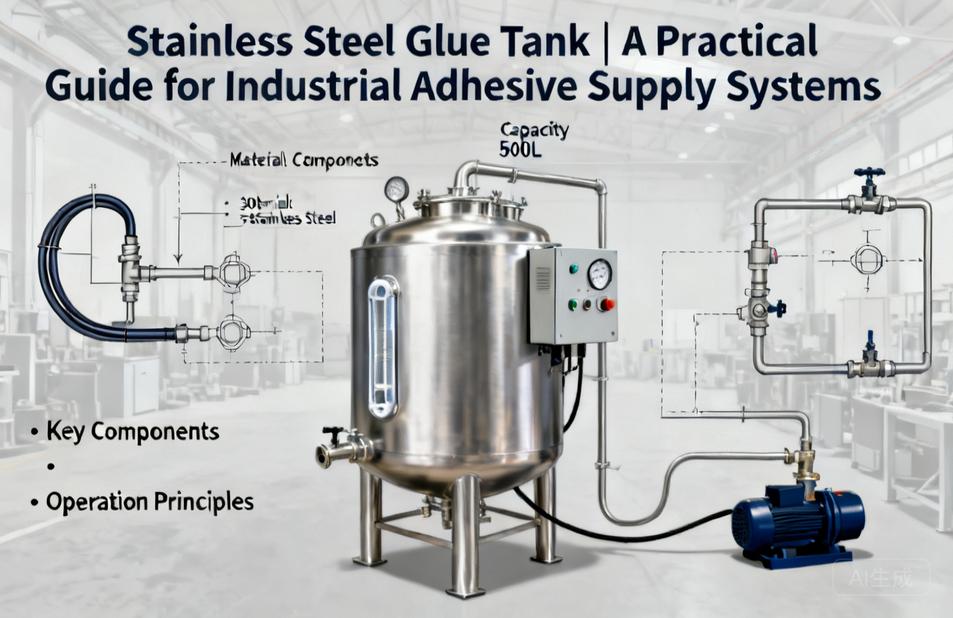
A stainless steel glue tank is a pressure vessel or storage container used to hold and feed liquid adhesives, sealants, resins, and other viscous materials into industrial dispensing systems. It is commonly found in automated glue application lines, packaging machinery, woodworking operations, automotive assembly, and electronics manufacturing where consistent adhesive flow and clean material handling are essential. For overseas buyers, understanding how these tanks work, what construction options matter, and how to match a tank to an existing dispenser or production line is critical before placing an order.
What Is a Stainless Steel Glue Tank?
In simple terms, a stainless steel glue tank is a container that stores adhesive under pressure or gravity and delivers it to a dispensing valve, nozzle, or roller. Unlike plastic or carbon steel tanks, stainless steel offers corrosion resistance, easier cleaning, and better compatibility with water-based and solvent-based adhesives. Depending on the system design, the tank may be pressurized with compressed air, heated with a jacket or cartridge, or fitted with a pump and level sensor. The goal is always the same: keep the adhesive at the correct viscosity and feed it steadily so the dispensing process remains repeatable.
These tanks are often described by buyers using different terms, including adhesive pressure tank, glue pot, resin supply tank, sealant reservoir, or dispensing tank. While the names vary, the core function is consistent: controlled storage and transfer of sticky, curing, or temperature-sensitive materials.
Key Features Buyers Usually Look For
When sourcing a stainless steel glue tank, procurement teams and process engineers often evaluate several practical features. A well-designed tank should support stable pressure, easy refilling, and simple maintenance. Common features include:
- A sealed lid with gasket and clamp for pressure retention
- An air inlet and pressure regulator connection
- A material outlet port sized to match the dispensing hose or pump
- A level indicator or sight glass for monitoring adhesive remaining
- Optional heating elements or water jacket for hot melt or temperature-sensitive glues
- Quick-release fittings for fast cleaning and material changeover
The right combination depends on the adhesive type, production speed, and the number of dispensing points on the line.
Materials and Construction
Stainless steel grades such as 304 and 316 are frequently specified because they resist rust, handle repeated washdown, and do not easily react with adhesive chemistry. The tank body may be seamless drawn, welded, or fabricated from sheet metal, and the interior finish matters. A smooth internal surface reduces adhesive buildup and makes cleaning faster, which is important when switching between different glue formulations. Exterior surfaces may be brushed or polished depending on the working environment.
Seals, gaskets, and wetted components also deserve attention. The adhesive supplier or equipment manufacturer can often recommend compatible elastomers, because some solvents and curing agents can degrade certain rubber compounds. A stainless steel glue tank manufacturer should be able to discuss these material compatibility questions rather than simply quoting a generic unit.
Industrial Applications
Stainless steel glue tanks appear in many industrial applications. In packaging, they supply hot melt or cold glue to case sealers and carton erectors. In woodworking, they feed edge banding and laminating lines. In automotive and electronics, they support precise dispensing of sealants, potting compounds, and conductive adhesives. Because these industries often run multiple shifts, tank reliability and quick refilling directly affect overall equipment effectiveness.
Some buyers need a tank for a single dispensing robot, while others require a larger reservoir that feeds several valves through a manifold. The application determines whether a small pressure pot or a custom-engineered stainless steel glue tank is the better choice.
How to Choose the Right Tank
Selecting a tank starts with the adhesive itself. Consider viscosity, solids content, curing behavior, and whether the material must be heated. Next, review the dispensing system: what pressure or flow rate does the valve require, and what connection size is standard on the existing hose or pump? Tank volume should match the refill interval that production can reasonably support without interrupting the line.
Other factors include available floor or machine space, mounting method, cleaning frequency, and whether the tank will be moved between stations. If the tank is part of a regulated process, buyers may also ask about documentation, material certificates, and surface finish reports. A reputable stainless steel glue tank supplier will ask about these details before recommending a model, because a tank that is oversized, undersized, or incompatible with the adhesive can cause production problems.
Customization and OEM Options
Many industrial buyers cannot use a standard catalog tank because their adhesive, mounting space, or automation interface is unique. In these cases, a custom or OEM stainless steel glue tank may be the practical solution. Customization can include specific inlet and outlet positions, tank dimensions, lid configuration, heating capacity, level sensor type, and mounting brackets. Some suppliers also offer private labeling for distributors and system integrators.
When requesting a custom tank, it helps to provide a simple sketch or drawing, the adhesive technical data sheet, the required working pressure range, and details about the existing dispensing equipment. This information allows the factory to propose a design that fits without guesswork. Clear communication at this stage reduces the risk of rework and delays later.
Buying Considerations and Supplier Selection
Price is only one part of the purchasing decision. Buyers should also compare fabrication quality, weld finish, port alignment, and the supplier’s ability to support spare parts and technical questions after delivery. A stainless steel glue tank factory that regularly serves dispensing equipment manufacturers will understand common pain points such as clogging, pressure drop, and seal wear.
It is reasonable to ask for dimensional drawings, material grade confirmation, and photographs of similar tanks the supplier has produced. If the application involves food-grade or medical adhesives, discuss cleaning and material documentation requirements early. For repeat orders, confirm that the supplier can maintain consistent construction and connection standards. Working with a manufacturer that communicates clearly and documents specifications is often more valuable than chasing the lowest initial quote.
Frequently Asked Questions
Can a stainless steel glue tank be used with different types of adhesive?
Yes, but compatibility should be checked for each adhesive. Water-based, solvent-based, and hot melt adhesives have different chemical and temperature requirements. The tank materials, seals, and heating method must suit the specific glue being used.
How do I know what tank size to order?
Tank size depends on adhesive consumption rate, acceptable refill frequency, and available space. A smaller tank may suit low-volume dispensing, while a larger reservoir reduces refill downtime on high-speed lines.
Can the tank be customized for my existing dispensing machine?
Many manufacturers offer custom connection positions, mounting brackets, and capacity options. Providing drawings and equipment details helps the supplier match the tank to your machine.
What information should I provide when requesting a quote?
Useful details include adhesive type, viscosity, required pressure or flow, connection sizes, heating needs, tank volume, and any space limitations. This helps the supplier recommend a suitable stainless steel glue tank rather than a generic unit.
Conclusion
Choosing a stainless steel glue tank is mainly about matching the tank to the adhesive, the dispensing system, and the production environment. Focus on material compatibility, pressure and flow requirements, cleaning access, and the supplier’s ability to support customization or OEM production. If you are unsure which configuration fits your line, contact a qualified manufacturer or supplier with your application details, and ask for a specification review before ordering.