

Mixing Pressure Tank | A Complete Guide for Industrial Buyers and OEM Projects
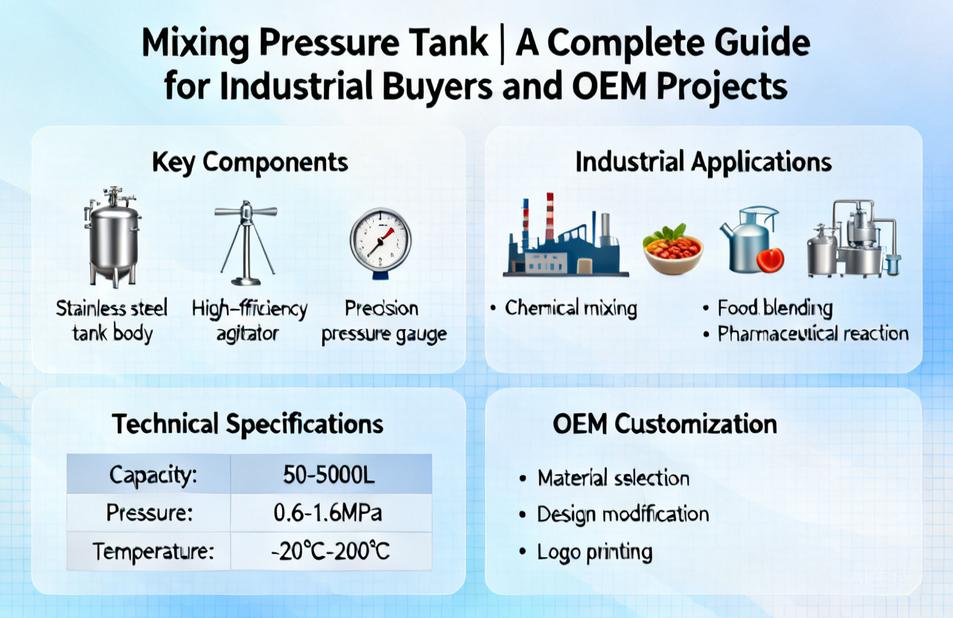
A mixing pressure tank is a vessel that combines two functions: holding a liquid or semi-liquid material under controlled pressure while actively mixing it to maintain a uniform consistency. In industrial settings, it is commonly used in adhesive dispensing, coating supply, sealant delivery, ink circulation, and chemical dosing systems where separation, settling, or viscosity changes would otherwise affect process quality. For overseas buyers, understanding how a mixing pressure tank works, where it fits, and how to specify one is essential for selecting the right equipment and a reliable manufacturer or supplier.
What Is a Mixing Pressure Tank and How Does It Work?
A mixing pressure tank typically consists of a sealed chamber, an agitator or mixer shaft, a pressure inlet, a material outlet, and a lid or cover with ports for filling, venting, and instrumentation. The tank is pressurized by compressed air or an inert gas, which pushes the material through a hose or pipe to a dispensing valve, spray gun, or application point. At the same time, the internal mixer keeps the material homogeneous, preventing pigments, fillers, or solid particles from settling during storage or use.
The working principle is straightforward: pressure provides the driving force for material delivery, while mechanical agitation maintains consistency. Depending on the application, the mixer may run continuously or intermittently, and the tank may be used as a buffer vessel between bulk storage and the point of application. This dual function makes the mixing pressure tank a practical choice for processes that require both steady flow and stable material properties.
Key Features Buyers Should Look For
When evaluating a mixing pressure tank, buyers should focus on features that affect performance, safety, and maintenance. Common design elements include:
- Pressure-tight construction with a secure lid and reliable sealing to prevent leakage and pressure loss.
- An agitator driven by an air motor or electric motor, selected according to material viscosity and mixing requirements.
- Material contact parts in stainless steel or other corrosion-resistant materials suitable for the chemical being processed.
- Inlet and outlet ports sized to match the supply line and dispensing equipment.
- Pressure relief and safety valves to protect operators and equipment.
- Optional level sensors, temperature control, or clean-in-place features for more demanding processes.
These features should be matched to the specific fluid, production environment, and regulatory requirements of the end user.
Materials and Construction
Material selection is a critical decision for any mixing pressure tank. Stainless steel, particularly grades such as 304 and 316, is widely used because it offers good corrosion resistance, cleanability, and durability. For aggressive chemicals, specialized alloys, lined tanks, or plastic-bodied vessels may be more appropriate. Carbon steel tanks with internal coatings are also available for certain non-corrosive applications.
The construction method matters as well. Welded seams, surface finish, and internal polish affect both pressure integrity and cleaning efficiency. In hygienic applications, such as food, pharmaceutical, or cosmetic production, tanks may require smooth internal surfaces and sanitary fittings. Buyers should confirm that the wetted parts are compatible with the material being mixed and that the pressure rating matches the intended operating conditions.
Typical Industrial Applications
Mixing pressure tanks are used across many industries where a consistent, pressurized supply of material is required. Common applications include:
- Adhesive and sealant dispensing in assembly and packaging lines.
- Paint, coating, and ink supply for spray or roll coating systems.
- Chemical dosing and transfer in water treatment and process industries.
- Resin, silicone, and two-component material delivery in composites and electronics manufacturing.
- Food and cosmetic processing where gentle mixing and controlled delivery are needed.
In each case, the tank acts as both a reservoir and a conditioning device, helping to maintain process stability and reduce downtime caused by material separation or inconsistent flow.
How to Choose the Right Mixing Pressure Tank
Choosing the right tank involves more than matching a size to a production line. Buyers should consider the following factors:
Material Characteristics
Viscosity, density, temperature, and chemical compatibility influence the choice of tank material, agitator type, and sealing method. High-viscosity materials may require a more powerful mixer and larger outlet ports, while corrosive fluids demand specialized wetted materials.
Pressure and Flow Requirements
The required working pressure and flow rate determine the tank’s pressure rating, wall thickness, and port sizes. The tank must be able to deliver material at the rate demanded by the downstream equipment without pressure fluctuations that could affect application quality.
Mixing Performance
The agitator design should match the material’s tendency to settle or separate. Options range from simple paddle mixers to high-shear or scraped-surface agitators. The goal is to maintain uniformity without introducing air or damaging shear-sensitive materials.
Integration with Existing Equipment
The tank should connect easily to existing pumps, hoses, valves, and control systems. Space constraints, mounting options, and access for maintenance also play a role in selection.
Customization and OEM Options
Many industrial buyers require mixing pressure tanks that fit specific process needs rather than standard catalog models. Custom and OEM options often include adjustments to tank volume, port configuration, agitator speed, control interface, and material of construction. Some suppliers offer private-label manufacturing for distributors and equipment integrators. When discussing a custom project, it is important to provide detailed information about the material, operating pressure, temperature range, and the equipment the tank will work with. A capable manufacturer or factory can then propose a design that balances performance, safety, and cost.
Buying Considerations and Supplier Selection
When sourcing a mixing pressure tank, price should not be the only factor. Buyers should evaluate the supplier’s engineering capability, manufacturing experience, quality control process, and ability to provide technical support. A reliable supplier will ask detailed questions about the application and offer practical recommendations rather than simply quoting a standard unit. It is also advisable to review the supplier’s production facilities, testing procedures, and documentation practices. For OEM projects, clear communication about specifications, timelines, and responsibilities helps avoid misunderstandings. Working with a manufacturer that understands both the product and the end-use application can reduce integration risks and improve long-term reliability.
Frequently Asked Questions
How do I know if I need a mixing pressure tank instead of a standard pressure tank?
If your material tends to separate, settle, or change consistency during storage and delivery, a mixing pressure tank is usually the better choice. It maintains uniformity while providing pressurized supply, which helps ensure consistent application results.
Can a mixing pressure tank be used with high-viscosity materials?
Yes, but the tank must be specified accordingly. High-viscosity materials typically require a more powerful agitator, larger outlet ports, and sometimes heated or insulated construction. Providing accurate viscosity data to the supplier is essential for proper selection.
What information should I provide when requesting a quote?
Useful details include the material to be mixed, its viscosity and density, required working pressure, flow rate, temperature range, available space, and how the tank will connect to existing equipment. If you have special requirements such as sanitary construction or custom controls, include those as well.
Are custom or OEM mixing pressure tanks available?
Many manufacturers offer custom and OEM solutions. This can include modified dimensions, different materials, specialized agitators, and private-label branding. Discuss your requirements with the supplier to determine the most suitable configuration.
Conclusion
Selecting a mixing pressure tank requires a clear understanding of the material, process, and equipment interface. By focusing on construction materials, mixing performance, pressure requirements, and supplier capability, buyers can choose a tank that supports stable production and reduces maintenance issues. Whether you need a standard unit or a custom OEM solution, working with an experienced manufacturer or supplier who understands industrial applications will help you make a better-informed decision. For specific specifications, application questions, or customization requests, contacting a qualified supplier directly is the most efficient next step.
