

How to Choose a Pressurized Fluid Tank for Industrial Applications
A pressurized fluid tank is a sealed vessel that stores liquids or gases under pressure and delivers them in a controlled, consistent flow to downstream equipment. It is commonly used in industrial fluid handling, adhesive dispensing, spray coating, lubrication systems, chemical processing, and water treatment. Unlike a simple storage tank, a pressurized fluid tank relies on internal pressure to push media through lines, valves, and applicators without the need for a pump in every section of the system. For overseas buyers, understanding how these vessels are built, where they are used, and what to check before ordering is essential for selecting a reliable unit that matches the process.
What a Pressurized Fluid Tank Does in a System
In many industrial setups, the tank acts as both a reservoir and a pressure source. Compressed air or an inert gas is introduced above the liquid, creating pressure that forces the fluid out through an outlet. This design is popular in adhesive and sealant dispensing, where consistent bead size and flow rate matter. It is also found in paint circulation, ink supply, cutting fluid delivery, and chemical dosing. Because the tank is sealed, it can handle fluids that should not be exposed to ambient air, moisture, or contamination. The working principle is straightforward: pressure in, fluid out, with regulators and valves controlling the output. The result is a steady supply that supports repeatable production quality.
Key Features Buyers Look For
When evaluating a pressurized fluid tank, procurement teams usually focus on pressure rating, tank volume, port configuration, and the type of level monitoring. A well-designed unit includes a secure lid or cover, a pressure gauge, a safety relief valve, and inlet and outlet ports sized to match the application. Some tanks are fitted with agitators or recirculation lines to keep mixed fluids uniform. Others include quick-release clamps for fast cleaning and changeover between batches. In adhesive and sealant systems, a follow-plate or follower plate may be used to minimize waste and maintain steady pressure as the tank empties. These features directly affect uptime, maintenance cost, and operator safety.
Materials and Construction
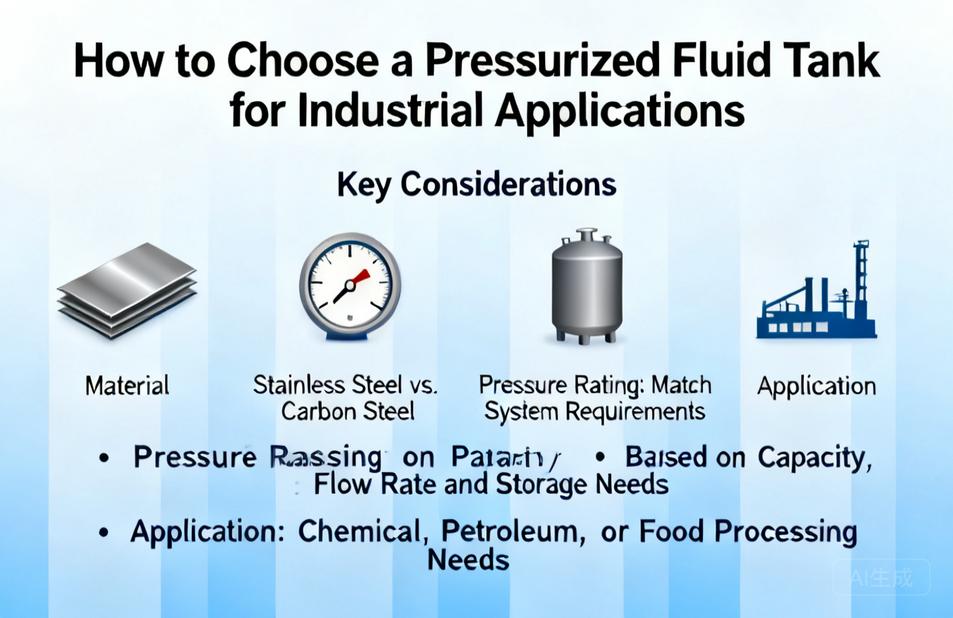
The material of construction depends on the fluid being handled and the environment. Stainless steel is a common choice for water-based, solvent-based, and corrosive media because it resists rust and is easy to clean. Carbon steel may be suitable for non-corrosive oils and lubricants, often with an internal coating. For highly aggressive chemicals, higher-alloy stainless grades or plastic-lined tanks are considered. Welding quality, surface finish, and seal material are also important. Seals must be compatible with the fluid to prevent swelling, leakage, or premature failure. A reputable manufacturer will match the wetted materials to the chemical and temperature profile of the process, rather than offering a single generic specification.
Typical Industrial Applications
Pressurized fluid tanks appear across many sectors. In automotive assembly, they supply adhesives, sealants, and lubricants to dispensing robots and manual applicators. In electronics manufacturing, they feed conformal coating and potting materials. In food and beverage plants, they may handle oils and flavorings where sanitary design is required. Water treatment and chemical processing use them for dosing and transfer. Printing and packaging operations rely on them for ink and coating supply. Because each application has different viscosity, temperature, and pressure needs, the tank should be selected as part of the whole fluid delivery system, not as an isolated component.
How to Choose the Right Tank
Start by defining the fluid: its viscosity, corrosiveness, solids content, and operating temperature. Then determine the required flow rate and the pressure needed at the point of use. This helps size the tank volume and pressure rating. Consider the available floor space, port positions, and how the tank will be filled and cleaned. If the fluid tends to settle or separate, look for agitation or recirculation options. For hazardous areas, check that the design can accommodate the necessary controls and venting. Buyers should also confirm that the tank can be integrated with existing pumps, regulators, hoses, and applicators. A supplier who understands the full fluid path can often recommend a configuration that avoids pressure drops and inconsistent flow.
Customization and OEM Options
Many projects require more than a standard tank. Custom fabrication can adjust dimensions, port locations, lid type, mounting brackets, and surface finish. OEM programs may involve private labeling, specific color requirements, or documentation packages. Some suppliers offer custom pressure ratings, special coatings, and built-in level sensors or temperature probes. When requesting a custom design, provide drawings, process details, and any site-specific constraints. A factory with in-house engineering can review the application and propose a build that fits the equipment envelope. Clear communication at this stage reduces the risk of rework and delays.
Buying Considerations for Importers
Price is only one part of the total cost. Importers should review material certificates, dimensional reports, and pressure test records where applicable. Packaging and shipping method matter for large vessels, and spare parts availability affects long-term operation. Ask about lead time for standard and custom units, and confirm warranty terms. It is also wise to check whether the supplier can provide English documentation, installation guidance, and after-sales support. For repeat orders, consistent quality and interchangeable parts are often more valuable than a low initial quote.
How to Select a Reliable Supplier
Look for a manufacturer or supplier with experience in fluid handling and pressure vessels, not just general metal fabrication. Review their production capability, quality control process, and ability to handle OEM or custom projects. Ask for references from similar industries, and request samples or small trial orders when possible. A factory that communicates clearly, answers technical questions, and offers practical suggestions is usually a better long-term partner than one that only quotes a price. Visiting the facility or conducting a video audit can also help verify workshop conditions and testing equipment.
Frequently Asked Questions
What is the difference between a pressure tank and a standard storage tank?
A pressure tank is designed to hold fluid under internal pressure and deliver it in a controlled flow. A standard storage tank typically stores fluid at atmospheric pressure and relies on a separate pump for transfer.
Can a pressurized fluid tank be used with high-viscosity materials?
Yes, but the design must account for viscosity. Higher-viscosity fluids may require larger ports, follow plates, or assisted feeding to maintain consistent flow. The supplier should review the fluid characteristics before recommending a model.
What information is needed for a custom tank quote?
Provide the fluid type, operating temperature, required pressure, flow rate, tank volume, port sizes, available space, and any cleaning or sanitation requirements. Drawings or photos of the existing setup also help.
How often should a pressurized fluid tank be inspected?
Inspection frequency depends on the application, fluid, and local regulations. Routine checks of seals, gauges, relief valves, and fittings are recommended. A maintenance schedule should be based on the manufacturer guidance and operating conditions.
Conclusion
Choosing the right pressurized fluid tank comes down to matching the vessel to the fluid, the process, and the production environment. Focus on material compatibility, pressure and flow requirements, cleaning access, and the supplier ability to support customization or OEM production. A well-matched tank improves consistency, reduces downtime, and protects product quality. If you are reviewing options for an upcoming project, share your specifications and application details with a qualified manufacturer or supplier to discuss standard models and custom configurations.
