

Pressurized Adhesive Tank | A Complete Guide for Industrial Dispensing and OEM Procurement
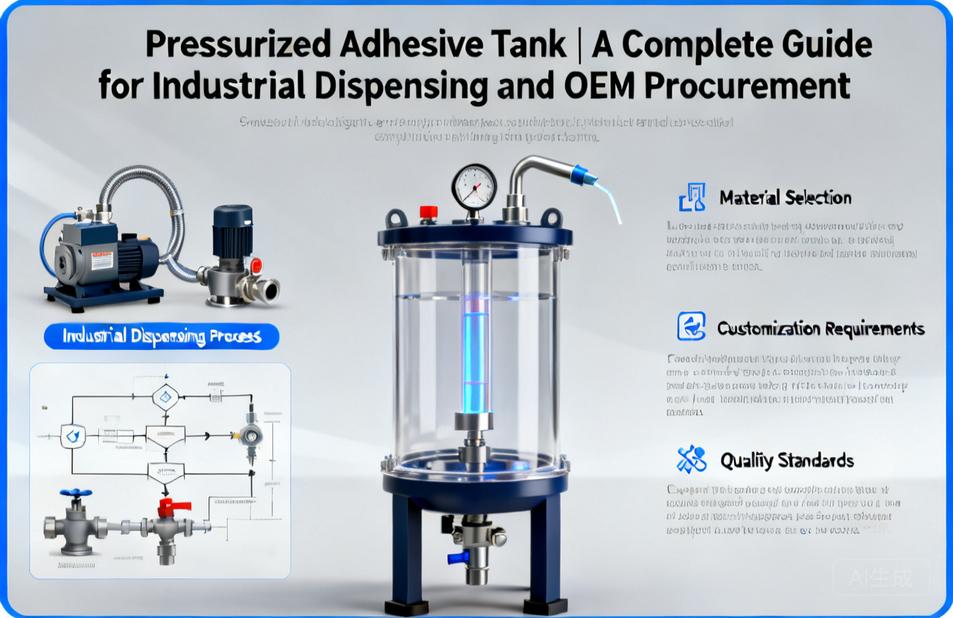
A pressurized adhesive tank is a sealed vessel that holds adhesive, sealant, or other viscous fluids under controlled air or gas pressure, then delivers the material through a hose to a dispensing valve, nozzle, or gun. It is widely used in industrial assembly, packaging, woodworking, automotive, and electronics manufacturing where consistent adhesive flow and reduced manual handling are important. For overseas buyers, understanding how these tanks work, what options are available, and how to select a reliable manufacturer or supplier is essential before placing an order.
How a Pressurized Adhesive Tank Works
Unlike a simple gravity-fed container, a pressurized adhesive tank uses compressed air or inert gas to push material from the tank to the point of application. The tank usually includes a pressure regulator, safety relief valve, inlet and outlet ports, a lid with a secure clamp or bolt system, and often a fluid-level indicator. When pressure is applied, the adhesive moves through a heated or unheated hose to a dispense valve. This setup helps maintain steady flow, reduces air bubbles, and allows operators to work at a distance from the material supply.
Depending on the application, some tanks are designed for low to medium viscosity adhesives, while others handle high-viscosity hot melt or silicone materials. The choice of tank size, pressure rating, and outlet configuration affects performance, so buyers should match the tank to the adhesive type and the dispensing equipment already in use.
Key Features Buyers Should Evaluate
When evaluating a pressurized adhesive tank, procurement teams often look at several practical features. Pressure control is critical because inconsistent pressure leads to uneven beads or drips. A reliable regulator and gauge help operators maintain repeatable results. Safety design is another priority; tanks should include a pressure relief device and a lid that cannot be opened accidentally while pressurized. Material compatibility matters because adhesives can be corrosive, abrasive, or sensitive to moisture. Portability is also important in cells where the tank must move between workstations.
- Adjustable air pressure regulator with clear gauge
- Quick-release or bolt-down lid for fast refilling
- Corrosion-resistant wetted parts
- Optional agitator or heater for high-viscosity adhesives
- Multiple outlet sizes and hose connection options
Materials and Construction
Pressurized adhesive tanks are commonly made from stainless steel, carbon steel, or aluminum. Stainless steel is often preferred in adhesive and sealant applications because it resists rust and is easier to clean. Carbon steel may be suitable for non-corrosive materials and can be a more economical option. Aluminum offers lighter weight but may not be ideal for certain chemicals. Internal surfaces should be smooth to prevent adhesive buildup and simplify maintenance. Weld quality, lid sealing, and fitting threads also affect long-term reliability, so buyers should review construction details rather than focus only on price.
Typical Industrial Applications
These tanks are used across many industries. In woodworking and furniture production, they supply glue to edge banders, dowel inserters, and assembly stations. In automotive and transportation manufacturing, they feed sealants, sound-deadening materials, and structural adhesives. In packaging, they deliver hot melt or cold glue to case sealers and labeling systems. Electronics and appliance manufacturers use them for potting compounds, thermal interface materials, and gasketing adhesives. Other applications include construction, footwear, bookbinding, and filter manufacturing. Because adhesive formulations vary widely, the tank and dispensing system must be selected as a complete package, not as separate components.
How to Choose the Right Tank for Your Equipment
Selecting a pressurized adhesive tank starts with the material being dispensed. Viscosity, temperature sensitivity, and curing behavior determine whether a standard tank will work or whether a heated, agitated, or specialized model is needed. Next, consider the required flow rate and duty cycle. A high-volume production line may need a larger tank or a system that supports quick refilling. The pressure range should match the dispense valve and hose rating. Port size and thread type must connect properly to existing equipment. Finally, think about the working environment: flammable adhesives may require inert gas pressurization, while cleanroom or food-related applications may need specific surface finishes.
Buyers should also consider maintenance access, spare parts availability, and whether the supplier can provide technical support for integration. A tank that is difficult to clean or service can increase downtime and operating costs over time.
OEM and Customization Options
Many manufacturers and suppliers offer OEM and custom pressurized adhesive tanks to fit specific machinery or production requirements. Customization can include tank volume, working pressure, outlet quantity and orientation, mounting brackets, lid type, material selection, and integration with existing controls. Some buyers need private-label branding or modified dimensions to fit inside a machine frame. When requesting a custom design, provide clear details about the adhesive, required pressure, flow rate, hose length, and electrical or pneumatic connections. A capable factory will review these requirements and propose a suitable configuration rather than forcing a standard model.
Buying Considerations for Overseas Procurement
Price is only one factor in a successful purchase. Buyers should evaluate the supplier’s engineering capability, production consistency, and communication during the quotation stage. Ask for dimensional drawings, material certificates where applicable, and details about testing procedures. Confirm what spare parts are recommended and how they can be sourced after delivery. Shipping method, packaging, and documentation also matter for international orders. If the tank will be integrated into a larger machine, clarify responsibilities for compatibility and technical support. Avoid assuming that a low-cost tank will perform the same as a purpose-built unit; the cost of adhesive waste, downtime, and rework often exceeds the initial savings.
Supplier Selection and Due Diligence
Finding a reliable pressurized adhesive tank manufacturer or supplier requires more than browsing a catalog. Look for a factory with experience in fluid handling and dispensing systems, not just general pressure vessels. Review the product range, ask technical questions, and request references or examples of similar applications if available. A supplier that understands adhesive behavior, viscosity, and dispensing valves can help prevent integration problems. For OEM projects, confirm whether the manufacturer can handle custom drawings, small trial orders, and consistent repeat production. Transparent communication and documented specifications are good signs of a professional partner.
Frequently Asked Questions
What is the difference between a pressure tank and a pressure pot?
In many industrial contexts, the terms pressure tank and pressure pot are used interchangeably. Both refer to a sealed vessel that uses air pressure to move material to a dispense point. However, some suppliers use pressure pot for smaller, portable units and pressure tank for larger or stationary systems.
Can a pressurized adhesive tank handle high-viscosity materials?
It can, but the design must match the material. High-viscosity adhesives may require a larger outlet, higher pressure capability, heated components, or an agitator to maintain flow. Always share the adhesive datasheet with the supplier before selecting a model.
Are custom tank sizes and connections available?
Yes. Many manufacturers offer custom sizes, port configurations, and mounting options for OEM and industrial projects. Customization is most effective when the buyer provides detailed requirements for pressure, flow, adhesive type, and available space.
How do I maintain a pressurized adhesive tank?
Regular maintenance usually includes checking seals and gaskets, cleaning the interior and outlet, inspecting the pressure relief device, and verifying the regulator and gauge. Follow the manufacturer’s instructions and replace worn parts promptly to avoid dispensing problems.
Conclusion
Choosing a pressurized adhesive tank is a decision that affects adhesive flow, production efficiency, and maintenance costs. Focus on material compatibility, pressure control, safety features, and the supplier’s ability to support your application. Whether you need a standard unit or a custom OEM solution, clear specifications and a factory that understands dispensing systems will help you avoid costly mistakes. If you are reviewing options for an upcoming project, contact a qualified supplier to discuss your adhesive, equipment, and production requirements.
