

Adhesive Reservoir Tank | A Practical Guide for Industrial Dispensing and OEM Sourcing
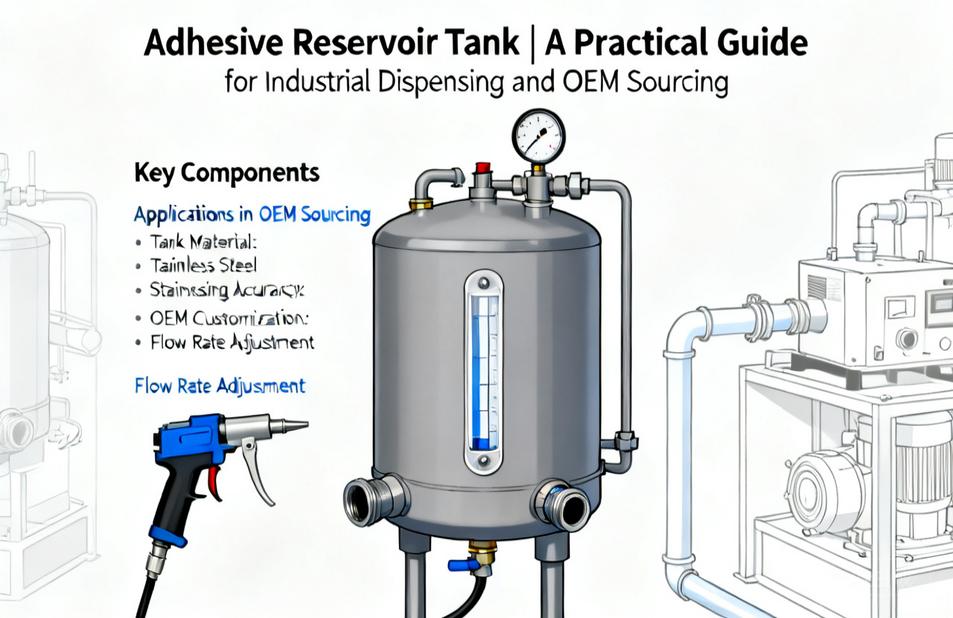
An adhesive reservoir tank is a pressure vessel that stores and supplies liquid adhesives, sealants, or other viscous media to a dispensing system at a controlled flow. In industrial settings, it is commonly used in automated glue application, packaging lines, automotive assembly, and product assembly where a stable adhesive feed is essential. For overseas buyers, understanding how this tank works, which materials suit different adhesives, and what to evaluate in a supplier helps reduce downtime and improve dispensing accuracy. This guide answers common sourcing questions and explains how to match an adhesive reservoir tank to your equipment and production needs.
What Is an Adhesive Reservoir Tank?
An adhesive reservoir tank, also called an adhesive pressure tank or glue supply tank, is a sealed container that holds adhesive under pressure. Compressed air or a pump mechanism pushes the adhesive from the tank through hoses to a dispensing valve, gun, or nozzle. The tank may be a simple pressure pot or a more complex system with level sensors, agitators, heaters, and pressure regulators. Unlike small cartridges, a reservoir tank supports continuous production because it holds a larger volume and can be refilled without stopping the line. It is often used with hot melt adhesives, cold glue, silicone, polyurethane, epoxy, and other flowable materials. The tank can be a standalone unit or part of a larger adhesive supply system that includes filters, regulators, and circulation loops.
How an Adhesive Reservoir Tank Works in a Dispensing System
The basic principle is pressure transfer. Adhesive is loaded into the tank, the lid is sealed, and compressed air enters the tank to pressurize the adhesive. The pressure pushes the adhesive through an outlet and along a heated or unheated hose to the dispensing point. A pressure regulator controls the flow rate, while a relief valve protects the tank from overpressure. Some tanks include a follower plate that sits on top of the adhesive to prevent channeling and ensure smooth feeding. For hot melt adhesives, the tank may have a heated jacket and heated hoses to keep the material at the right viscosity. For two-component adhesives, separate tanks or a metering system may be used. In automated lines, a level sensor signals when to refill, and a control unit can integrate with the dispensing robot or PLC.
Key Features Buyers Should Evaluate
When sourcing an adhesive reservoir tank, buyers should look at features that affect production reliability and maintenance. Common features include:
- Pressure capacity and control: The tank should match the pressure range required by your dispensing valve and adhesive viscosity.
- Material compatibility: Wetted parts must resist the adhesive, solvent, or cleaning agent used in your process.
- Heating and insulation: For hot melt or temperature-sensitive adhesives, a heated tank and hose may be necessary.
- Agitation: An agitator can keep filled adhesives or pigmented materials uniform.
- Level monitoring: Low-level sensors help avoid air pockets and missed dispense cycles.
- Sealing and safety: A reliable lid seal, pressure relief valve, and gauge are important for safe operation.
- Cleanability: Quick-release lids and smooth internal surfaces reduce changeover time between adhesive batches.
Materials and Construction Considerations
The construction material depends on the adhesive and the working environment. Stainless steel is a common choice for water-based and solvent-based adhesives because it resists corrosion and is easy to clean. Carbon steel may be suitable for some non-corrosive materials but usually requires a protective coating. Aluminum is lightweight and can be used in portable tanks, though it may not suit certain chemicals. Seals and gaskets are equally important; nitrile, Viton, PTFE, and EPDM are common options, and the right choice depends on the adhesive chemistry and temperature. Tank walls should be thick enough to handle the rated pressure with a safety margin. Internal surfaces should be free of cracks or dead corners that could trap cured adhesive. For food or medical packaging applications, buyers may request a tank designed with sanitary connections and cleanable surfaces, but these requirements must be confirmed with the manufacturer rather than assumed.
Industrial Applications of Adhesive Reservoir Tanks
Adhesive reservoir tanks serve many industries where consistent adhesive supply matters. In packaging, they feed case sealers, carton erectors, and labelers. In automotive assembly, they supply adhesives for trim bonding, gasketing, and structural bonding. In furniture and woodworking, they support edge banding and panel lamination. In electronics, they can deliver small amounts of adhesive for component bonding and encapsulation. Other applications include bookbinding, footwear manufacturing, nonwoven products, and general product assembly. Because adhesive viscosity, open time, and temperature requirements vary widely, the tank must be selected for the specific adhesive and dispensing rate. A tank that works well for a low-viscosity cold glue may not be suitable for a high-viscosity hot melt without heating and pressure adjustments.
How to Choose the Right Adhesive Reservoir Tank
Choosing the right tank starts with the adhesive. Identify the adhesive type, viscosity, operating temperature, and whether it is single or two-component. Then determine the required flow rate and the maximum pressure your dispensing equipment can accept. Consider the tank volume: too small means frequent refills, while too large may waste material or cause adhesive aging. Check the available floor space, the distance to the dispensing point, and whether the tank needs to be mobile. If your process changes adhesives often, prioritize easy cleaning and quick color or material changeover. If you run continuous production, look for level monitoring and automatic refill options. Finally, confirm that the tank can be integrated with your existing hoses, regulators, and dispensing valves. Sharing your adhesive data sheet and equipment details with a supplier helps them recommend a suitable configuration.
Customization and OEM Options
Many adhesive reservoir tank manufacturers offer OEM and custom fabrication services. Custom options can include tank size, port positions, lid clamping style, heating elements, agitator mounting, level sensor type, and surface finish. For original equipment manufacturers, private labeling and custom control interfaces may be available. When requesting a custom tank, provide drawings or detailed specifications, including pressure rating, temperature range, connection types, and material compatibility. A factory with in-house machining and welding can often adjust dimensions and fittings to match your equipment. However, buyers should avoid assuming that any customization is free or immediate; lead times and minimum order quantities vary by supplier and should be discussed directly.
Supplier Selection and Buying Considerations
When evaluating an adhesive reservoir tank supplier, look for experience in fluid handling and dispensing systems. A supplier that understands adhesives can help you avoid common problems such as pressure drop, adhesive curing in the tank, or uneven flow. Ask about the materials used for wetted parts, the quality control process, and whether the tank is pressure-tested before shipment. Request documentation for the pressure rating and any available material certificates. If you need spare parts, confirm that seals, gauges, and valves are available. For international buyers, consider freight, packaging, and whether the supplier can provide English manuals or technical support. It is also useful to ask for references from similar industries, but verify them independently. A reliable supplier will ask about your adhesive and application before quoting, rather than offering a generic tank.
Frequently Asked Questions
What is the difference between an adhesive reservoir tank and a pressure pot?
A pressure pot is a type of adhesive reservoir tank. The terms are often used interchangeably. In practice, a reservoir tank may include additional features such as heating, agitation, or level control, while a basic pressure pot is a simpler pressurized container.
Can I use one tank for different types of adhesive?
It depends on the adhesive compatibility and cleaning requirements. Some tanks can handle multiple adhesives if they are thoroughly cleaned between changes. However, switching between chemically incompatible adhesives may require separate tanks, hoses, and seals to avoid contamination or curing issues.
How do I determine the right tank size for my production line?
Calculate your adhesive consumption per hour and the maximum time you want to run between refills. Then choose a tank volume that matches that runtime while leaving some headspace for pressure. Also consider the physical space available and the weight of a full tank.
Do adhesive reservoir tanks require special maintenance?
Regular maintenance includes checking seals and gaskets, cleaning the tank interior, inspecting pressure relief valves, and verifying pressure gauges. For heated tanks, check heating elements and insulation. The frequency depends on the adhesive and production intensity.
Conclusion
An adhesive reservoir tank is a practical investment for manufacturers that need consistent adhesive supply and reduced manual refilling. The right choice depends on your adhesive, pressure and temperature requirements, production volume, and equipment compatibility. Buyers should prioritize material compatibility, safe pressure control, and ease of cleaning, then work with a supplier who can support customization and OEM needs. If you are planning a new dispensing system or replacing an existing tank, contact a qualified manufacturer with your adhesive specifications and application details. They can help you select a standard model or develop a custom solution that fits your line.
