

Glue Reservoir Tank | A Practical Guide for Industrial Dispensing and Adhesive Supply Systems
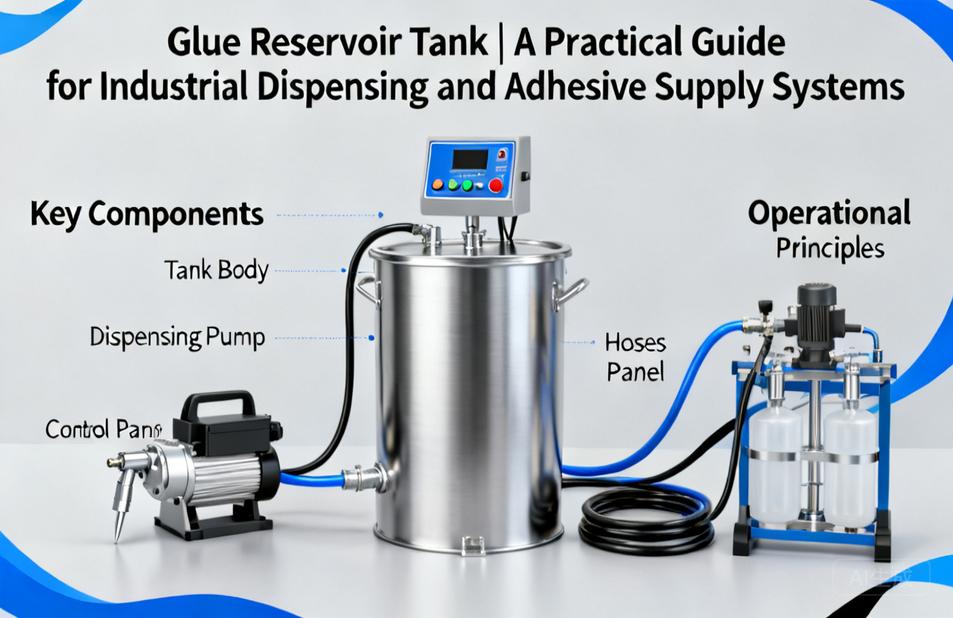
A glue reservoir tank is a pressure vessel or storage container that holds adhesive, sealant, or other viscous fluids and delivers them under controlled pressure to dispensing valves, guns, rollers, or automated application heads. In industrial settings, it is often part of a larger adhesive supply system that includes pumps, regulators, hoses, and dispensing controls. Whether you are integrating a tank into a new production line or replacing an existing unit, understanding how a glue reservoir tank works, where it is used, and how to match it to your process is essential for reliable operation and efficient material use.
What Is a Glue Reservoir Tank and How Does It Work?
A glue reservoir tank is designed to store adhesive in bulk and feed it consistently to downstream equipment. Depending on the system design, the tank may be pressurized with compressed air to push material toward the dispense point, or it may work with a pump that draws adhesive from the tank and moves it through heated or unheated hoses. Many tanks include a follower plate or piston that sits on top of the adhesive, helping to prevent air pockets, reduce waste, and maintain steady flow as the material level drops.
In automated dispensing systems, the tank acts as a buffer between bulk adhesive delivery and the precise, repeatable output required at the nozzle. This is especially important when applying hot melt adhesives, two-component materials, or high-viscosity sealants that must be kept at a stable temperature and pressure. A well-matched glue reservoir tank helps minimize downtime, reduce material waste, and maintain consistent bead size or spray pattern.
Key Features to Look for in an Industrial Glue Tank
When evaluating a glue reservoir tank for your process, several design and construction features affect performance, maintenance, and compatibility with your adhesive. Common considerations include:
- Capacity and refill method: Tank size should align with your production volume and refill frequency. Some systems use manual refill, while others are designed for bulk transfer from drums or pails.
- Pressure or pump compatibility: Confirm whether the tank is intended for pressure-fed systems, pump-fed systems, or both, and ensure it matches the pressure and flow requirements of your dispensing equipment.
- Heating and temperature control: Hot melt and some reactive adhesives require heated tanks with uniform temperature distribution to maintain viscosity and prevent premature curing.
- Material compatibility: The wetted parts must be compatible with the adhesive chemistry, whether water-based, solvent-based, polyurethane, epoxy, or hot melt.
- Sealing and air removal: Proper seals and follower plates help prevent air entrapment, which can cause inconsistent dispensing and surface defects.
Materials and Construction of Glue Reservoir Tanks
Industrial glue reservoir tanks are typically built from stainless steel or carbon steel, with stainless steel often chosen for adhesive systems where corrosion resistance and easy cleaning are priorities. Internal surfaces may be polished or coated to reduce adhesive buildup and simplify maintenance. Exterior components such as clamps, lids, and fittings are selected for durability and compatibility with the operating environment.
Seals, gaskets, and hoses are also critical. They must withstand the adhesive chemistry, operating temperature, and pressure cycles without swelling, cracking, or degrading. For custom installations, manufacturers may adjust port locations, tank dimensions, mounting brackets, and control interfaces to fit existing equipment. This is where working with an experienced glue reservoir tank manufacturer or supplier can make a significant difference in long-term reliability.
Industrial Applications of Glue Reservoir Tanks
Glue reservoir tanks are used across many industries where adhesive is applied in automated or semi-automated processes. Typical applications include:
- Packaging and carton sealing, where hot melt adhesive is applied at high speed.
- Woodworking and furniture assembly, including edge banding and panel bonding.
- Automotive interior assembly, such as trim, headliner, and sound insulation bonding.
- Electronics and appliance manufacturing, where precise adhesive dispensing is required for small components.
- Nonwoven and hygiene product production, including diaper and feminine care lines.
- Filter manufacturing, where adhesive is used to bond pleats and end caps.
- Bookbinding and graphic arts, including perfect binding and spine gluing.
In each case, the glue reservoir tank must match the adhesive type, production speed, and dispensing method. A tank that is too small can cause frequent refills, while an undersized or improperly heated tank may lead to inconsistent flow and poor bond quality.
How to Choose the Right Glue Reservoir Tank for Your System
Match the tank to your adhesive and process
Start by identifying the adhesive chemistry, viscosity, and operating temperature. Hot melt systems require heated tanks and hoses, while cold glue systems may use unheated pressure tanks with appropriate seals. If you are using two-component adhesives, you may need separate tanks or a metering system that combines materials at the dispense point.
Consider pressure, flow, and dispensing method
Review the pressure and flow requirements of your dispensing valves, guns, or nozzles. The tank must be able to supply adhesive at a consistent rate without pressure fluctuations that could affect bead placement or spray pattern. For high-speed lines, a larger tank with a reliable follower plate and level monitoring may be necessary to avoid interruptions.
Evaluate maintenance and cleaning access
Adhesive residue can accumulate over time, so tanks should be easy to open, inspect, and clean. Quick-release lids, removable follower plates, and smooth internal surfaces help reduce downtime during color changes or material swaps. Consider how often you will need to change adhesive types and choose a design that supports efficient cleaning.
Plan for integration with existing equipment
Check mounting options, port sizes, and control connections. If you are replacing a tank, confirm dimensions and interface points match your current system. If you are building a new line, consider whether you need a standalone tank or a complete adhesive supply unit that includes pumps, hoses, and controls.
Customization and OEM Options
Many industrial buyers require custom glue reservoir tanks that fit specific space constraints, adhesive types, or production requirements. A capable factory can offer OEM and custom fabrication services, including modifications to tank capacity, port configuration, heating elements, insulation, and control interfaces. When requesting a custom solution, provide detailed information about your adhesive, operating temperature, pressure range, flow rate, and available installation space. This helps the supplier recommend a suitable design and avoid costly mismatches.
Working with a manufacturer that understands adhesive dispensing systems can also help you select compatible components, such as hoses, fittings, and level sensors, that work together as a complete solution.
Buying Considerations and Supplier Selection
When sourcing a glue reservoir tank, price should not be the only factor. Evaluate the supplier’s experience with industrial adhesive systems, their ability to provide technical support, and their responsiveness to customization requests. Ask for detailed drawings or specifications before ordering, and confirm lead times, warranty terms, and after-sales support. If possible, request references from similar industrial applications, though specific customer information may be confidential.
A reliable supplier will ask about your application, adhesive type, and existing equipment before recommending a tank. They should also be able to advise on installation, maintenance, and safety considerations. For international buyers, clear communication and documentation are important, especially if the tank will be integrated into a larger system or shipped to a different facility.
Frequently Asked Questions
What is the difference between a glue reservoir tank and a pressure tank?
A glue reservoir tank is a general term for a container that stores and supplies adhesive. A pressure tank is one type of glue reservoir tank that uses compressed air to pressurize the adhesive and push it to the dispense point. Some glue reservoir tanks are designed for pump-fed systems instead of direct pressure feed.
Can a glue reservoir tank be used with hot melt adhesive?
Yes, but the tank must be designed for heated operation. Hot melt adhesives require controlled temperature to maintain proper viscosity and prevent charring or premature curing. Heated tanks, hoses, and dispensing components must all be compatible with the operating temperature range.
How do I know what size glue reservoir tank I need?
Tank size depends on your adhesive consumption rate, production speed, and how often you can refill. Calculate the maximum adhesive usage per hour and consider the acceptable downtime for refills. A larger tank reduces refill frequency but may require more space and longer heating times.
Can glue reservoir tanks be customized for OEM applications?
Many manufacturers offer OEM and custom fabrication services. Customizations may include tank dimensions, port locations, heating capacity, insulation, mounting brackets, and control interfaces. Provide your application details and space constraints to the supplier for a tailored solution.
Conclusion
Selecting the right glue reservoir tank involves matching the tank to your adhesive, dispensing method, production speed, and available space. Focus on material compatibility, pressure and temperature requirements, maintenance access, and integration with existing equipment. If you need a custom or OEM solution, work with a manufacturer or supplier who understands industrial adhesive systems and can provide technical guidance. For specific specifications, application questions, or customization requests, contact a qualified supplier to discuss your project.
