

Dispensing Reservoir Tank Buyer Guide | Selection, Applications, and OEM Options
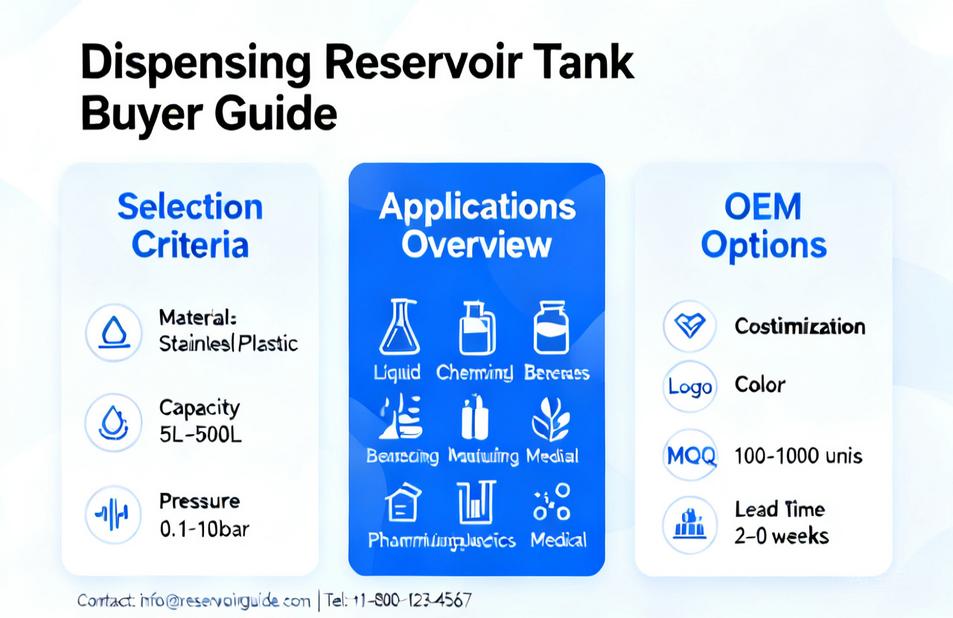
A dispensing reservoir tank is a critical component in fluid handling systems, designed to store and supply adhesives, sealants, inks, lubricants, or other process fluids to dispensing equipment at a controlled rate. Whether you operate a manual dispensing station or a fully automated production line, the reservoir tank ensures a steady feed of material, reduces downtime from frequent refills, and helps maintain consistent bead or dot quality. For overseas buyers sourcing industrial fluid delivery components, understanding how these tanks work and what to consider before purchasing can significantly affect system performance and total cost of ownership.
What Is a Dispensing Reservoir Tank?
In simple terms, a dispensing reservoir tank is a vessel that holds liquid or semi-liquid material and feeds it to a dispenser, valve, or pump. It may operate under atmospheric pressure, or it may be pressurized to push material toward the point of application. Common configurations include gravity-fed tanks, pressure pots, and tanks integrated with pumps or level sensors. The tank itself is often part of a larger dispensing system that includes hoses, regulators, valves, and controls. Depending on the application, the reservoir may be as small as a benchtop unit or as large as a floor-mounted bulk supply tank.
Buyers often search for terms such as adhesive reservoir tank, fluid dispensing tank, material supply tank, or pressure reservoir. While naming varies across industries, the core function remains the same: reliable, repeatable delivery of process fluid to a dispensing point.
Key Features That Matter in Industrial Applications
When evaluating a dispensing reservoir tank for a specific production environment, several design and performance features deserve attention.
- Capacity and refill intervals: Tank volume affects how often operators must refill. Larger tanks reduce labor but may require more floor space and longer cleaning cycles.
- Pressure or gravity feed: Some processes require precise pressure regulation, while others work well with gravity. The choice depends on fluid viscosity and dispense distance.
- Level monitoring: Low-level sensors or sight glasses help prevent dry running and inconsistent dispensing.
- Agitation or recirculation: For filled materials or formulations that tend to separate, gentle agitation or recirculation can maintain homogeneity.
- Sealing and venting: Proper sealing prevents contamination and solvent evaporation, while venting avoids vacuum lock during withdrawal.
- Cleanability: Quick-access lids, smooth internal surfaces, and drain ports simplify changeovers between materials.
Materials and Construction
Material selection depends on the chemical compatibility of the fluid, required cleanliness, and operating environment. Stainless steel is a common choice for its durability and resistance to many solvents and adhesives. Some systems use carbon steel with internal coatings, while others employ engineered plastics or PTFE-lined components for aggressive chemicals. Seals, gaskets, and wetted parts must be compatible with the dispensed material to avoid swelling, degradation, or contamination. For food, medical, or electronics applications, buyers may require specific surface finishes or cleanroom-compatible designs. It is important to discuss the exact fluid and process conditions with a supplier so that the tank construction matches the application.
Typical Industrial Applications
Dispensing reservoir tanks are used across many sectors where controlled fluid delivery is essential. In electronics assembly, they supply solder paste, conformal coating, or underfill materials. In automotive production, they feed adhesives for bonding, sealing, and gasketing. Packaging lines use them for glue and labeling adhesives. Medical device manufacturing may require small, precise reservoirs for dispensing silicones or epoxies. Other applications include woodworking, aerospace, appliance assembly, and general industrial maintenance. Because each application has different viscosity, cure time, and flow requirements, the reservoir tank should be selected as part of the complete dispensing system rather than as an isolated component.
How to Choose the Right Dispensing Reservoir Tank
Selecting a tank begins with defining the material to be dispensed and the required flow rate. Next, consider the dispense method: time-pressure, volumetric, or progressive cavity. The tank must supply material at a pressure and volume that matches the dispenser or valve. Evaluate the operating environment, including temperature, humidity, and potential exposure to solvents. Space constraints, available utilities, and operator access for refilling and cleaning also influence the decision. Finally, think about future flexibility. A tank that can accommodate different fluids or quick-change components may reduce long-term costs. If you are unsure, a knowledgeable manufacturer or supplier can help match the reservoir to your dispensing equipment.
Customization and OEM Options
Many industrial buyers need a dispensing reservoir tank that fits specific equipment layouts or process requirements. Custom options may include modified dimensions, alternate port configurations, special mounting brackets, level sensor integration, or material changes. OEM and custom manufacturing services allow a factory to produce tanks to your drawings or performance specifications. When requesting a custom design, provide detailed information about the fluid, operating pressure range, temperature, cleaning method, and any industry standards that apply. Working with an experienced OEM partner can shorten development time and ensure the final product integrates smoothly with your existing dispensing system.
Buying Considerations for Overseas Procurement
Price is only one factor in the purchasing decision. Evaluate total cost by considering maintenance, replacement parts, and downtime risk. Ask about the supplier’s quality control procedures and whether they can provide material certificates or dimensional reports. Clarify packaging and shipping methods to prevent damage during transit. For international orders, confirm documentation requirements and communication channels for technical support. A supplier that understands dispensing systems can offer valuable advice on tank sizing, pressure regulation, and compatibility with your fluids, which often outweighs a lower initial price.
How to Evaluate a Supplier or Manufacturer
When sourcing a dispensing reservoir tank, look for a manufacturer or supplier with experience in fluid handling and dispensing equipment. Review their product range, engineering capabilities, and responsiveness to technical questions. A factory that offers OEM services should be able to discuss design adjustments, prototyping, and production consistency. Request references or examples of similar applications if available, and consider whether their location and logistics align with your supply chain. Transparent communication, clear specifications, and a willingness to solve application problems are signs of a reliable partner.
Frequently Asked Questions
Can a dispensing reservoir tank be used with high-viscosity adhesives?
Yes, but the tank design must account for the fluid’s resistance to flow. Often, pressure assistance, heated options, or larger outlet ports are needed. The supplier should know the viscosity range and recommend a suitable configuration.
What information do I need to provide for a custom reservoir tank?
Prepare details on the fluid type, required capacity, operating pressure and temperature, connection sizes, available space, and cleaning requirements. Drawings or photos of the existing setup also help the manufacturer propose an accurate solution.
How do I maintain consistent dispensing performance?
Regular cleaning, proper pressure regulation, and level monitoring contribute to consistency. Use compatible seals and replace worn components according to the supplier’s recommendations. Keeping the tank at a stable temperature can also help with viscosity control.
Is it possible to integrate level sensors and alarms?
Many suppliers offer level sensor options that can trigger refill alerts or shut off the system. Discuss the signal type and control integration needed for your equipment.
Conclusion
Choosing a dispensing reservoir tank requires a clear understanding of the fluid, the dispensing process, and the production environment. By focusing on capacity, feed method, materials, cleanability, and compatibility, buyers can select a tank that supports consistent output and reduces downtime. Custom and OEM options provide flexibility for unique equipment layouts or specialized fluids. When contacting suppliers, be ready to share application details so they can recommend a suitable design. For specific requirements, reach out to a manufacturer or supplier to discuss specifications, customization, or OEM production for your next project.