

Precision Dispensing Tank | A Practical Guide for Industrial Fluid and Adhesive Systems
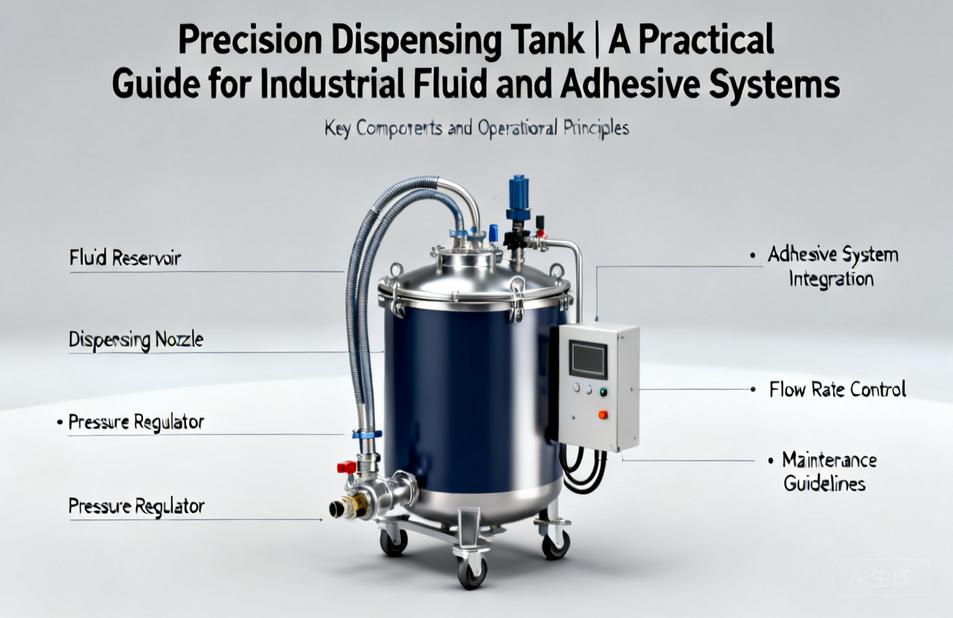
A precision dispensing tank is a pressure vessel or reservoir designed to hold and deliver fluids, adhesives, sealants, solvents, or other process liquids with controlled pressure and consistent flow. It is commonly used in automated dispensing systems, adhesive bonding lines, potting and encapsulation equipment, and industrial fluid handling applications where repeatability and material integrity matter. For overseas buyers sourcing equipment for electronics assembly, automotive parts, medical device manufacturing, or general industrial production, understanding how a precision dispensing tank works and how to specify one is essential for stable process performance.
What Is a Precision Dispensing Tank and How Does It Work?
In simple terms, a precision dispensing tank stores a liquid or semi-liquid material and uses regulated air pressure, a pump, or a piston mechanism to push that material toward a dispensing valve, nozzle, or gun. The tank itself may be a pressure tank, a cartridge reservoir, or a piston-style feed system. The word precision refers to the tank’s ability to maintain stable pressure and deliver material without pulsation, air entrapment, or inconsistent volume.
Many systems operate by connecting compressed air to the tank through a pressure regulator. The regulated air presses on a follower plate or directly on the material, forcing it through an outlet line to the dispense point. Other designs use a pump mounted on or inside the tank, or a piston that moves at a controlled rate. In all cases, the goal is to keep the material supply consistent so the dispensed shot, bead, or dot remains within tolerance.
Because different fluids behave differently, the tank design must match the material. Low-viscosity solvents flow easily but may require careful sealing. High-viscosity adhesives, silicones, and greases need larger outlet paths and sometimes heated or follower-plate designs. Two-component materials may require separate tanks or a dual-tank configuration with metering and mixing downstream.
Key Features Buyers Look For
When evaluating a precision dispensing tank, procurement teams and process engineers typically review several functional features:
- Pressure stability: The tank and regulator should maintain steady pressure during dispensing, especially when the material level changes.
- Material compatibility: Wetted parts must resist the fluid being dispensed, whether it is an adhesive, solvent, ink, resin, or lubricant.
- Sealing and safety: Proper gaskets, lids, and relief devices help prevent leaks and over-pressurization.
- Level monitoring: Some tanks include level sensors or sight glasses so operators know when to refill.
- Cleanability: Easy access for cleaning and material changeover reduces downtime and cross-contamination.
- Integration: Mounting options, outlet port sizes, and control interfaces should match the existing dispenser or robot.
These features directly affect dispense quality, maintenance frequency, and overall production efficiency.
Materials and Construction
Precision dispensing tanks are often made from stainless steel because it offers corrosion resistance and is compatible with many industrial fluids. Other options include carbon steel for non-corrosive materials, aluminum for weight-sensitive installations, and engineered plastics or PTFE for specialized chemical applications. Wetted components such as seals, O-rings, and diaphragms are selected based on the fluid. For example, solvent-based materials may require PTFE or fluoroelastomer seals, while water-based adhesives may use different elastomers.
Surface finish also matters. A smooth internal finish supports cleaning and reduces material buildup. Tank geometry, outlet location, and the presence of a follower plate can influence how much residual material remains and how easily air is removed. Buyers should request a material compatibility chart or discuss their specific fluid with the manufacturer before finalizing the tank specification.
Typical Industrial Applications
Precision dispensing tanks serve a wide range of industrial applications. In electronics manufacturing, they feed adhesives, underfill, and conformal coatings to dispensing robots. In automotive production, they supply sealants, greases, and structural adhesives for body assembly and component bonding. Medical device and pharmaceutical operations use them for accurate fluid transfer where repeatability is important. General assembly, packaging, and furniture manufacturing also rely on these tanks for glue, silicone, and lubricant dispensing.
Because the tank is part of a larger dispensing system, it must be matched to the valve, pump, hose, and control unit. A tank that performs well with a low-viscosity fluid may not be suitable for a filled or abrasive material. This is why application details are critical during the selection process.
How to Choose the Right Precision Dispensing Tank
Choosing a tank starts with the material. Identify the fluid type, viscosity, temperature sensitivity, and whether it contains fillers or abrasives. Next, define the required dispense volume, flow rate, and pressure range. These parameters determine tank size, outlet size, and whether a pressure tank, pump-fed reservoir, or piston design is most appropriate.
Consider the operating environment as well. Cleanroom, hazardous area, or high-temperature environments may require specific construction and approvals. If the tank will be integrated into an automated line, confirm the mounting footprint, signal interfaces, and refill method. For manual operations, ergonomics and quick material changeover may be more important.
Finally, review maintenance requirements. Tanks that are easy to open, clean, and reseal reduce downtime. Spare parts availability and seal replacement intervals should be part of the purchasing decision.
Customization and OEM Options
Many manufacturers and suppliers offer custom and OEM precision dispensing tanks to fit specific equipment or process needs. Customization may include tank volume, port configuration, material of construction, mounting brackets, level sensors, heating jackets, or agitation. OEM programs can produce tanks with a buyer’s branding or integrate them into a larger dispensing system.
When requesting a custom tank, provide drawings, material specifications, and operating conditions. A factory with engineering support can review the application and propose a design that balances performance, cleanability, and cost. Avoid assuming that a standard catalog tank will fit every fluid or every dispenser; small differences in outlet size or seal material can affect performance.
Buying Considerations and Supplier Selection
Overseas procurement often involves comparing multiple suppliers. Beyond price, evaluate manufacturing capability, quality control, and communication. A reliable precision dispensing tank supplier should be able to explain material compatibility, provide dimensional drawings, and discuss how the tank integrates with your existing equipment. If the supplier is also a manufacturer or factory, they may offer more flexibility for custom orders and faster technical support.
Ask about documentation, packaging for export, and after-sales support. If the tank is part of a larger system, confirm that the supplier understands the full dispensing process, not just the vessel. For OEM projects, clarify intellectual property, tooling, and minimum order quantities before committing.
Frequently Asked Questions
What is the difference between a pressure tank and a precision dispensing tank?
A pressure tank is a broad category of vessel that holds fluid under pressure. A precision dispensing tank is designed specifically for controlled dispensing, with features such as stable pressure regulation, compatible wetted parts, and outlet configurations that support consistent flow. Many precision dispensing tanks are pressure tanks, but not all pressure tanks are built for precision dispensing.
Can a precision dispensing tank handle high-viscosity adhesives?
Yes, but the design must match the material. High-viscosity adhesives often require larger outlet ports, follower plates, or heated tanks to promote flow. The pump or pressure source must also be sized correctly. Always share the adhesive specifications with the tank manufacturer or supplier before ordering.
Are custom or OEM precision dispensing tanks available?
Many factories and suppliers offer custom and OEM options. Customization can include tank size, materials, port layouts, level sensing, and mounting. OEM arrangements may involve branding or integration with a specific dispensing system. Provide detailed requirements to get an accurate quotation.
How do I know if a dispensing tank is compatible with my fluid?
Compatibility depends on the wetted materials. Review the tank’s seal, gasket, and body materials against the fluid’s chemical properties. Request a compatibility chart or consult the manufacturer. For aggressive solvents or abrasive fillers, special materials and designs may be needed.
Conclusion
Selecting a precision dispensing tank is about matching the vessel to the material, the dispenser, and the production environment. Focus on pressure stability, wetted material compatibility, cleanability, and integration with your existing equipment. If your process requires specific dimensions, port layouts, or OEM branding, work with a manufacturer or supplier that can support custom design and provide clear technical guidance. For application-specific recommendations, share your fluid details, dispense parameters, and system configuration with a qualified supplier to confirm the right tank specification.
