

Industrial Dispensing Tank | A Complete Guide for B2B Buyers and OEM Projects
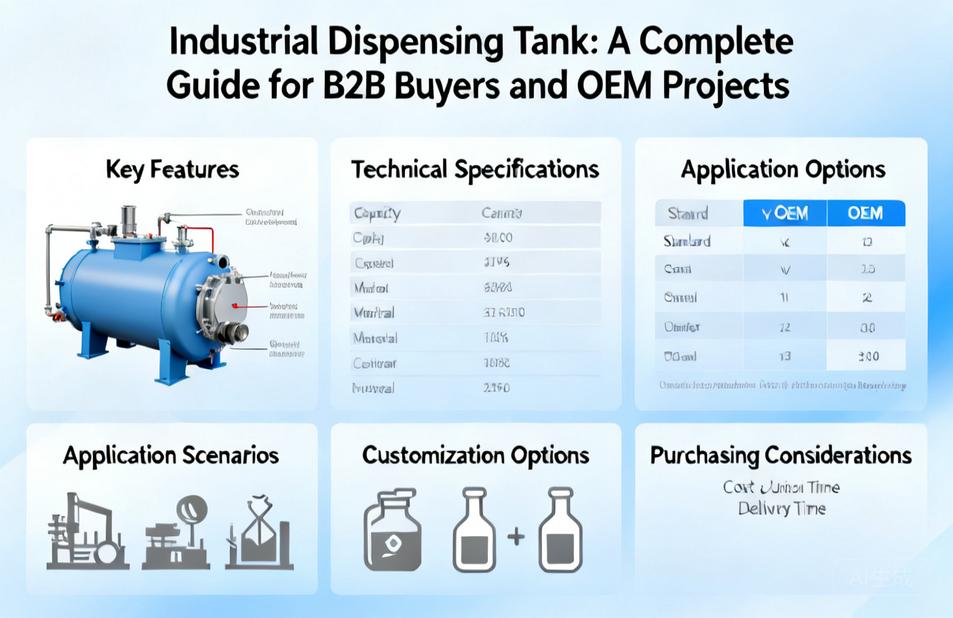
An industrial dispensing tank is a specialized vessel used to store, condition, and supply fluids or semi-solids to dispensing equipment in manufacturing and processing environments. Unlike a simple storage container, it is designed to integrate with pumps, valves, and control systems so that adhesives, sealants, lubricants, inks, coatings, and other media can be delivered accurately and consistently. Whether you are setting up a new production line or replacing an existing unit, understanding how these tanks work and what to look for will help you specify the right solution for your application.
What Is an Industrial Dispensing Tank?
An industrial dispensing tank acts as the central reservoir in a fluid handling system. It holds the material, maintains it in a condition suitable for dispensing, and feeds it to downstream equipment such as dispense valves, nozzles, or robots. Depending on the process, the tank may include agitation, heating or cooling, level sensing, and pressure or vacuum control. In many automated dispensing systems, the tank is a pressure vessel that uses regulated air pressure to push material through lines without mechanical pumps, which is common for high-viscosity adhesives and sealants.
These tanks are found in industries ranging from automotive and electronics to aerospace, medical device assembly, packaging, and general industrial manufacturing. Because material properties vary widely, the tank design must match the chemistry, viscosity, and flow characteristics of the media being dispensed.
Key Features of a Well-Designed Dispensing Tank
When evaluating industrial dispensing tanks, buyers typically look for features that support repeatable dispensing, easy maintenance, and safe operation. Common design elements include:
- Pressure or pump feed: Tanks may be pressurized for direct material delivery or configured with a pump outlet for transfer to multiple points.
- Agitation: An agitator helps maintain suspension, prevent settling, or keep two-part materials uniformly mixed before dispensing.
- Temperature control: Jacketed tanks or internal coils can heat or cool the material to maintain the viscosity required for accurate dispensing.
- Level monitoring: Sensors and sight glasses allow operators to track material consumption and avoid unexpected runouts.
- Sealing and venting: Proper seals prevent contamination and leaks, while vents and relief devices support safe pressure management.
- Cleanability: Removable lids, smooth interior surfaces, and drain ports simplify changeovers between materials.
Materials and Construction
The wetted materials of an industrial dispensing tank must be compatible with the dispensed media. Common construction materials include carbon steel, 304 or 316 stainless steel, and sometimes engineered plastics or PTFE-lined surfaces for aggressive chemicals. Stainless steel is frequently chosen for its corrosion resistance and cleanability in adhesive, coating, and food-related processes. For abrasive or reactive materials, the interior may be coated or lined to extend service life.
Fabrication quality matters as much as material selection. Weld quality, surface finish, fitting types, and port placement all affect leak-tightness and maintenance. A reputable manufacturer will review your material and process conditions before recommending a construction.
Typical Industrial Applications
Industrial dispensing tanks support a wide range of applications across manufacturing sectors:
- Adhesive and sealant dispensing: Supplying hot melt, silicone, epoxy, and polyurethane to automated dispensing heads.
- Lubrication systems: Delivering oils and greases to machinery, bearings, and assembly points.
- Ink and coating supply: Feeding printing presses, spray systems, and roll coating equipment.
- Potting and encapsulation: Providing two-part resins to meters and mixers for electronic component protection.
- Food and pharmaceutical processing: Handling edible oils, flavorings, and sanitary fluids with cleanable tank designs.
Each application places different demands on the tank, from pressure rating and temperature range to cleaning frequency and material compatibility.
How to Choose the Right Industrial Dispensing Tank
Selecting the correct tank starts with a clear understanding of your process. Consider the following factors:
Material Characteristics
Identify the viscosity, density, solids content, and chemical nature of the media. High-viscosity materials may require pressure feed or heated tanks, while abrasive slurries demand wear-resistant interiors.
Process Requirements
Determine the required flow rate, dispensing pressure, temperature range, and whether agitation is needed. If the material must be kept at a specific temperature, a jacketed or heated tank may be necessary.
System Integration
Check how the tank will connect to your existing dispensing equipment. Port sizes, fitting standards, sensor outputs, and control interfaces should match your system to avoid costly modifications.
Capacity and Footprint
Choose a tank size that balances production demand with available floor space and material shelf life. Larger tanks reduce refill frequency but may not suit materials with short pot life.
Maintenance and Safety
Look for designs that simplify cleaning, inspection, and replacement of seals or fittings. Pressure relief, grounding, and proper ventilation are important for safe operation, especially with flammable or pressurized materials.
Customization and OEM Options
Many industrial dispensing tanks are built to order because standard models rarely fit every process. Customization may include tank dimensions, port configuration, material selection, agitation type, heating or cooling capacity, and mounting arrangements. OEM and private-label options are also common for equipment builders and system integrators that need tanks branded or matched to their own dispensing platforms.
When working with a manufacturer on a custom tank, provide detailed process data and, if possible, samples of the material to be dispensed. A supplier experienced in fluid handling can recommend features that improve performance and reduce downtime.
Buying Considerations and Supplier Selection
Before placing an order, clarify the scope of supply. Does the tank include agitators, sensors, valves, and controls, or is it a bare vessel? Ask about documentation, testing procedures, and spare parts availability. A reliable supplier will be transparent about lead times, warranty terms, and technical support.
Evaluate potential suppliers on their experience with your industry, their engineering support, and their ability to communicate clearly during the specification stage. Factories that serve international B2B customers understand the importance of consistent quality, packaging, and delivery. If you need OEM or custom work, confirm that the supplier has in-house fabrication and quality control rather than outsourcing critical steps.
Frequently Asked Questions
What is the difference between a dispensing tank and a regular storage tank?
A dispensing tank is designed for integration with dispensing systems and often includes pressure control, agitation, heating, or level monitoring. A regular storage tank typically focuses on bulk holding and may not support the precise flow and conditioning required for dispensing.
Can an industrial dispensing tank handle high-viscosity materials?
Yes, but the design must account for the material’s flow behavior. Pressure vessels, heated jackets, and large outlet ports are common solutions for high-viscosity adhesives, sealants, and greases.
How do I know if I need a custom tank or a standard model?
If your material, flow rate, temperature, or connection requirements differ from standard offerings, a custom tank is usually more cost-effective in the long run. Discuss your process with a manufacturer to determine the best approach.
What information should I provide to a supplier for a quote?
Provide the material to be dispensed, its viscosity and temperature range, required flow rate or pressure, tank capacity, available utilities, and any system integration details. This helps the supplier recommend a suitable configuration.
Conclusion
Choosing an industrial dispensing tank is about matching the vessel to your material, process, and production environment. Focus on material compatibility, pressure and temperature requirements, integration with existing equipment, and the supplier’s ability to support customization or OEM needs. If you are evaluating options for your next project, contact a qualified manufacturer or supplier to discuss your specifications, application details, and any custom or OEM requirements. A well-matched tank can improve dispensing accuracy, reduce maintenance, and support consistent production quality.
