

Material Pressure Tank Selection Guide for Industrial Fluid and Dispensing Systems
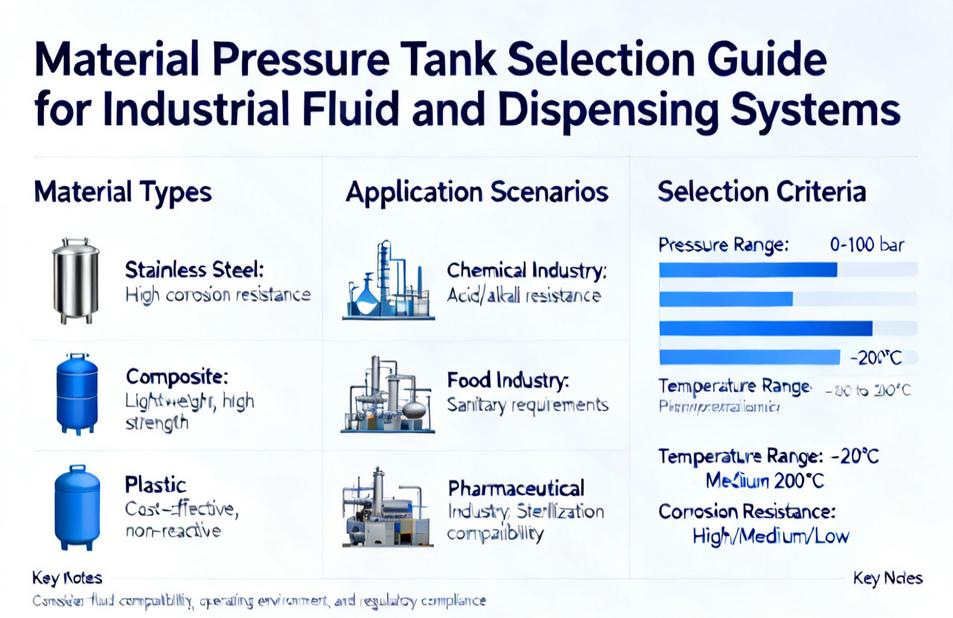
A material pressure tank is a vessel that stores and pressurizes liquids, adhesives, sealants, inks, or other flowable media so they can be delivered at a controlled rate to a downstream process. In industrial settings, it is commonly used in dispensing, spraying, coating, lubrication, and fluid transfer systems where consistent pressure and steady material flow are essential. Unlike a simple storage container, a material pressure tank uses compressed air or another pressurizing method to push the material through hoses, valves, and applicators. For overseas buyers, understanding construction, sizing, compatibility, and supplier capability is critical to selecting a tank that fits the application rather than simply matching a catalog number.
What a Material Pressure Tank Does in a Fluid System
In a typical setup, the tank is filled with the material to be dispensed. The lid is sealed, and air pressure is introduced above the material or through a follower plate. That pressure forces the material out through an outlet port and along the feed line to a dispense valve, gun, nozzle, or roller. The operator or control system adjusts pressure to match the required flow rate and bead size. Because the tank holds a larger volume than a syringe or cartridge, it reduces refill frequency and supports longer production runs. It also helps stabilize flow when the material is viscous or when the application demands repeatable output.
The working principle is straightforward, but the details matter. Tank geometry, outlet position, lid clamping, seal type, and pressure regulation all affect performance. A poorly matched tank can cause cavitation, inconsistent beads, material waste, or premature seal failure. That is why buyers should treat the material pressure tank as part of the fluid delivery system, not as an isolated accessory.
Common Materials and Construction Details
Material pressure tanks are available in several configurations to suit different media and environments. The wetted parts may be carbon steel, stainless steel, or other corrosion-resistant alloys. Stainless steel is often chosen for water-based fluids, some solvents, and applications where cleaning between batches is important. Carbon steel may be suitable for certain oils and greases when the inside is properly coated or treated. The choice depends on the chemical compatibility of the material, the required cleanliness level, and the operating environment.
Construction also varies by pressure rating, port size, and lid design. Some tanks use a simple clamp lid with a gasket, while others use bolted or threaded closures. Agitators, level sensors, and follower plates can be added when the material tends to separate or when near-complete evacuation is required. Buyers should confirm the tank’s pressure rating is appropriate for the system and that all seals and gaskets are compatible with the fluid being dispensed.
Typical Industrial Applications
Material pressure tanks serve a wide range of industries. In electronics manufacturing, they feed conformal coating, potting compounds, and solder paste. In automotive and aerospace assembly, they supply adhesives, sealants, and lubricants. In packaging and printing, they deliver inks, varnishes, and glues. In construction and general industry, they handle caulks, greases, and two-part materials when paired with suitable metering equipment. Because the tank can be pressurized and connected to fixed piping or flexible hoses, it fits both manual workstations and automated production lines.
The application determines the required tank size, outlet type, and pressure control method. For example, a small tank with a hand-held dispense valve may suit a low-volume assembly bench, while a larger tank with a pressure regulator and remote dispense head may be used in a continuous coating process. Buyers should map the material viscosity, flow rate, duty cycle, and available floor space before choosing a model.
How to Choose the Right Material Pressure Tank
Start by identifying the material to be dispensed. Its viscosity, chemical composition, and sensitivity to air or moisture will narrow the material and seal options. Next, determine the required flow rate and bead size at the dispense point. This helps define the tank pressure range, outlet size, and line diameter. Then consider the fill volume needed between refills. A larger tank reduces downtime but takes up more space and may require a different handling method.
Check the maximum working pressure of the tank and ensure it exceeds the system requirement with a reasonable margin. Confirm that all wetted parts, including the inner wall, outlet fitting, gaskets, and lid seal, are compatible with the material. If the material is abrasive or contains fillers, consider wear-resistant components. If the material cures or settles, consider agitation, a follower plate, or a recirculation option. Finally, review the mounting and mobility needs. Some tanks are portable with casters, while others are fixed and plumbed into a production line.
Customization and OEM Options
Many manufacturers and suppliers offer customization for material pressure tanks. Common options include special tank sizes, alternative port arrangements, different lid closures, level sensors, agitation, heating or cooling jackets, and customized mounting frames. OEM programs may allow buyers to specify branding, documentation, and packaging. When requesting a custom or OEM configuration, provide clear drawings or specifications for the connection points, the material to be used, the expected operating pressure, and any cleaning or maintenance requirements. A factory that can review these details and propose a suitable build is more likely to deliver a tank that works in the field.
Buying Considerations for Overseas Sourcing
When sourcing from an international supplier, confirm the tank’s pressure rating, material certificate, and dimensional drawings. Ask how the tank is tested before shipment, what spare parts are available, and whether replacement seals and gaskets can be supplied. Packaging should protect the tank and its fittings during transport. Documentation should include a bill of materials, operating instructions, and maintenance guidance. Buyers should also clarify the warranty terms and the supplier’s process for handling technical questions after delivery.
It is also useful to compare the total system cost, not just the tank price. A lower-cost tank that requires frequent maintenance or causes inconsistent dispensing can cost more over time. Look for a supplier that understands the fluid delivery process and can advise on pressure regulation, hose selection, and dispense valve matching. This kind of technical support is often more valuable than a small price advantage.
Frequently Asked Questions
How do I know which tank size is right for my process?
Consider the volume of material used per shift or per batch, the refill time, and the available space. A larger tank reduces refill frequency but may be harder to handle. A smaller tank is easier to move and clean but requires more frequent refills. The right choice balances production uptime with practical handling.
Can a material pressure tank handle high-viscosity adhesives?
Yes, many tanks are designed for viscous materials, but the outlet size, pressure range, and feed line must be matched to the adhesive. A follower plate or heated option may also be needed to help the material flow. Always confirm compatibility with the adhesive supplier and the tank manufacturer.
What information should I provide when requesting a quote?
Provide the material type, viscosity, required flow rate, working pressure, tank volume, port connections, and any special requirements such as agitation, heating, or level sensing. If you need OEM or custom branding, mention that as well. Clear specifications help the supplier recommend the most suitable configuration.
How can I verify a supplier’s capability?
Ask for dimensional drawings, material specifications, and details about their production and testing process. A responsive supplier that asks about your application and offers technical guidance is often a better partner than one that only quotes a price. If possible, request references or sample documentation without relying on unverified claims.
Conclusion
Choosing a material pressure tank requires attention to the material being dispensed, the required pressure and flow, the construction and seals, and the way the tank integrates with the rest of the fluid system. Buyers should look for a supplier that can provide clear specifications, support customization or OEM requirements, and answer technical questions about compatibility and maintenance. If you are evaluating options for a specific application, contact a qualified manufacturer or supplier with your material details, pressure needs, and volume requirements. A focused discussion about your process will help you select a tank that supports consistent output and reliable operation.
