

Liquid Pressure Tank Selection Guide for Industrial Fluid Systems
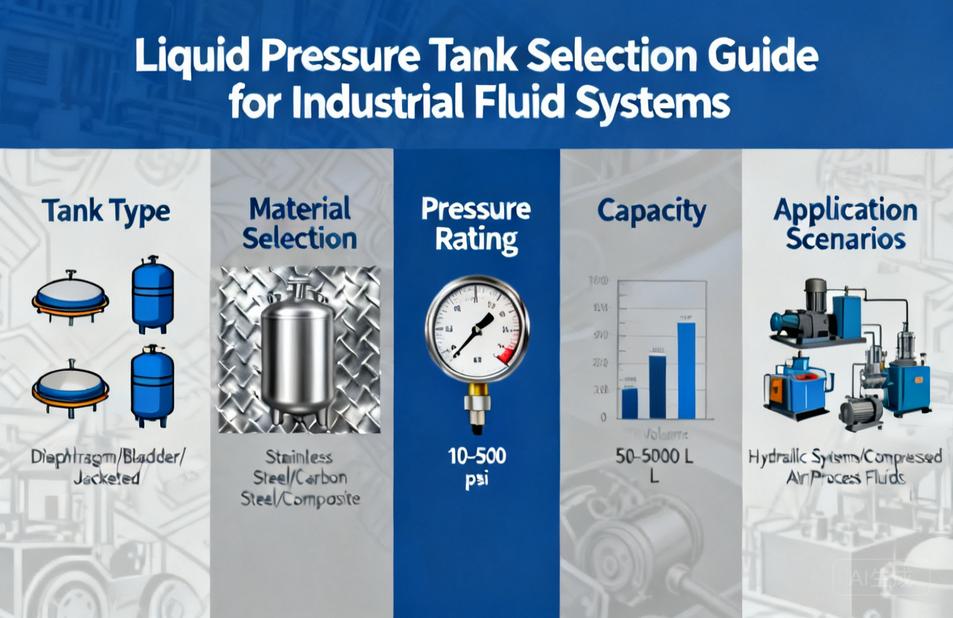
A liquid pressure tank is a vessel that stores liquid under pressure and delivers it in a controlled, steady flow to downstream equipment. It is widely used in industrial fluid handling, adhesive dispensing, coating supply, water treatment, chemical dosing, and automated production lines where consistent pressure and reliable liquid delivery are essential. Unlike a simple storage tank, a liquid pressure tank uses compressed air or another gas to pressurize the liquid inside, pushing it through piping, valves, or dispensers without the need for a pump on every cycle. For overseas buyers sourcing fluid delivery components, understanding how these tanks work, where they fit, and what to evaluate before ordering helps reduce integration risk and total operating cost.
How a Liquid Pressure Tank Works
Inside a sealed tank, liquid occupies part of the volume while compressed air or nitrogen fills the remaining space. The gas pressure pushes down on the liquid surface, forcing it out through an outlet port whenever a valve opens. When the valve closes, the stored pressure remains available for the next cycle. This design provides smooth, pulse-free flow and can supply multiple points from one central vessel. Because the tank acts as both a reservoir and a pressure source, it is often paired with pressure regulators, relief valves, level sensors, and filters to maintain stable output. In many systems, a pump fills the tank periodically, while the pressurized gas handles short-term demand and keeps line pressure consistent.
Common Industrial Applications
Liquid pressure tanks appear in a broad range of processes. In adhesive and sealant dispensing, they supply consistent material to robots or manual guns without foaming or pulsation. In coating and painting systems, they feed spray nozzles with uniform pressure for even coverage. Water treatment and reverse osmosis skids use them for chemical dosing and pressure stabilization. Food and beverage plants may use sanitary versions for ingredient transfer, while laboratories rely on smaller tanks for reagent delivery. Other applications include ink circulation, lubricant supply, mold release spraying, and automated fluid filling. Each application influences tank size, port configuration, wetted materials, and cleaning requirements.
Key Features Buyers Should Evaluate
When reviewing a liquid pressure tank specification, focus on features that affect performance, safety, and maintenance. A well-designed tank typically includes a secure lid or cover with a clamp or bolt system, an air inlet with regulator and gauge, a liquid outlet sized for the required flow, a pressure relief device, and a level indicator. Some models offer quick-opening covers for fast refilling or cleaning, while others include agitators or heating jackets for materials that separate or thicken. Ports should match existing hoses, fittings, and dispensers to avoid adapters that can create pressure drops. The tank interior should be accessible for inspection and cleaning, especially in applications where residue buildup affects product quality.
Materials and Construction
The wetted materials must be compatible with the liquid being handled. Stainless steel is common for water-based, solvent-based, and mildly corrosive fluids because it resists rust and is easy to clean. Carbon steel may suit non-corrosive industrial fluids where cost is a priority. For aggressive chemicals, PTFE-lined or plastic tanks are sometimes selected. Seals, gaskets, and diaphragms should also match the fluid; options include EPDM, FKM, silicone, and PTFE. Construction quality matters as much as material choice: weld quality, surface finish, and port reinforcement affect service life. A liquid pressure tank manufacturer should be able to explain which materials suit specific chemicals and operating conditions without overstating performance.
How to Choose the Right Tank for Your System
Selection starts with the fluid characteristics: viscosity, density, corrosiveness, and whether the material contains particles or tends to cure. Next, define the required flow rate and the pressure range needed at the point of use. Tank volume should provide enough working time between refills without being so large that it slows pressure buildup or wastes floor space. Consider the available compressed air supply and whether the system needs a pressure regulator, relief valve, or automated level control. Connection sizes and mounting options must fit the existing layout. If the tank will operate in a cleanroom, washdown area, or hazardous location, note those conditions early so the supplier can recommend suitable configurations. Finally, think about maintenance access and whether the tank can be drained, cleaned, and inspected without major disassembly.
Customization and OEM Options
Many industrial buyers need a liquid pressure tank that fits a specific machine or process rather than a standard catalog model. Custom options often include tank volume, port positions and thread types, material grade, surface finish, cover style, mounting brackets, and integrated components such as regulators, gauges, or level sensors. OEM programs allow equipment builders to private-label the tank or adapt it to a proprietary interface. When requesting customization, provide drawings, fluid details, pressure and flow requirements, and any standards the finished assembly must meet. A capable supplier will review the application and propose a workable configuration instead of simply quoting a stock item.
Buying Considerations for Overseas Procurement
Price alone rarely reflects the true cost of a liquid pressure tank. Evaluate the supplier’s ability to provide consistent dimensions, material certificates when required, and clear documentation for pressure-containing parts. Ask how the tank is tested before shipment and what quality checks are performed on welds, seals, and threads. Packaging matters for international shipping, especially for larger vessels that can be damaged in transit. Confirm lead times, spare parts availability, and whether technical support is offered after delivery. If the tank will be part of a certified system, verify that the supplier can work with your compliance requirements rather than assuming all products are interchangeable.
Selecting a Reliable Supplier or Factory
A reliable liquid pressure tank supplier or factory should demonstrate experience with industrial fluid systems, not just general metal fabrication. Look for evidence of engineering support, consistent production processes, and the ability to communicate in technical terms. Request dimensional drawings, material specifications, and details on seals and fittings. A good supplier will ask about your fluid, pressure, flow, and environment before recommending a model. If you need OEM or custom work, confirm that the factory can handle design reviews, sample approval, and batch production with stable quality. Visiting the factory or reviewing process documentation can reveal more than a product catalog alone.
Frequently Asked Questions
What is the difference between a liquid pressure tank and a standard storage tank?
A standard storage tank holds liquid at ambient pressure and usually relies on a pump for delivery. A liquid pressure tank stores liquid under gas pressure, so it can supply steady flow to downstream equipment without a pump running for every dispense cycle.
Can a liquid pressure tank handle high-viscosity fluids?
Yes, but the design must account for flow resistance and refill behavior. Larger ports, compatible seals, and sometimes agitation or heating may be needed. The supplier should review the fluid viscosity and operating temperature before recommending a configuration.
How do I know which tank size to order?
Size depends on flow rate, available refill intervals, and the pressure needed at the point of use. A smaller tank reaches pressure faster, while a larger tank extends working time between refills. Sharing your process details with the supplier helps narrow the options.
Are custom or OEM liquid pressure tanks available?
Many manufacturers offer custom port layouts, materials, volumes, and integrated components, as well as OEM labeling for equipment builders. Provide drawings and application details so the factory can confirm feasibility and propose a suitable design.
Conclusion
Choosing a liquid pressure tank involves matching the vessel to the fluid, flow rate, pressure requirements, and operating environment. Materials, port configuration, maintenance access, and customization options all affect long-term performance. Rather than comparing only unit prices, evaluate the supplier’s engineering support, documentation, and ability to handle OEM or custom projects. If you are sourcing for a specific industrial application, contact a qualified liquid pressure tank manufacturer or supplier with your specifications and process details. A technical review of your requirements will help you select a configuration that supports reliable fluid delivery and simplifies integration into your system.
