

Glue Pot Pressure Tank Buyer Guide for Industrial Adhesive Systems
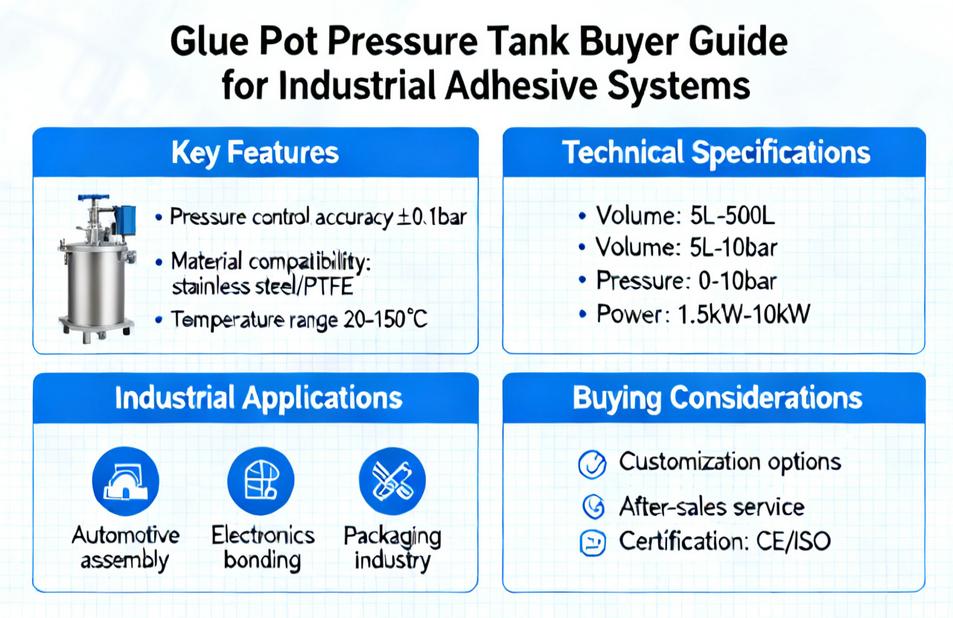
A glue pot pressure tank is a sealed vessel that holds adhesive, glue, or other viscous fluids under controlled air pressure so they can be delivered smoothly to dispensing valves, guns, rollers, or automated application heads. Instead of relying on gravity or manual feeding, a pressure tank uses compressed air to push the material through a hose to the point of use, which helps maintain a steady flow in industrial bonding, packaging, woodworking, automotive, and assembly operations. For overseas buyers sourcing adhesive supply equipment, understanding how these tanks work, where they fit, and what to evaluate before ordering is essential for getting a reliable setup that matches the production line.
What a Glue Pot Pressure Tank Does in a Dispensing System
In many adhesive applications, the material is too thick for a simple pump or gravity feed. A pressure tank solves this by applying air pressure to the surface of the glue inside a closed container. The pressure forces the adhesive out through a dip tube and along a heated or unheated hose to a dispensing valve. When the valve opens, material flows; when it closes, the pressure holds the column of glue ready for the next shot. This design is common in cold glue systems, hot melt pre-melt stations, and two-component mixing setups where consistent supply is needed.
The tank itself is usually a cylindrical pot with a clamp-down lid, an air inlet regulator, a pressure gauge, a safety relief valve, and an outlet port. Some units include heating jackets or internal heaters for adhesives that must stay at a specific temperature. The size and configuration depend on the adhesive type, the number of dispensing points, and the required flow rate.
Key Features Buyers Look For
When evaluating a glue pot pressure tank, purchasing teams typically compare features that affect uptime, safety, and material compatibility. Important points include:
- Pressure regulation: A reliable air regulator and gauge allow operators to set and repeat the same pressure for consistent bead size.
- Safety design: A certified relief valve and secure lid clamping mechanism protect operators from over-pressurization.
- Material contact parts: Wetted components such as the dip tube, outlet fitting, and seals should match the adhesive chemistry to avoid corrosion or contamination.
- Heating option: For hot melt or temperature-sensitive glues, an integrated heater or jacket keeps viscosity stable.
- Capacity and refill method: Tank volume, lid opening style, and whether the unit can be refilled without stopping production influence daily workflow.
- Mounting and mobility: Floor stands, wall brackets, or cart-mounted versions help fit the tank into crowded work cells.
Materials and Construction
Industrial glue tanks are commonly made from stainless steel or carbon steel with a protective coating. Stainless steel is often selected for water-based adhesives, solvents, and applications where corrosion resistance and easy cleaning matter. Carbon steel may be suitable for certain hot melt or non-corrosive materials when properly maintained. Internal surfaces should be smooth to prevent adhesive buildup, and seals should be chosen based on temperature and chemical compatibility. Buyers should confirm the material grade and surface finish with the manufacturer rather than assuming a standard specification.
Typical Industrial Applications
Pressure tanks for glue are used across many sectors where adhesive must be supplied continuously or in measured amounts. Common industrial applications include:
- Woodworking and furniture assembly, where cold glue or hot melt is applied to edges, dowels, and panels.
- Packaging and carton sealing, where a steady adhesive supply supports high-speed case erectors and sealers.
- Automotive interior bonding, including headliners, door panels, and trim assembly.
- Filter manufacturing, where glue is dispensed along pleats and end caps.
- Bookbinding and graphic arts, where spine glue and side gluing require controlled flow.
- General product assembly, including electronics, appliances, and disposable hygiene products.
Because adhesive viscosity, open time, and temperature vary by process, the tank should be matched to the specific glue and dispensing equipment rather than selected by size alone.
How to Choose the Right Tank for Your Line
Choosing a glue pot pressure tank starts with the adhesive. Identify whether the material is water-based, solvent-based, hot melt, polyurethane, or epoxy. This determines the wetted materials, seal type, and whether heating is required. Next, estimate the maximum flow rate and the number of dispensing points. A single tank can often feed multiple valves if the pressure and hose diameter are sized correctly, but long runs or high flow may need a larger outlet or a different supply method.
Then consider the working environment. If the tank will sit near the dispenser, a smaller unit may be enough. If refills are infrequent or the line runs continuously, a larger capacity with quick-open lid can reduce downtime. Check the available air pressure and whether the facility has a clean, dry air supply, since moisture and oil can affect adhesive quality. Finally, confirm the mounting method, floor space, and any plant safety requirements.
Customization and OEM Options
Many suppliers offer custom and OEM configurations for glue pot pressure tanks. Customization can include tank volume, outlet port size and position, lid clamp style, heater voltage and wattage, pressure rating, and material of construction. OEM programs may involve private labeling, custom color, or modifications to fit an existing dispensing system. Buyers should provide clear drawings or samples of the adhesive and the connection points so the factory can propose a suitable design. It is also helpful to discuss whether the tank will be used as a standalone unit or integrated with a pump, valve, or robotic dispenser.
Buying Considerations and Supplier Selection
When comparing suppliers, look for experience in adhesive handling equipment rather than general pressure vessels. A specialized manufacturer or supplier can advise on material compatibility, safety features, and matching the tank to the rest of the dispensing system. Ask for dimensional drawings, material certificates where applicable, and a clear list of included components such as regulators, gauges, hoses, and fittings. Confirm the warranty terms and the availability of spare parts, especially seals and dip tubes that wear over time.
It is also wise to discuss lead times, packaging, and shipping method early, particularly for international orders. A factory with export experience can provide the necessary documentation and pack the tank to protect fittings and gauges during transit. If the application is unusual, request a technical review before placing a bulk order. Avoid suppliers who cannot explain how their tank handles the specific adhesive you use.
Frequently Asked Questions
Can a glue pot pressure tank be used with hot melt adhesive?
Yes, if the tank is designed with heating capability and components rated for the required temperature. The adhesive must remain within its recommended viscosity range, and the hose and valve should also be heated or insulated as needed. Always confirm temperature compatibility with the supplier.
How do I determine the correct tank size?
Consider adhesive consumption per hour, the number of dispensing points, and how often operators can refill. A larger tank reduces refill frequency but takes more space and requires more adhesive to reach operating temperature. Review your production rate with the supplier to find a balanced size.
What air pressure is needed to operate the tank?
Required pressure depends on adhesive viscosity, hose length, and dispensing valve design. The tank should have an adjustable regulator and gauge so the pressure can be tuned. The supplier can recommend a starting range based on your application details.
Are custom outlet positions and tank volumes available?
Many manufacturers offer custom fabrication for volume, port location, and mounting. Provide a sketch or sample of your connection and describe the available space. OEM and private label options are also common for distributors and equipment builders.
Conclusion
A glue pot pressure tank is a practical solution for delivering adhesive consistently in industrial dispensing systems. The right choice depends on the adhesive type, required flow, heating needs, and how the tank integrates with valves, hoses, and automation. Buyers should focus on material compatibility, safety features, and supplier support rather than just price. If you are sourcing for a specific application or need a custom or OEM configuration, contact a qualified manufacturer or supplier with your specifications, adhesive details, and line layout so they can recommend a suitable tank and help you avoid costly mismatches.
