

Adhesive Pot Pressure Tank | A Practical Guide for Industrial Dispensing and Gluing Systems
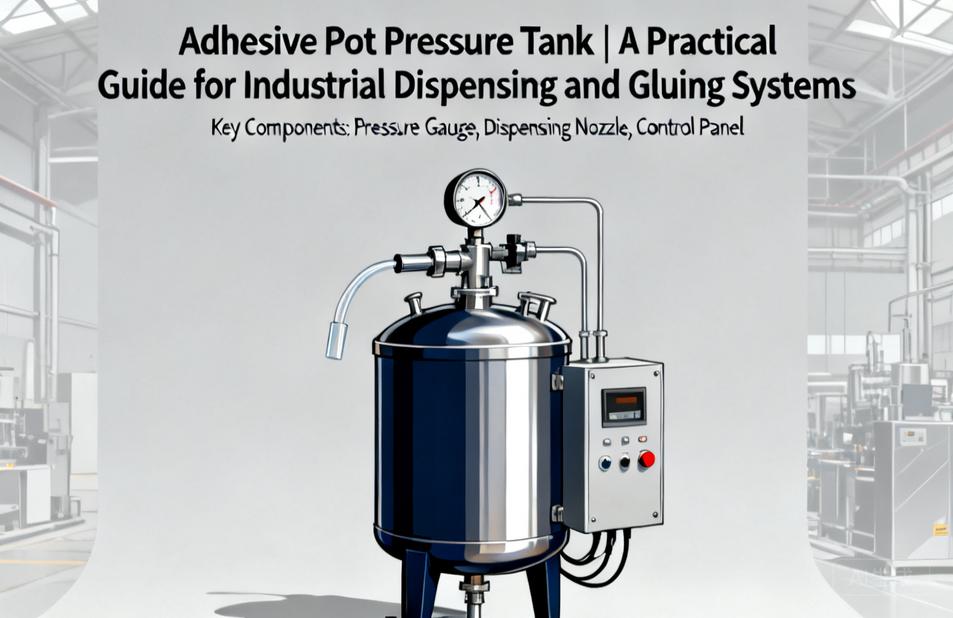
An adhesive pot pressure tank is a pressure vessel used to hold and deliver liquid adhesives, sealants, and other viscous materials to dispensing valves, guns, or automated gluing systems. Instead of relying on a pump to move glue from a small cartridge, the tank uses regulated air pressure to push adhesive through a hose toward the point of application. This setup is common in furniture assembly, packaging, automotive interiors, filter manufacturing, and any production line where consistent adhesive flow matters. For overseas buyers, understanding how an adhesive pot pressure tank works, what to check before ordering, and how to work with a manufacturer or supplier on custom configurations can prevent costly downtime and material waste.
Product Overview and Working Principle
An adhesive pot pressure tank, sometimes called a glue pressure pot or adhesive pressure vessel, is typically a cylindrical tank with a sealed lid, an air inlet, a material outlet, and a pressure gauge. The operator fills the tank with adhesive, closes the lid, and connects it to a compressed air supply. Regulated pressure pushes down on a follower plate or directly onto the adhesive surface, forcing the material through an outlet hose to a dispensing valve or nozzle. When the valve opens, adhesive flows; when it closes, flow stops. The pressure setting controls the flow rate, so the same tank can support slow bead application or faster dot dispensing depending on the valve and hose size.
Because the adhesive stays enclosed, the system reduces exposure to air, which helps limit skinning and curing for moisture-sensitive or solvent-based adhesives. It also allows a larger volume of material to be stored near the workstation, reducing the frequency of cartridge changes and improving line efficiency.
Key Features Buyers Usually Look For
Most industrial buyers evaluate an adhesive pot pressure tank by how well it matches their adhesive type, production rhythm, and existing dispensing equipment. Common features include:
- Regulated air inlet with pressure gauge for repeatable flow control
- Quick-release or clamped lid for faster refilling and cleaning
- Follower plate or seal design to minimize adhesive waste and air pockets
- Material outlet sized to match hose and valve requirements
- Lifting lug, handle, or cart mounting for safe handling in the workspace
- Optional agitation or heating for adhesives that separate or need viscosity control
These features are not universal. A tank intended for low-viscosity glue may not perform the same way with a filled hot melt or a high-solids sealant. That is why matching the tank to the material and the dispensing valve is more important than choosing the largest or most heavily built unit.
Materials and Construction
Adhesive pot pressure tanks are generally made from carbon steel or stainless steel, with wetted parts selected according to the adhesive chemistry. Stainless steel is often preferred for water-based adhesives, some solvent-based products, and applications where corrosion resistance or easy cleaning is important. Carbon steel with an internal coating may be used for compatible materials where cost is a priority. Seals, gaskets, and hoses must also be compatible with the adhesive; otherwise they can swell, leak, or contaminate the material.
Buyers should ask the supplier which wetted materials are standard, what seal options are available, and whether the tank can be configured for a specific adhesive family. In many cases, the factory can provide a material compatibility recommendation based on the adhesive datasheet.
Industrial Applications
The adhesive pot pressure tank is used in a wide range of industrial applications where a steady supply of adhesive is needed at a manual or automated workstation. Typical examples include woodworking and furniture edge banding, packaging carton sealing, automotive trim and headliner bonding, filter pleating and frame sealing, shoe assembly, and electronics potting or gasketing. It is also common in job shops that run different adhesive jobs and need a flexible, portable supply method rather than a dedicated pump system.
Because the tank can be moved between workstations and connected to different valves, it is a practical choice for small and mid-size production lines as well as for OEM equipment builders who want to offer a complete dispensing package.
How to Choose the Right Tank for Your Process
Choosing an adhesive pot pressure tank starts with the adhesive itself. Consider viscosity, solids content, cure mechanism, and whether the material needs agitation or heating. Next, review the dispensing valve or gun: its operating pressure range, flow rate, and inlet connection determine what the tank must supply. Then consider production volume and refill frequency. A larger tank reduces refills but adds weight and may require a lifting device or cart.
Other practical questions include: Will the tank be stationary or portable? Is the workspace rated for the air pressure required? What cleaning procedure will be used between adhesive changes? Does the tank need a follower plate to push high-viscosity material efficiently? Answering these questions before contacting a supplier helps narrow the options and avoids a mismatch between the tank and the rest of the dispensing system.
Customization and OEM Options
Many adhesive pot pressure tank manufacturers and suppliers offer OEM and custom configurations for equipment builders, integrators, and distributors. Customization can include tank volume, outlet position, mounting style, lid design, pressure rating, material of construction, seal type, and fittings. Some factories also provide private-label options for distributors who want their own branding.
When requesting a custom tank, provide the adhesive type, required flow rate, valve model, available air pressure, and any space constraints. A capable supplier will ask for these details and may suggest a standard model that already meets the requirement, which can reduce cost and lead time.
Supplier Selection and Buying Considerations
When comparing suppliers, look for experience with industrial dispensing rather than general pressure vessels. A supplier who understands adhesives can help with material compatibility, seal selection, and system integration. Ask for dimensional drawings, material specifications, and available options. Confirm whether the factory performs pressure testing and what documentation is provided. For international buyers, it is also useful to discuss packaging, spare parts availability, and technical support in the destination market.
Avoid suppliers who cannot explain how the tank works with your specific adhesive or who offer only one fixed model with no customization path. Reliable manufacturers and suppliers are usually willing to review your application and recommend a configuration instead of pushing a generic unit.
Frequently Asked Questions
What is the difference between an adhesive pot pressure tank and a glue pump?
A pressure tank uses regulated air pressure to push adhesive from a sealed vessel, while a glue pump mechanically draws and pushes material. Pressure tanks are often simpler and more portable, while pumps can handle continuous high-volume supply. The right choice depends on adhesive type, flow rate, and production layout.
Can one tank be used with different adhesives?
It can, but the tank, seals, and hose must be compatible with each adhesive. Cleaning between changes is important to avoid contamination. Some buyers keep separate tanks for different adhesive families to reduce cleaning time and cross-contamination risk.
Do I need a follower plate in my adhesive pot pressure tank?
A follower plate helps push viscous adhesive toward the outlet and reduces waste left on the tank wall. It is more common with high-viscosity materials. For low-viscosity adhesives, a simple tank may be sufficient. The supplier can advise based on your material.
Can the tank be customized for my existing dispensing valve?
Yes. Many manufacturers offer custom outlet fittings, hose connections, and pressure ranges to match an existing valve or gun. Provide the valve model and required inlet pressure so the supplier can confirm compatibility.
Conclusion
An adhesive pot pressure tank is a practical solution for delivering glue, sealant, and other viscous materials to manual or automated dispensing points. The most important selection factors are adhesive compatibility, pressure and flow requirements, valve matching, and cleaning convenience. Buyers who plan to integrate the tank into an existing line or private-label program should discuss OEM and custom options with the supplier early. If you are evaluating a tank for a specific adhesive or application, contact a manufacturer or supplier with your material details, valve information, and production requirements to confirm the right configuration.
