

Glue Pressure Tank Manufacturer | How to Choose the Right Tank for Your Dispensing System
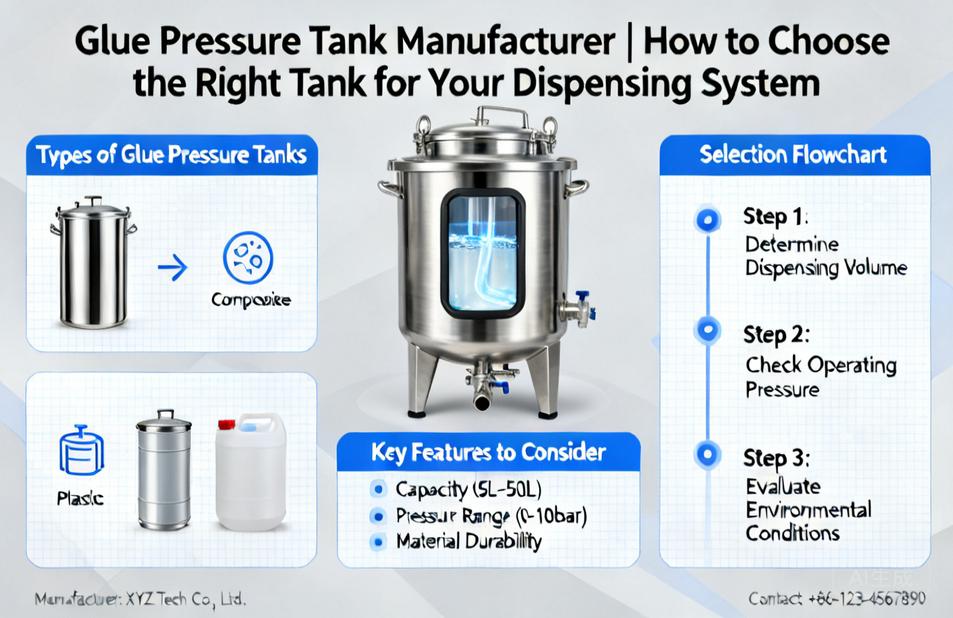
When you are searching for a reliable glue pressure tank manufacturer, you are likely looking for a vessel that can hold adhesive or sealant under pressure and deliver it consistently to a dispensing valve, nozzle, or robot. A glue pressure tank, also called an adhesive pressure tank or glue pressure pot, is a sealed container that uses compressed air to push glue through a hose to the point of application. It is commonly used in packaging, woodworking, automotive assembly, electronics, and general industrial bonding where accurate, pulse-free glue flow is required.
This article explains what these tanks do, the features that matter, how to match a tank to your process, and how to evaluate a supplier or factory for OEM and custom projects.
What a Glue Pressure Tank Does in a Dispensing System
A glue pressure tank works as a pressure vessel and a material reservoir. Glue is loaded into the tank through a fill port. The tank is then sealed, and regulated air pressure is applied to the glue surface. That pressure pushes the adhesive through a fluid hose to a dispensing valve. Because the tank itself provides the driving force, the system can supply multiple valves, guns, or nozzles from one central unit. This design is often preferred over small cartridges when you need larger volumes, fewer refills, and more stable flow.
Typical system components
- Pressure tank body with a removable or hinged lid
- Air pressure regulator and gauge
- Safety relief valve
- Fluid outlet port and dip tube
- Fill port and vent valve
- Optional agitator, heater, or level sensor
Key Features Buyers Look For
Not every glue pressure tank is built for every adhesive. Some glues are thin and flow easily, while others are thick, filled, or moisture-sensitive. The following features are important to discuss with a manufacturer or supplier before ordering.
Pressure control and stability
Consistent pressure produces consistent glue beads. Look for a tank with a sensitive regulator and a reliable gauge. If your process runs at low pressure, the regulator should be able to hold that setting without drifting. For high-pressure applications, the tank body and fittings must be rated for the working pressure.
Tank size and refill frequency
Tank capacity directly affects how often operators must stop to refill. Smaller tanks suit low-volume or portable stations, while larger tanks support continuous production lines. The right size depends on your glue consumption rate, shift length, and available floor space.
Material compatibility
Wetted parts must resist the adhesive being used. Water-based glues, solvent-based adhesives, polyurethane, epoxy, and hot melt materials each have different chemical and temperature requirements. A quality glue pressure tank manufacturer will ask about your adhesive before recommending materials.
Cleaning and maintenance
Glue residue can cure and block lines. Tanks with smooth internal surfaces, quick-release lids, and accessible ports are easier to clean. If your production changes adhesives often, consider a design that allows fast disassembly or a tank with a removable liner.
Common Industrial Applications
Glue pressure tanks appear in many bonding and sealing processes. Typical industrial applications include:
- Packaging and carton sealing
- Woodworking and furniture assembly
- Automotive interior and structural bonding
- Electronics encapsulation and component bonding
- Appliance and metal fabrication
- Filter and nonwoven manufacturing
In each case, the tank must match the glue viscosity, required flow rate, duty cycle, and the number of dispensing points.
Materials and Construction
Industrial glue pressure tanks are commonly built from carbon steel or stainless steel. Carbon steel may be suitable for some solvent-based adhesives in controlled environments, while stainless steel offers better corrosion resistance and easier cleaning for water-based and moisture-sensitive glues. Internal surfaces should be smooth and free of traps that can hold cured adhesive. Welds should be clean and, where required, ground smooth. Fittings, valves, and hoses must also be compatible with the adhesive and the working pressure.
How to Choose the Right Tank for Your Dispensing Equipment
Start by defining your process requirements. The following questions help narrow down the correct configuration and avoid over- or under-sizing.
Questions to answer before requesting a quote
- What adhesive or sealant will be used, and what is its viscosity?
- What flow rate and bead size are required?
- How many dispensing valves or guns will the tank supply?
- What is the maximum working pressure of the dispensing system?
- How many hours per day does the system operate?
- Will the tank be stationary or mounted on a moving carriage?
- Is heating, agitation, or level monitoring needed?
- What cleaning method and frequency are planned?
Sharing this information with a manufacturer helps them recommend a tank size, port layout, and material that fit your line. It also reduces the risk of downtime caused by incompatible components.
Customization and OEM Options
Many buyers need more than a standard tank. Custom and OEM glue pressure tanks can be adapted with specific inlet and outlet positions, mounting brackets, lid configurations, pressure ratings, and control interfaces. If your system integrates with a robot, PLC, or automated dispensing cell, the tank may need signal outputs, remote pressure control, or a particular footprint. A manufacturer experienced in OEM projects can review your drawings and propose a build that matches your equipment.
Buying Considerations and Supplier Selection
When comparing suppliers, look beyond the initial price. Ask how the tank is pressure-tested, how wetted parts are specified, and whether replacement seals and valves are available. A reliable factory should provide dimensional drawings, material certificates where applicable, and responsive technical support. If you are sourcing from overseas, confirm packaging standards, documentation, and communication channels before placing an order. A supplier that asks detailed questions about your application is often a better long-term partner than one that quotes immediately without understanding your process.
Frequently Asked Questions
What is the difference between a glue pressure tank and a glue pump?
A glue pressure tank uses compressed air to push adhesive from a sealed vessel to the dispensing point. A glue pump mechanically moves adhesive, often at higher pressure or for higher-viscosity materials. Some systems combine both, using a tank as the reservoir and a pump or regulator to control flow.
Can a glue pressure tank handle high-viscosity adhesives?
It depends on the adhesive and the system design. Higher-viscosity glues may require higher pressure, larger fluid lines, or a different feed method. Discuss the specific material with the tank manufacturer to confirm suitability.
Are custom tank sizes and port layouts available?
Yes. Many manufacturers offer custom fabrication, including special dimensions, port locations, lid types, and mounting arrangements. Provide a drawing or a clear description of your equipment interface for an accurate quotation.
How do I maintain a glue pressure tank?
Follow the adhesive supplier’s cleaning recommendations. Regularly inspect seals, regulators, and relief valves. Clean the tank and fluid lines before glue can cure. Replace worn parts with compatible spares from the tank supplier.
Conclusion
Choosing the right glue pressure tank starts with understanding your adhesive, flow requirements, and dispensing setup. The tank must match your pressure, volume, material, and cleaning needs, and it should integrate smoothly with your existing equipment. Whether you need a standard unit or a custom OEM solution, working with an experienced manufacturer or supplier can save time and reduce production problems. If you are evaluating options, prepare your process details and contact a qualified glue pressure tank supplier to discuss specifications, customization, and the best configuration for your industrial application.
